Portuguese
  Spanish


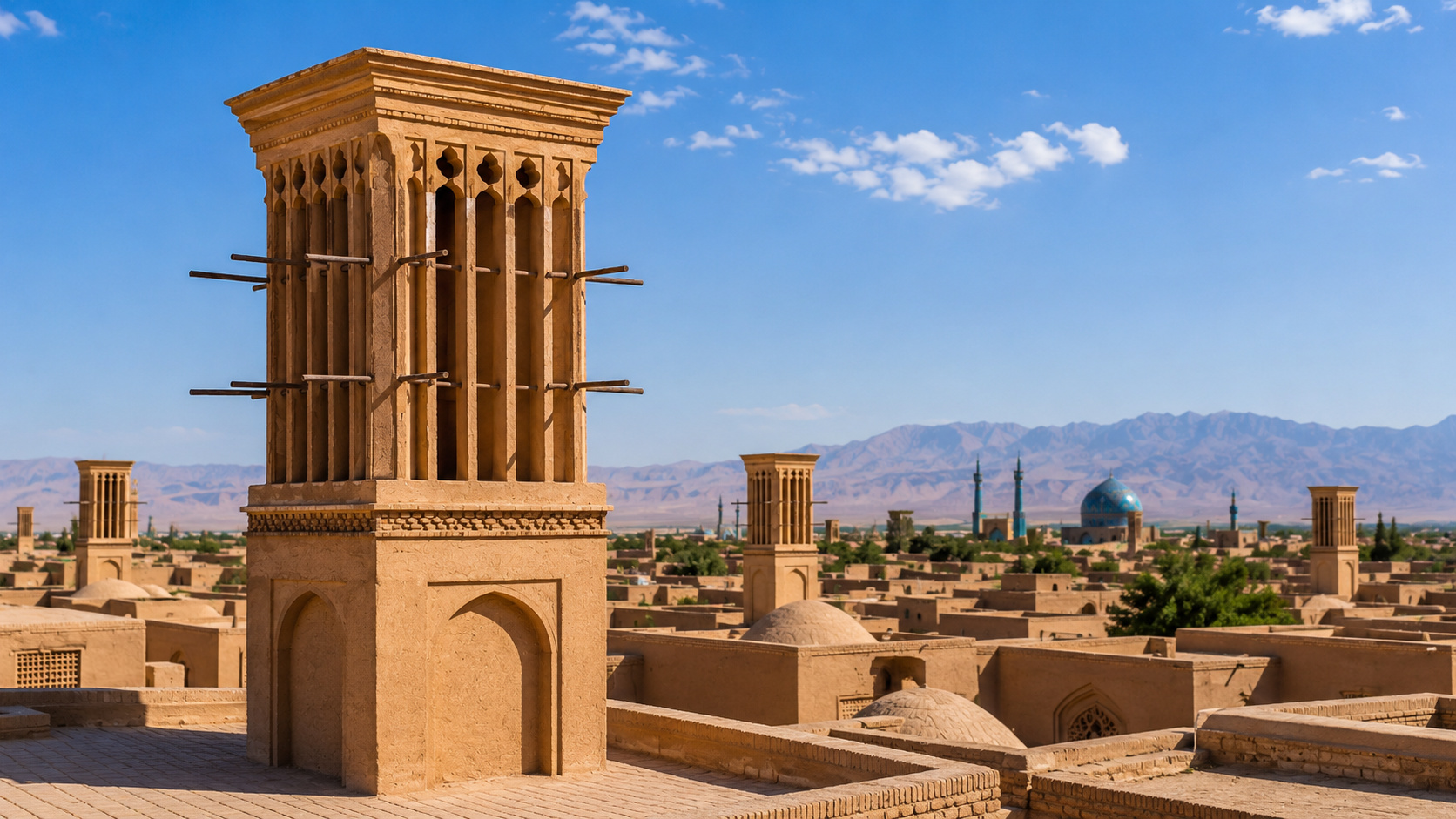

The badgir, created in ancient Persia, shows how desert peoples faced extreme heat without engines, compressors, or electricity
For those living in the desert, shade and wind were never luxuries. For centuries, they were survival. Long before fans and air conditioning, people in ancient Persia already used a simple, elegant, and efficient technology to cool houses in extreme heat: the badgir, also known as a wind tower or wind catcher.
The idea seems modern, but it is over 2,000 years old. Instead of relying on electricity, the system takes advantage of wind power, temperature differences, and building design. The result is a kind of natural air conditioning, still visible in historic cities like Yazd, in Iran, according to the Encyclopaedia Iranica and references associated with traditional Persian architecture.
The ancient invention that cools houses without using energy
The badgir functions as a tall tower installed above the house. The openings at the top capture the breeze and channel the air inside the building through vertical ducts.
-
Free Coffee for World Cup Losers? Mexican Café Offers “Losers’ Coffee” to Cheer Up Disappointed Fans with Humor

-
Elon Musk, the world’s first trillionaire, builds a SpaceX-led city in Texas with employee housing and a public beach along the rocket path to Mars.

-
Coastal City in Brazil Plans to Revive 1990s Cable Car as New Tourist Attraction Amid Major Infrastructure Developments

-
Brazilian Weight Loss Pens by Eurofarma Launch Nationwide at More Affordable Prices Than Competitors


At the same time, the hot air accumulated inside rises and escapes through the structure. This movement, known as the chimney effect, creates constant circulation.
The house, then, breathes on its own.
In many constructions, the tower was combined with water reservoirs, internal lakes, or underground galleries. The air passed through cool or humid areas and lost heat before reaching the rooms.
This process, called evaporative cooling, works best in dry regions. Therefore, the badgir became so efficient in desert areas.
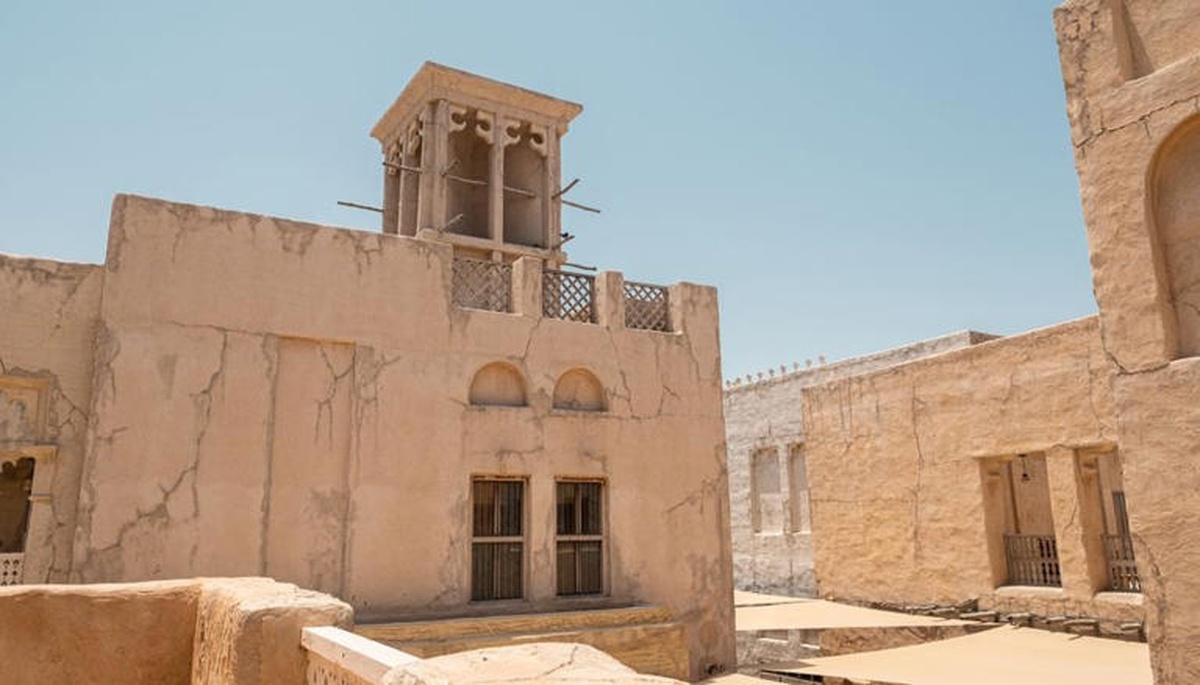
Why the badgir works so well in the desert
The wind tower does not work alone. The entire house was designed to overcome the heat.
The thick adobe or brick walls absorbed heat during the day. Then, they slowly released this energy at night.
Small windows, internal courtyards, and careful orientation also reduced direct sunlight entry. In this way, the entire construction became a passive air conditioning system.
No engines, no compressors, and no electricity bill.
This setup helped residents of hot regions, like southern Iran, where summer can exceed 50°C, to withstand extreme temperatures.

Can the badgir replace modern air conditioning?
The answer depends on the climate.
In hot and dry regions, the badgir can significantly reduce the feeling of heat. Low humidity favors evaporation and improves the performance of natural ventilation.
In tropical or very humid areas, however, the result is less. The air already carries a lot of water vapor, which reduces the cooling effect.
Therefore, experts do not treat the wind tower as a universal substitute for air conditioning. The badgir is seen as a complementary solution, especially useful for reducing the energy demand of buildings.


The ancient technology that returned to the architecture radar
The badgir is no longer just a historical curiosity. Today, it inspires bioclimatic architecture projects, especially in a world seeking to reduce electricity consumption and carbon emissions.
According to the International Energy Agency, cooling environments represents a significant portion of global electricity consumption in buildings.
In this scenario, universities, architects, and engineers have returned to studying ventilation towers, cross ventilation, and passive systems inspired by this ancient mechanism.
The lesson is straightforward: sometimes, the smartest technology doesn’t come from a new machine, but from an old idea that knew how to observe the wind.
The badgir shows that cooling a house doesn’t just depend on modern devices. With physics, water, shade, and well-planned architecture, desert peoples were already doing, more than 2,000 years ago, what the world is trying to relearn today: living better while consuming less energy.
And you, do you think ancient solutions like the badgir should make a strong comeback in modern constructions?