








In Australia, Iberdrola’s sonar swept the seabed to build the Aurora Green wind farm in Gippsland and encountered the City of Hobart, a steamship that sank in 1877 with 615 tons of coal: a coal shipwreck found by wind power at 60 meters, right where the wind will replace coal.
Some discoveries happen without anyone looking for them. That’s what happened with Iberdrola, a Spanish energy giant, on the seabed of Australia. While sweeping the ocean floor with sonar to plan an offshore wind energy park, the company stumbled upon an iron steamship that had been missing for almost 150 years. It was the City of Hobart, a ship that sank in 1877 carrying 615 tons of coal, found right where the wind will replace that same coal.
The case was reported by the diving site Divernet, specialized in shipwrecks. The wreck was at a depth of 60 meters, in the area of the future Aurora Green park in Gippsland, and was only confirmed after Iberdrola passed the coordinates to technical divers. A coal shipwreck found by wind power: the coincidence is too poetic to be an invention.
A sonar hunting for turbines that found a ghost
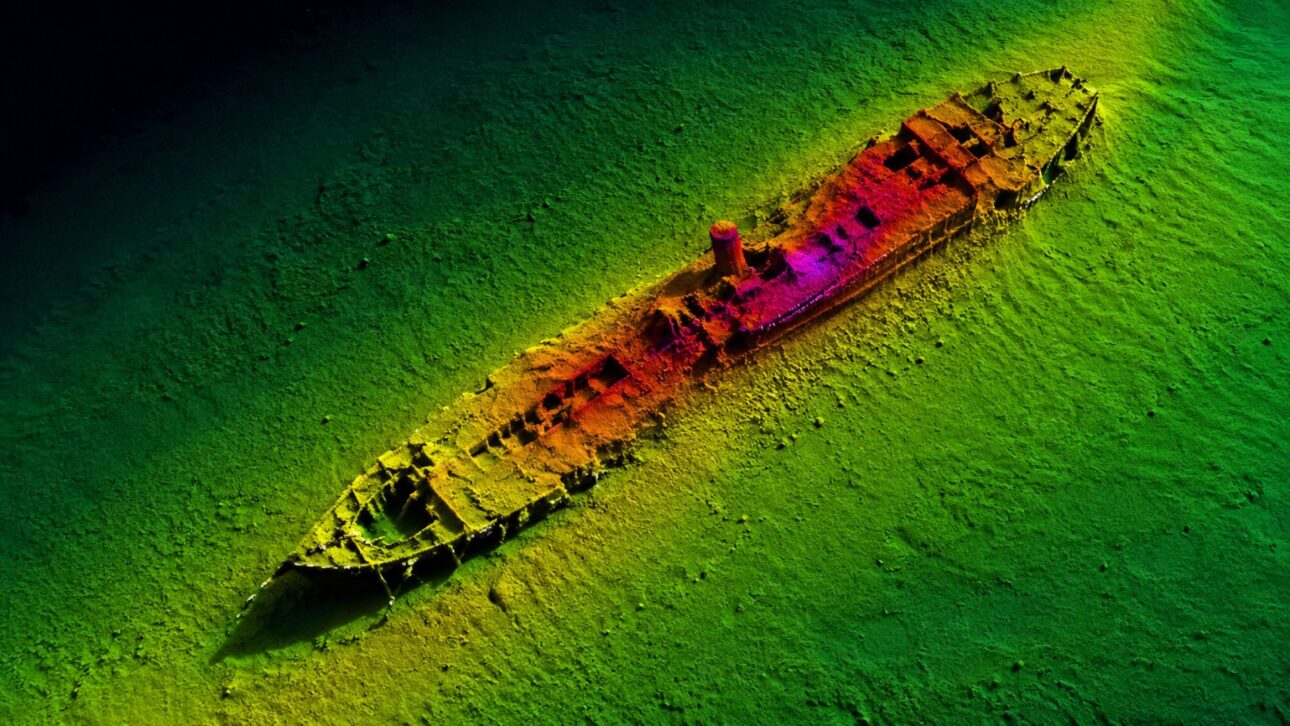
Iberdrola was conducting geophysical surveys on the seabed at the beginning of 2025 to map the terrain where it intends to plant the turbines of the Aurora Green park.
-
Scottish Village with 15 Wooden Tiny Homes Provides Shelter for the Homeless: Each Unit Includes a Private Door, Kitchen, Bathroom, and Living Room in a £3 Million Project

-
Brazil bans donkey slaughter to prevent extinction and address health risks amid rising demand for hides in China.
-
Brazil’s Superior Court rules banks like Caixa, Banco do Brasil, and Santander not liable for compensation in fake customer service scams.
-
Using plastic from just 6 ocean-recovered bottles, a 25-year-old engineer creates a bionic prosthetic in 24 hours in a country where 95% of amputees have never had access to a new leg.




It was during this routine sweep, done with sonar, that the equipment detected not one, but two shipwrecks in the area and around the future park.
One of them was an old acquaintance.
The second wreck was identified as the SS Vicky, a shipwreck that had already been located before in the same Gippsland region.
But the other was the big prize.
That echo on the sonar turned out to be the City of Hobart, and Iberdrola had, unintentionally, found the piece that divers had been hunting for decades.
A coal shipwreck found by wind energy, by surprise.
Those who went out to measure the sea floor returned with a lost chapter of Australian maritime history.
The City of Hobart, the steamer that disappeared in 1877
The ship’s story is worthy of an old movie.
The City of Hobart was an iron steamer that, in July 1877, departed from Newcastle to Melbourne carrying 615 tons of coal.
Three days after setting sail, near Wilson’s Promontory cape, the propeller shaft broke and water began to flood the holds.
The crew was lucky.
The sailors managed to escape in lifeboats before the City of Hobart sank completely, taking the coal cargo to the bottom.
And then the ship simply disappeared from the map.
For almost 150 years, no one knew exactly where the City of Hobart had ended up, despite several diver searches over the decades.
It was one of the enigmas of the Gippsland coast.
An entire steamer, with a known name and date of demise, but without an address on the sea floor.
At 60 meters deep, a 150-year-old mystery
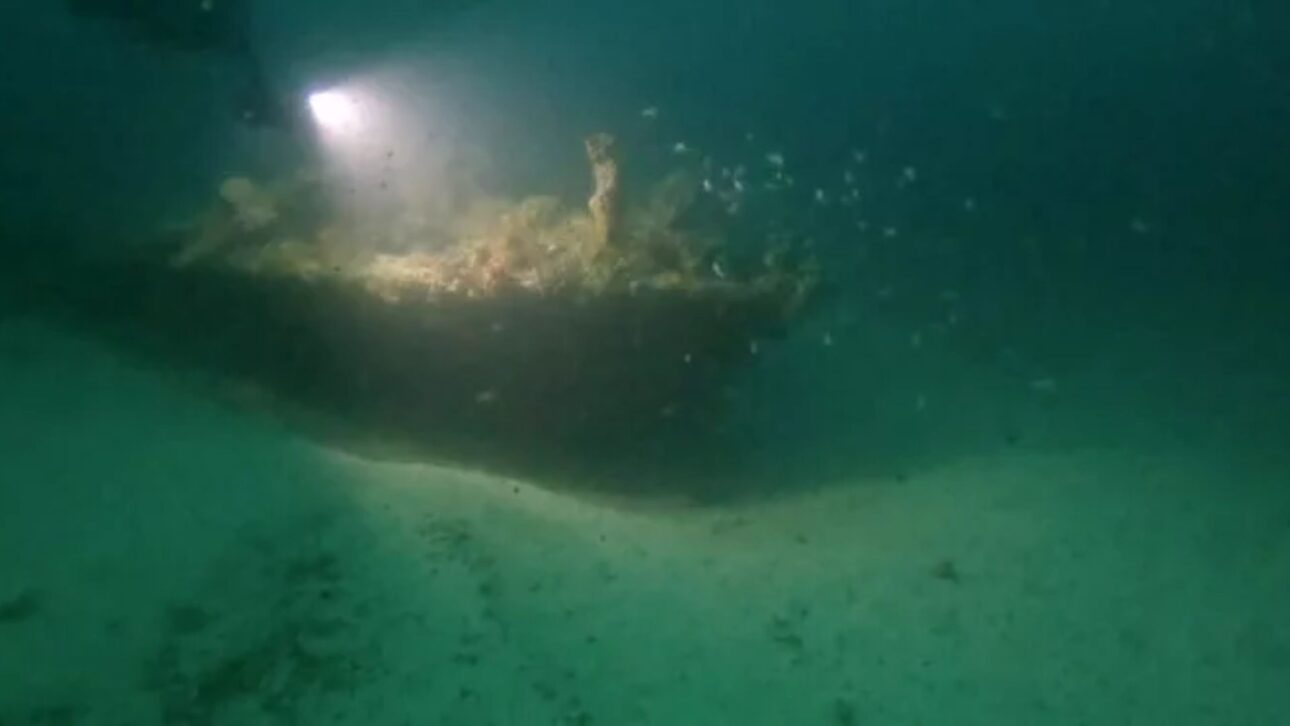
The City of Hobart rests at 60 meters deep, a depth that makes diving difficult and keeps the wreck away from casual onlookers.
At this depth, only technical divers, with special equipment and training, can descend and return safely.
That’s where a passionate group came in.
The Southern Ocean Exploration diving club, from Melbourne, had been treating the ship as a search target since 2008, without ever pinpointing the exact location.
The accurate clue came from clean energy.
With the precise coordinates provided by Iberdrola, the technical team led by Mark Ryan finally descended and confirmed that the wreck was indeed the City of Hobart.
Decades of searching ended thanks to a wind farm.
What no shipwreck hunter had achieved, a renewable energy sonar delivered on a silver platter.
The irony: coal at the bottom, wind on top
And here the story gains its poetic flavor.
The City of Hobart sank carrying coal, the fuel that for more than a century powered the world and today is a climate villain.
More than a hundred years later, it was found precisely underneath where turbines that produce energy from the wind, without burning anything, will be born.
The coincidence is almost a symbol.
In the same piece of sea, the coal-powered past rests and the wind-powered future rises, separated by a century and a half of history.
It’s not just a pretty phrase.
This coal shipwreck found by wind power summarizes, in a single point of the ocean, the energy shift the planet is trying to make.
The old fuel sank there.
The energy that will replace it is about to emerge exactly in the same place.
The Aurora Green park and the 150 turbines
Behind the discovery is a major project.
The Aurora Green park, by Iberdrola, is an offshore wind power plant planned for the Gippsland sea, more than 25 km from the coast.
If built to full capacity, in three phases, Aurora Green will have up to 150 turbines, each with about 20 MW of power.
The project’s numbers are impressive.
The licensed area can house up to 3 GW of capacity, enough to supply a huge number of homes with clean wind energy.
It’s a leap in the Australian transition.
Australia still relies heavily on coal, and parks like Aurora Green are part of the plan to replace fossil plants with renewable generation at sea.
Hence the symbolic weight of the encounter.
The same 150 turbines that will replace coal revealed, along the way, a ship that sank precisely carrying coal.
When clean energy becomes an archaeologist
The case of the City of Hobart is not an isolated exception.
To install turbines at sea, wind energy companies need to scour every meter of the seabed, and this sweep ends up revealing hidden archaeological treasures.
Sonar, mapping, and geophysical surveying, done for engineering, inadvertently became tools for discovering submerged heritage.
That’s how it was in Gippsland.
Iberdrola itself recognized the historical value of the find, and the wreck is now protected by an Australian underwater cultural heritage law.
Clean energy became an ally of history.
Instead of destroying the past, the survey that resulted in the coal shipwreck found by wind energy helped preserve it and tell its story.
It’s a happy side effect.
Every offshore wind farm that emerges can, in turn, return to humanity a piece of history that the sea had swallowed.
What the case of the City of Hobart shows
The biggest lesson is about unlikely encounters between eras.
Iberdrola set out to prepare the future of energy and stumbled upon a symbol of the past, closing a cycle of almost 150 years in a single point of the ocean.
Where a coal ship sank in 1877, the wind will generate the electricity that coal once provided.
Of course, it’s worth keeping your feet on the ground.
Aurora Green is still a project in the study and licensing phase, and erecting 150 turbines at sea takes years, so the replacement of coal by wind there is a plan in progress, not a done deal.
Even so, the symbolism is strong.
Few images translate the energy transition as well as a coal shipwreck found by wind energy, with the old fuel at the bottom and the clean future on top.
From the coast of Gippsland to the world, the City of Hobart resurfaced as a reminder.
Coal had its time, and that time, in the sea of Australia, is about to turn into wind.
And you, did you imagine that the search for a place for wind energy turbines would end up solving a 150-year-old maritime mystery? Tell us in the comments what you think of this coincidence between the sunken coal ship and the wind farm that will be born in the same place.


