Portuguese
  Spanish


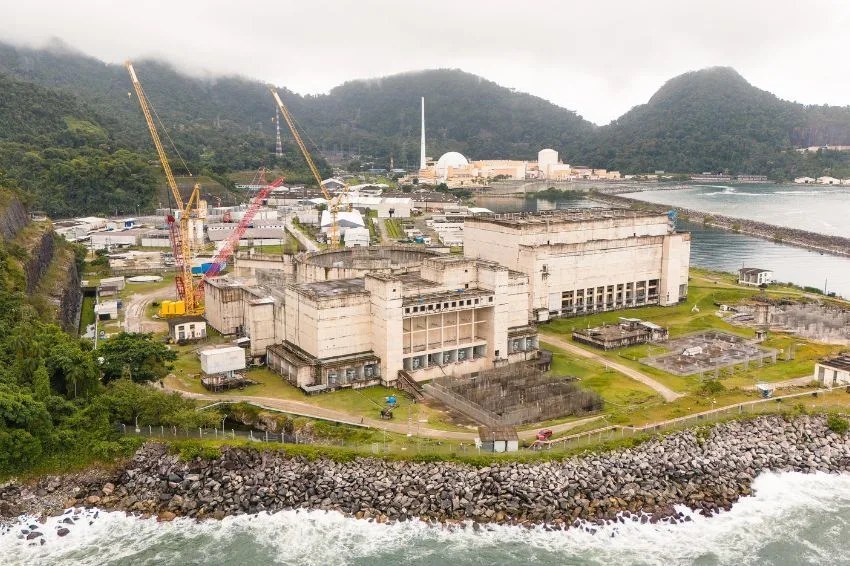
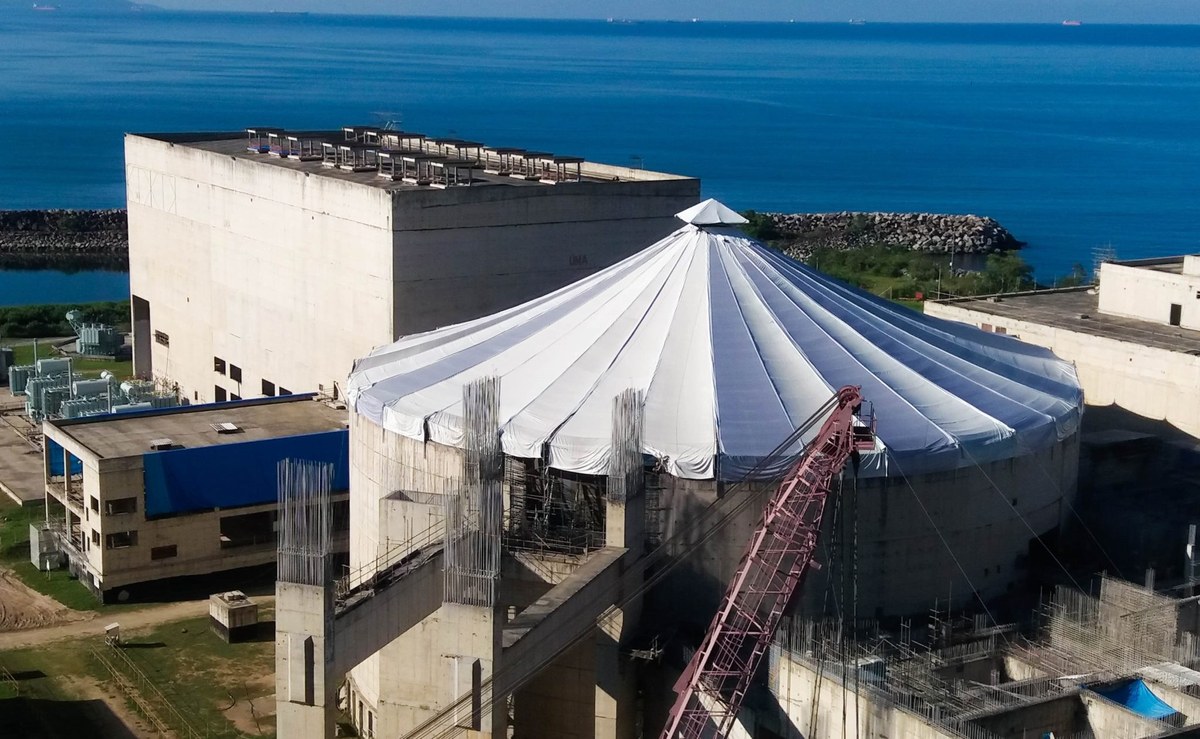
Few accounts in Brazil are as uncomfortable as Angra 3. The nuclear plant is 66% complete, but finishing it costs about R$ 24 billion, practically the same as abandoning it altogether. And the decision needs to be made just as the world rediscovers nuclear energy because of artificial intelligence.
The construction began in 1984. Since then, it was halted in 1986, resumed in 2010, and stopped again in 2015, becoming the most expensive symbol of Brazilian energy indecision. While the country procrastinates, the idle plant consumes about R$ 1 billion per year, with approximately R$ 800 million just for debt service, plus equipment maintenance and salaries. It’s money burned to keep something standing that hasn’t generated a single watt yet.
The math that leaves no easy way out
What makes Angra 3 a management nightmare is the symmetry of the numbers. Completing the plant requires around R$ 24 billion in additional investment. Abandoning it isn’t cheap: between contract terminations, loan settlements, fines, and site demobilization, the cost ranges from R$ 22 billion to R$ 26 billion. In other words, Brazil is already in a position where spending more seems as inevitable as losing what has already been spent, about R$ 12 billion sunk so far.
“It’s not simple to stop, because there are costs in not continuing,” acknowledged Minister Esther Dweck, summarizing the predicament the government is in. The Federal Court of Accounts estimates that just the delays in recent years have already wasted about R$ 2 billion. Once completed, the plant would have a capacity of 1,405 megawatts and generate more than 12 million MWh per year, enough firm energy to supply millions of homes without depending on rain or wind.
-
Nvidia Secures Billion-Dollar Deal to Supply Up to 170,000 AI Accelerators to a 360 MW Data Center in Indonesia, Aiming to Transform Batam into an Advanced Computing Hub

-
NuScale proposes revised plan for six VOYGR SMR reactors in Poland after ending U.S. project

-
Holtec and EDF Submit Joint Proposal to Install Four SMR-300 Reactors in England with Combined Capacity of 1.3 GW
-
Brazil’s Angra 3 Nuclear Plant Reaches 66% Completion; Government Faces 2026 Deadline to Decide on $24 Billion Project’s Future


How the decision is being structured
To break the deadlock, Eletronuclear handed over the technical, financial, and legal modeling of the project to BNDES. The bank hired the consortium Angra Eurobras NES to design the schedule, budget, and contractor hiring format, with the construction structured in the engineering, procurement, and construction model. In parallel, the state company has already opened the public consultation for the civil works tender and launched a bid of about R$ 1.93 billion for the electromechanical assembly.
While the account doesn’t balance, Eletronuclear requested a new waiver, the suspension of debt payments with BNDES and Caixa until December 2026, to maintain cash flow. The final decision, which rests with the National Energy Policy Council, was postponed until after the election period. I confess that delaying a choice that bleeds R$ 1 billion a year sounds like the worst of both worlds. If the plant were completed on the current schedule, it would start operating around 2030 or 2031, almost half a century after the first stone was laid.
Why AI changed the conversation about nuclear
Here comes the new factor. The explosion of artificial intelligence data centers has triggered global demand for clean, stable, and 24-hour available energy, exactly the profile of nuclear generation. “A search done with artificial intelligence consumes ten times more energy than a search on a search engine,” illustrated the president of Eletronuclear. In Brazil, data center projects under review at the Ministry of Mines and Energy jumped from 19.8 to 26.2 gigawatts in a few months, and the global consumption of these centers is expected to more than double by the end of the decade.
It’s not a passing phenomenon. The Energy Research Company projects to increase Brazil’s nuclear capacity from the current 2 gigawatts to 8 to 10 gigawatts by 2050, which would require six to eight new plants. In this scenario, Angra 3 would be just the beginning. In the United States, giants like Amazon, Google, and Microsoft are already signing contracts to power their servers with small modular reactors, the new frontier of nuclear technology.
The contrast with the rest of the world is what hurts. In the same period that Angra 3 spent four decades idle, China put about 20 reactors into operation and maintains more than 20 under simultaneous construction. Base energy has returned as a strategic asset, and Brazil is sitting on an almost ready plant without knowing whether to turn it on or off.
There is also a less visible risk in the account. Eletronuclear warned that if indecision persists, the state company could face a severe financial squeeze, with debt service eroding cash year after year. Much of the heavy equipment for the plant has already been purchased and is stored, aging while the construction is stalled. Each idle year not only burns money but also depreciates what has already been paid, making the final bill even more expensive and the decision more urgent than the electoral calendar suggests. Technicians following the case compare the impasse to a budgetary time bomb, which becomes more costly with each month of delay and transfers the cost of inertia to the energy consumer.
In the end, Angra 3 has ceased to be just an engineering project to become a decision test. We can discuss whether it was worth starting in 1984, and it wasn’t, the way it was handled. But the country that hesitates now is the same that might desperately need this firm energy in the next decade, when each clean gigawatt becomes a dispute between industry, cities, and AI servers.
Finishing Angra 3: throwing money away or ensuring firm energy for the AI era?