





 Portuguese
  English
  Spanish
  4 min of reading
  0 comments


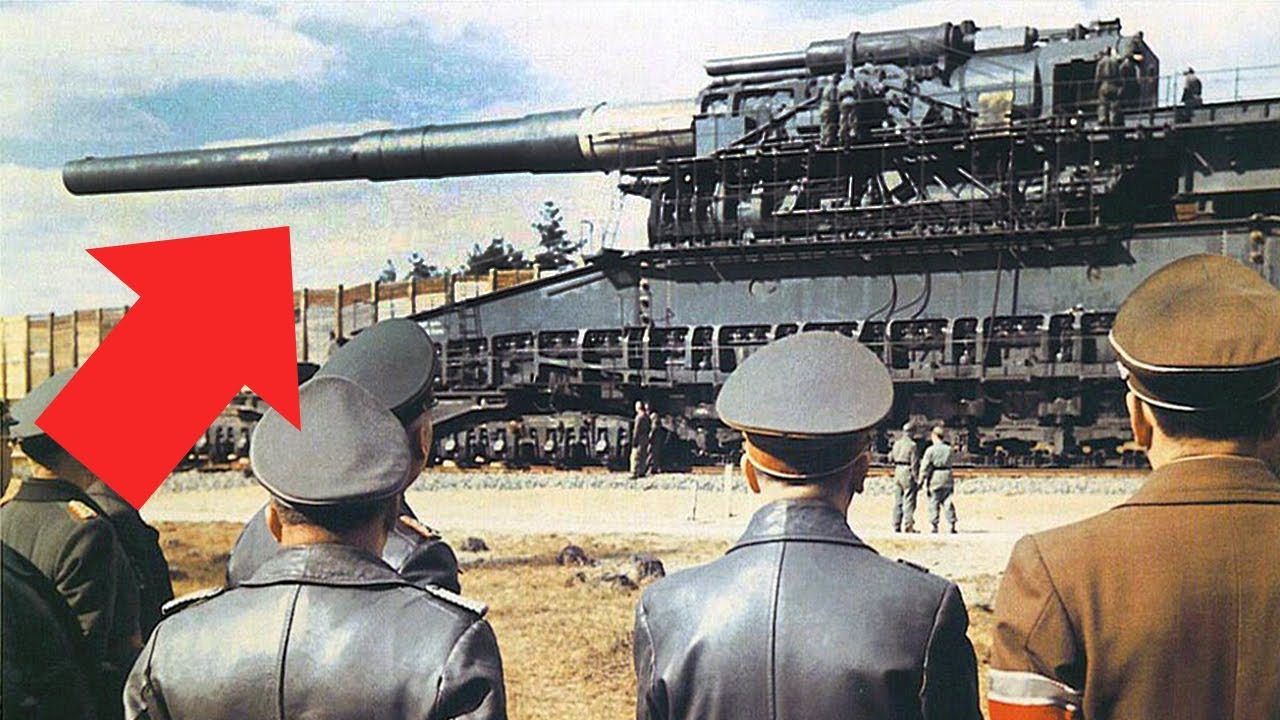
Built By Nazi Germany, The Schwerer Gustav Weighed 1,350 Tons, Fired Shells Of 7 Tons And Was Used In Real Combat During World War II.
When it comes to colossal weapons of World War II, many projects really never made it off the drawing board. But the Schwerer Gustav is a complete exception. Unlike concepts like giant tanks or impossible airplanes, it was designed, manufactured, tested, transported, and employed in real combat, leaving clear historical records of its use.
Developed by the Krupp company in the late 1930s, the railway gun was commissioned to solve a specific problem of the German military doctrine: destroying fortifications considered impenetrable by conventional artillery, such as the French fortified lines and, later, deeply buried Soviet positions.
Schwerer Gustav: A Weapon Made To Break Fortresses
The Schwerer Gustav was conceived to penetrate structures that simply could not be destroyed by aerial bombs or traditional guns. Its caliber of 800 mm remains, to this day, the largest ever used in real combat.
-
Students drop out of ESA after reports of sergeants driving for Uber, and a silent crisis in the Armed Forces begins to worry candidates in 2026

-
More than 500 Marines, robots, drones, and armored vehicles are deployed in Rio de Janeiro for the UN to certify Brazil at the highest level of readiness for peacekeeping missions. It is the first force in the country to achieve this status in all of history.

-
With 24-meter wings, two turbodiesel engines, 49 hours of autonomy, and the ability to launch sonobuoys to hunt submarines, the Turkish drone Aksungur can monitor an area the size of Brazil for two consecutive days without landing.

-
Pentagon wants to transform drones into mass ammunition, produce 340,000 units in two years, and lead the US Army to a fleet of 1 million disposable aircraft for modern warfare.



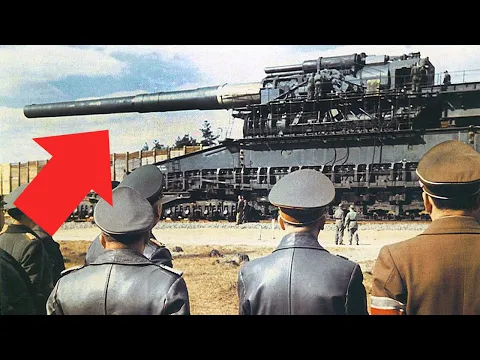

It fired two main types of ammunition: armor-piercing shells weighing approximately 7,100 kg, capable of penetrating up to 7 meters of reinforced concrete or 1 meter of steel;
– explosive shells weighing about 4,800 kg, designed to destroy large fortified areas.
Each shot had a maximum range of 37 to 47 kilometers, depending on the type of ammunition and the elevation of the gun.
Absurd Logistics: Moving The Weapon Was Already A Military Operation
Operating the Schwerer Gustav was not simply “bringing a gun to the front”. It required a dedicated railway infrastructure, with reinforced double tracks and specially prepared curves. Just the transportation involved several separate trains, carrying:
– the gun tube;
– the recoil systems;
– railway platforms;
– special cranes;
– ammunition;
– mobile shelters and workshops.
The complete assembly took several days, even with highly trained teams.
Thousands Of Men For A Single Gun
The number of people involved is one of the most impressive aspects. It is estimated that:
– about 250 to 500 men operated the gun directly;
– another 2,000 to 3,000 soldiers were responsible for security, logistics, engineering, anti-air defense, and maintenance.
In practice, the Schwerer Gustav functioned as a mobile military base on tracks.
Use In Real Combat: The Siege Of Sevastopol
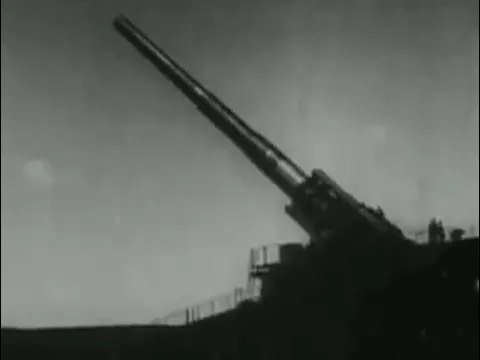
The best-known and documented moment of the Schwerer Gustav’s use occurred in 1942, during the Siege of Sevastopol, in Crimea, then under Soviet control.
There, the gun was employed to destroy:
– coastal fortifications;
– underground ammunition depots;
– extremely deep concrete bunkers.
Historical records indicate that the Schwerer Gustav fired dozens of shells during the campaign. One of the most cited targets was a Soviet ammunition depot buried dozens of meters deep, which was reportedly destroyed after direct hits.
In other words: it was not a test, it was not propaganda, it was not a concept. There were real shots, against real targets, in one of the largest sieges of the war.
Precision And Rate Of Fire: The Price Of Gigantism
Despite its absurd destructive power, the Schwerer Gustav had clear limitations. The rate of fire was extremely low: one shot every 30 to 45 minutes, under ideal conditions. Each shot required fine adjustments, complex loading, and perfect coordination.
Furthermore, the weapon was:
– vulnerable to air attacks (the reason it required strong anti-air defense);
– dependent on intact tracks;
– difficult to reposition quickly.
These limitations began to weigh as the war became more mobile and less focused on prolonged sieges.
The End Of The Schwerer Gustav
With the advance of the war and the increase in Allied air superiority, giant and slow weapons like the Schwerer Gustav began to be seen as high-risk strategic assets. Although there were still plans for its use in other theaters, the context changed.
At the end of the war, the Germans themselves destroyed parts of the gun to prevent its capture. Fragments and components were later found by Allied forces.
Why It Was Never Repeated
The Schwerer Gustav remains unique for a simple reason: the cost-benefit was unsustainable. Although it was capable of feats that no other land weapon could achieve, the investment in logistics, time, and protection did not compensate in light of the evolution of aviation, penetrating bombs, and guided missiles.
It represents the extreme limit of a military philosophy based on brute force and monumental engineering.
Unlike many “absurd” military projects that never made it past the drawing board, the Schwerer Gustav was real from start to finish. It existed, was used, destroyed targets, and became part of history as the largest artillery weapon ever employed in real combat.
More than a historical curiosity, it serves as a warning about the limits of military gigantism: when logistics becomes as complex as the weapon itself, the battlefield begins to change definitively.







-

-

2 people reacted to this.