Portuguese
  Spanish


Modernization of armored vehicles advances in Europe with medium platforms, 120 mm cannons, and digital systems that interest military programs in different countries, while Romania increases investments and manufacturers compete for space in a market pressured by new operational demands.
Tracked armored vehicles, digital turrets, medium and large caliber cannons, and solutions aimed at network warfare have repositioned the modernization of ground forces at the center of defense fairs held in May in Romania and Slovakia.
For the Brazilian defense sector, this movement has direct interest because some of the platforms exhibited in Europe also appear in discussions related to the future family of tracked armored vehicles of the Brazilian Army.
Within this program, the Force seeks to combine mobility, modularity, protection, and digital integration in a single operational base, without losing sight of logistical costs, adaptation to national territory, and modernization capacity throughout the life cycle.
-
U.S. Air Force Launches Air-to-Air Missile Project with Range of Up to 1,850 km for Indo-Pacific Operations

-
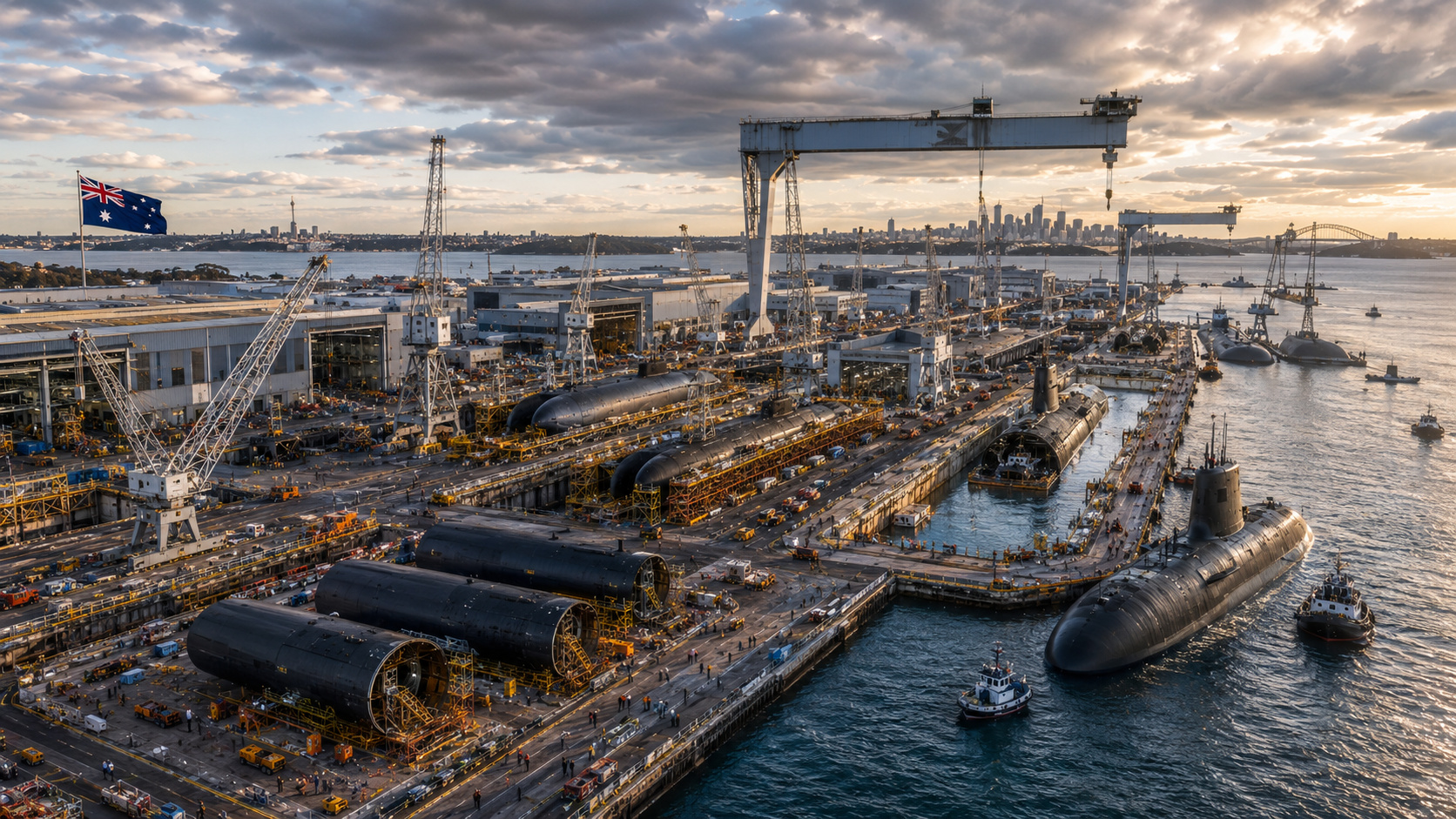
Australia to Deploy Up to 8 Nuclear-Powered Submarines in Indo-Pacific, Establishes Billion-Dollar Naval Chain Through AUKUS, Joining Elite Group Capable of Extended Underwater Missions

-
Indonesia Begins Construction of 2,000-Ton Scorpène Stealth Submarines with Advanced Weaponry and French Steel

-
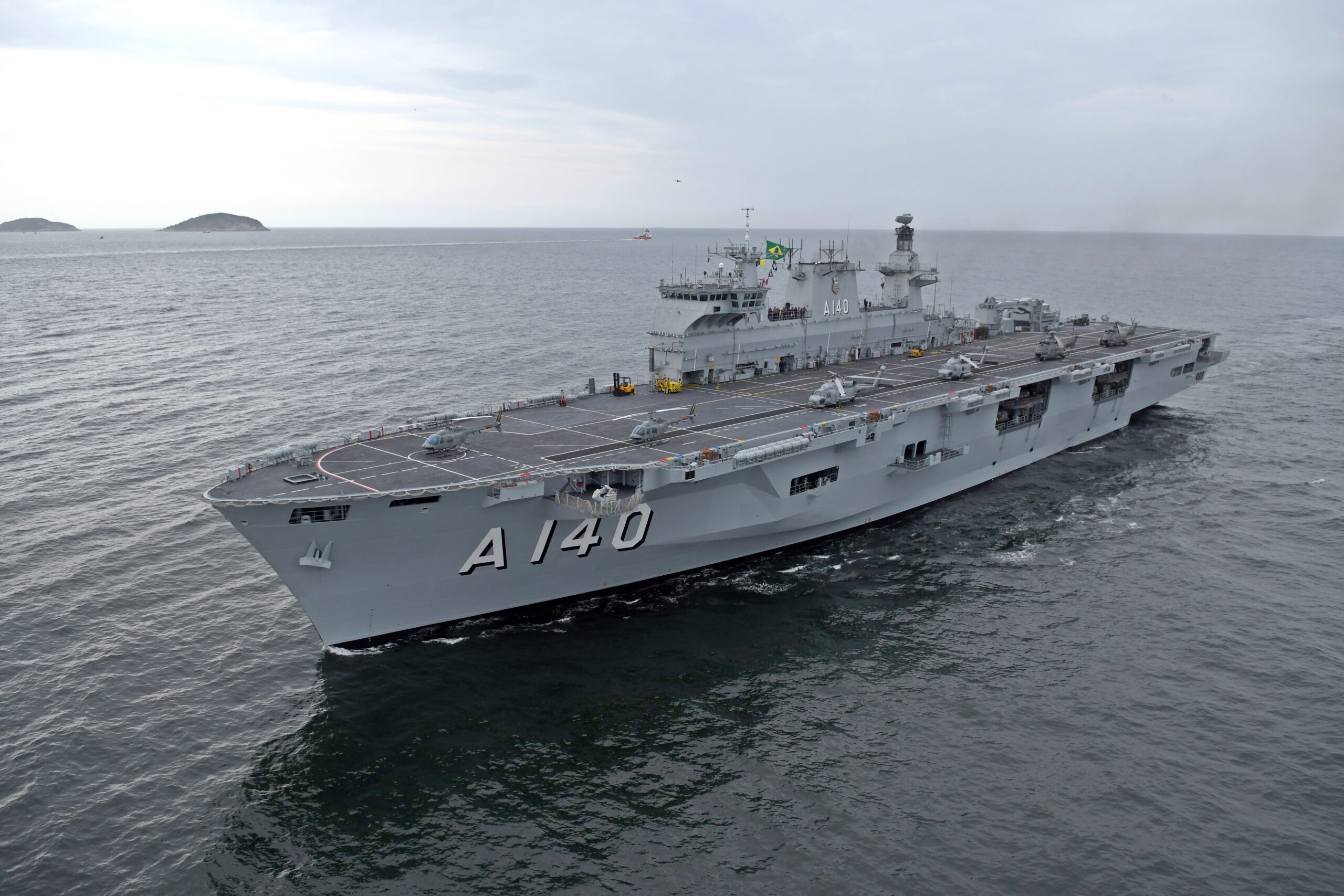
Brazil’s Largest Navy Ship, NAM Atlântico, Transforms into Field Hospital During National Crises



In Romania, the debate gained additional weight after the Parliament approved defense contracts estimated at € 8.33 billion under the European SAFE instrument, created to finance military capabilities through long-term loans.
Besides this specific package, the European Commission informed that the provisional allocation destined for Bucharest reaches about € 16.68 billion, a value that expands the Romanian margin for re-equipment programs and industrial strengthening.

Among the most visible projects is the acquisition of combat armored vehicles for marines, pointed out as one of the country’s priorities amid the gradual replacement of Soviet-origin equipment.
According to the international specialized press, the Romanian Ministry of Defense selected the Lynx KF41 from Rheinmetall to replace the MLI-84, although the execution of the program still depends on contractual, industrial, and administrative stages.
Medium armored vehicles gain space in Romania
Held in Bucharest between May 13 and 15, the 10th edition of the Black Sea Defense & Aerospace, the BSDA 2026, brought together manufacturers competing for space in a market pressured by the war in Ukraine.
This environment also reflects the need to reinforce defense on NATO’s eastern flank, where countries close to the conflict are accelerating purchases, reviewing stocks, and seeking greater autonomy to sustain prolonged operations.
Among the highlights of the fair was the TULPAR from Turkey’s Otokar, presented in the configuration of an armored combat vehicle for marines with a Mizrak turret and a 30 mm Mk44 Bushmaster II cannon.
Designed to accommodate different configurations, the platform uses modular architecture and can be adapted to various missions, allowing the user to adjust protection, armament, and onboard systems according to the required operational profile.
This proposal follows a trend observed in several armies, which seek to use the same chassis to reduce logistical complexity and expand the availability of specialized versions within a single family of vehicles.
With this common base, it becomes possible to have versions for troop transport, fire support, command, engineering, ambulance, or recovery, according to the operational need defined by the user and the employment doctrine adopted.
Also present at BSDA 2026, Rheinmetall showcased the Lynx KF41 equipped with a Lance turret, 30 mm MK30-2/ABM automatic cannon, and Main Sensor Slaved Armament station.
According to the company, the vehicle was part of a broader portfolio that included air defense solutions, munitions, and electronic systems aimed at different layers of ground combat.
The presence of the Lynx had political and commercial weight because Romania seeks to expand local production of military equipment, transfer technology, and strengthen its industrial base amid increased defense spending.

The plans associated with the program include hundreds of vehicles, with part of the resources linked to SAFE and another portion dependent on complementary budgetary sources to support the acquisition.
In the same competitive environment, Spain’s GDELS Santa Bárbara Sistemas appeared linked to the ASCOD family, one of the European platforms cited among alternatives for forces seeking modular tracked armored vehicles.
This line of vehicles is presented in the market as an option for users seeking modernization capability throughout the life cycle, integration of new sensors, and adaptation to different ground missions.
Slovakia targets lighter combat vehicles
In Bratislava, the IDEB Defence & Security 2026 took place between May 14 and 16, at the Incheba exhibition center, and opened space for proposals for medium combat vehicles aimed at new operational demands.
These solutions interest countries seeking high firepower but do not necessarily intend to adopt heavy vehicles of about 70 tons, whose operation can impose logistical and infrastructure restrictions.
In the Slovak case, the discussion gained momentum because the Armed Forces operate a limited number of Leopard 2A4 tanks received from Germany and are still evaluating how to replace or complement capabilities inherited from older platforms.
This evaluation occurs in a scenario where logistical requirements, terrestrial infrastructure limitations, and the need for strategic mobility increase interest in vehicles with lower mass and high firepower.
BAE Systems presented the concept of the CV90120, derived from the CV90 family, with a 120 mm cannon and a proposal to combine tank firepower with lower mass.
In the MkIV version disclosed by the company, the platform foresees a weight of up to 38 tons, an engine of up to 1,000 hp, and an automatic loader, characteristics associated with greater strategic mobility and less logistical pressure.
Another notable launch came from the Turkish FNSS and the Czech group CSG, which presented the CFL-120 Karpat as a medium combat vehicle based on the Kaplan MT.

The vehicle was displayed with the HITFACT MkII turret, from Leonardo, armed with a 120 mm cannon, in a configuration aimed at users seeking greater firepower without resorting to traditional heavy platforms.
Designed to integrate 105 mm or 120 mm armaments in medium armored platforms, the HITFACT MkII combines digital architecture, modern sensors, and a focus on situational awareness.
Leonardo describes the turret as a large-caliber solution developed for vehicles of lower mass compared to traditional tanks, maintaining relevant offensive capability in high-intensity scenarios.
Network warfare guides new projects
The presentations in Bucharest and Bratislava reflect a shift in priority among European land forces, which have started to pay more attention to mobility, sensors, data integration, and network operation.
In this logic, armored protection remains relevant but is no longer the sole parameter of comparison between platforms intended to operate in environments marked by drones, guided munitions, and distributed sensors.
Survival on the battlefield now also depends on alert systems, active protection, information sharing, situational awareness, and the ability for coordinated engagement with troops, drones, artillery, and command posts.
From a logistical standpoint, the search for families of vehicles on the same platform addresses a practical concern, especially in forces that need to sustain operations for long periods and in different theaters.
The greater the standardization of components, engines, tracks, transmission, and electronic systems, the less pressure there tends to be on maintenance, training, spare parts inventory, and strategic transport.
This concept is similar to what the Brazilian Army is evaluating for its new family of tracked armored vehicles, in a program that also requires a balance between performance, life cycle cost, and national industrial participation.
In Brazil, the challenge includes unique factors such as continental dimensions, irregular road and rail infrastructure, diversity of biomes, and the need to adapt military platforms to very different scenarios.
With the Eurosatory scheduled to take place in Paris from June 15 to 19, 2026, new presentations of medium armored vehicles, large-caliber turrets, and digital systems are expected to intensify the competition among manufacturers.
This market will remain attentive to modernization programs in Europe, Latin America, and other regions, where mobility, digital integration, and technological upgrade capability have become more significant in purchasing decisions.