





 Portuguese
  English
  Spanish
  4 min of reading
  0 comments


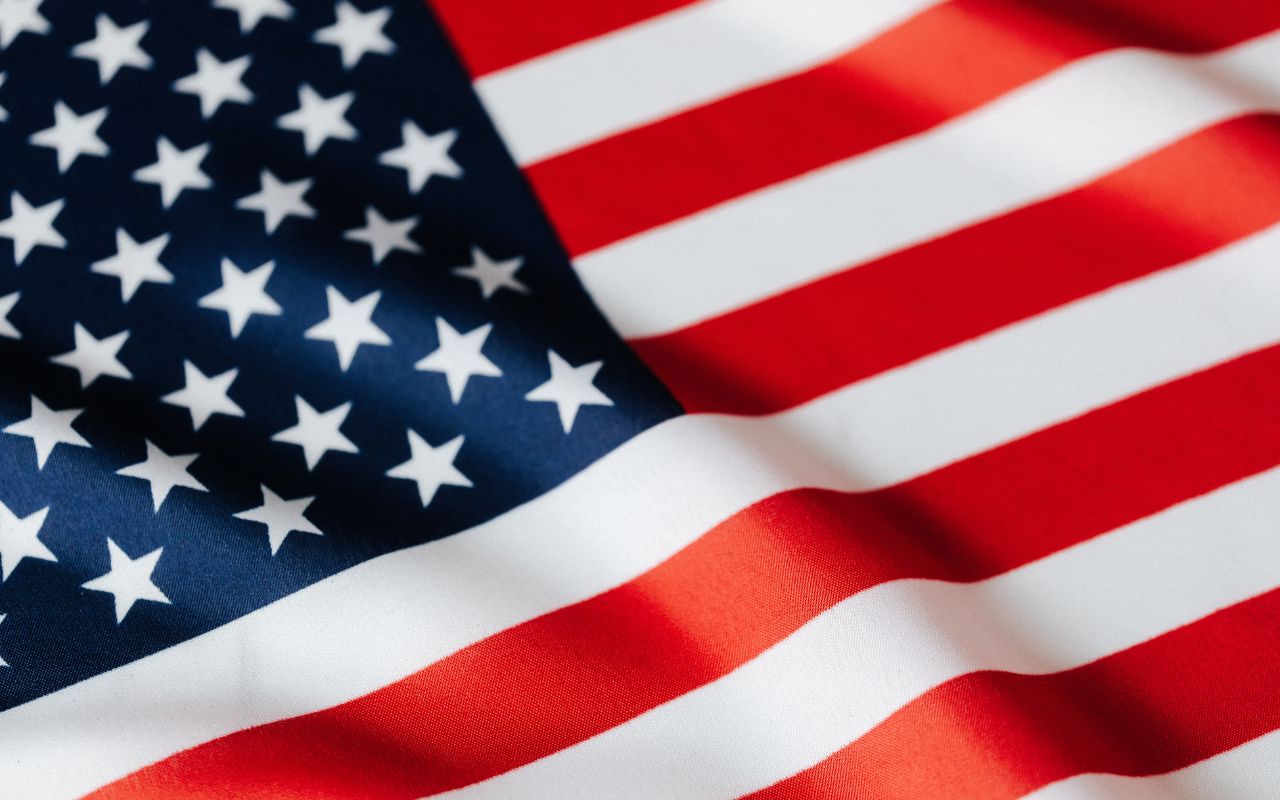
The History of Territories Purchased by the USA Explains American Expansion and Helps Understand Donald Trump’s Interest in Greenland.
The idea of incorporating new territories is not a novelty in U.S. politics. By publicly advocating the possibility of buying Greenland, a territory that belongs to the Kingdom of Denmark, President Donald Trump reignited a historical debate about territorial expansion.
For experts, Trump’s rhetoric directly aligns with practices adopted since the 19th century, when the United States used territorial purchases as a strategic tool to grow economically and geopolitically.
Greenland and the Echo of an Ancient Expansionist Policy
According to historian Walter A. McDougall of the University of Pennsylvania, “Trump’s policies remind us of the promised land tradition of the Monroe Doctrine.”
-
US focuses on Brazil to break China’s dominance in rare earths, after Pentagon activates a $200 billion plan targeting strategic magnets used in missiles and electric cars.

-
Orbiting at just 250 km from Earth and capturing images with centimeter resolution, the KH-11 KENNEN has become the largest spy eye of the American government since the Cold War.

-
The secret behind the most coveted whiskies: how single malt, bourbon, and rye whiskey have won over consumers, auctions, and sophisticated bars

-
With a wingspan of 24 meters and weighing 27 tons, the C-2 Greyhound is a military aircraft capable of landing on aircraft carriers at 240 km/h and stopping in just 2 seconds, transporting cargo and passengers at sea for over five decades.


Created in 1823, this doctrine asserted that the Western Hemisphere should be free from European interference, serving as an ideological basis for U.S. expansion.
Another historical parallel is noted by Jay Sexton of the University of Missouri.
“As is the case with Greenland, Washington claimed it needed to control the territories before they fell into the hands of other powers.” This logic was applied repeatedly throughout American history.
Before the Purchases: Wars, Treaties, and Displacements
Even before major territorial acquisitions, the United States was already expanding its borders through wars, international treaties, and diplomatic agreements.
Indigenous peoples were subjected to or displaced, while European powers negotiated areas deemed strategic.
However, the direct purchase of sovereign territories became one of the most effective and symbolic methods of national growth.
This model consolidated much of the current map of the United States.

The Purchase of Louisiana: The Turning Point
The first major acquisition among the territories purchased by the USA occurred in 1803, when President Thomas Jefferson decided to purchase from Napoleonic France the vast territory of Louisiana.
At the time, Napoleon Bonaparte had already abandoned his plans for an overseas empire after the revolt of enslaved people in Haiti.
Without strategic interest in the region, France agreed to sell the territory for US$ 15 million.
The deal nearly doubled the size of the United States and secured control of the Mississippi River and the port of New Orleans, which were crucial for trade and national security.
The Advance Over Mexico and Expansion to the Pacific
In the 1840s, the notion of “Manifest Destiny” dominated American politics. President James K. Polk argued that the United States should reach the Pacific Ocean, even if it meant armed conflict.
The war against Mexico ended in 1848 with the signing of the Treaty of Guadalupe Hidalgo.
The USA paid US$ 15 million, but, as Jay Sexton points out, “the Mexicans would never have agreed to cede the territories if they hadn’t lost the war. It was a forced sale.”
Mexico lost more than half of its territory, leaving a lasting national trauma.
The Gadsden Purchase and Internal Interests
Just a few years later, in 1853, the Gadsden Purchase took place, also known as the La Mesilla Sale.
The United States acquired a strip of land south of Arizona and New Mexico for US$ 10 million.
The main goal was to facilitate a transcontinental railroad through the southern part of the country. Sexton explains that internal political interests influenced the decision:
“Southern slaveholders wanted a railroad that would reach the Pacific without benefiting the free states in the North.”
Alaska: From Historical Error to Strategic Asset
Among all the territories purchased by the USA, Alaska comes closest to the current debate about Greenland.
In 1867, the USA purchased the territory from Russia for US$ 7.2 million. The decision, led by Secretary of State William Seward, was heavily criticized.
At the time, newspapers called the operation “Seward’s Folly.” Decades later, the discovery of gold, oil, and Alaska’s strategic role during the Cold War transformed the purchase into one of the most advantageous deals in American history.
Virgin Islands: The Last Territorial Purchase
The last territorial acquisition by the United States occurred in 1917 when the country purchased the U.S. Virgin Islands from Denmark for US$ 25 million.
The interest was linked to security in the Caribbean during World War I.
Interestingly, as part of the agreement, the USA committed not to oppose the expansion of Danish interests in Greenland—a point that has now returned to the center of international debate.

The Past Helps Explain the Present
Although Greenland is not for sale and polls indicate local population rejection, Trump’s rhetoric shows how the history of territories purchased by the USA continues to influence American foreign policy.
The trajectory of expansion through purchases, wars, and treaties reveals that territorial interest has always been part of the national project of the United States.
Thus, the current discussion does not arise out of nowhere: it is yet another chapter in a long history that has helped shape one of the world’s greatest powers.
Source: BBC





-

-

-

4 people reacted to this.