Portuguese
  Spanish


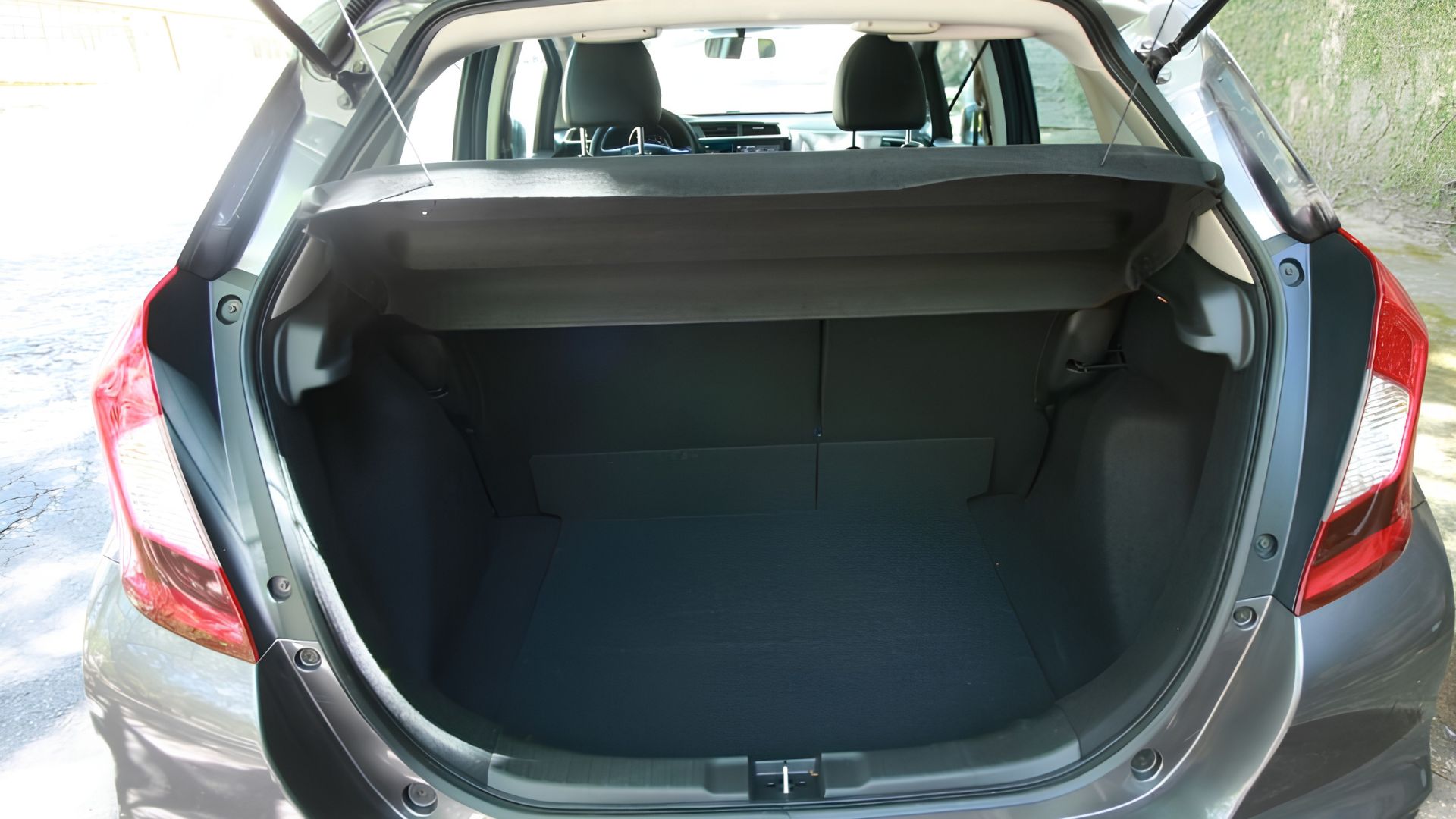

Used Honda Fit combines Magic Seat system, surprising interior space, economical i-VTEC engine, and rare versatility in the Brazilian market.
The Honda Fit was discontinued in Brazil in 2021, but it remains one of the most versatile used cars ever sold in the country. Even years after the end of national production, Honda’s hatchback still attracts attention for delivering a rare combination of interior space, balanced fuel consumption, mechanical reliability, and a modular seating system that many current compact SUVs cannot replicate.
Among the models produced from 2014 to 2019, the Fit became known mainly for the Magic Seat system, a technology that allows different internal configurations to expand the transport of large, tall, or long objects. The result is a compact car on the outside but extremely flexible on the inside.
While many consumers focus only on modern compact SUVs, the Fit continues to appear as a rational alternative for those seeking space, urban practicality, and low consumption without needing to move to larger and more expensive vehicles.
-
End of an era in Brazil: beloved sedan by Brazilians is discontinued despite having a 2.0 engine with 151 hp, CVT transmission, 466-liter trunk, and up to 650 km of range.

-
New Law Proposal in Brazil Could Heavily Penalize Drivers: Dangerous Overtaking May Become a Serious Offense with Fines Increased Tenfold and a 12-Month License Suspension; Update on 2026 Progress

-
Electric Revolution: Watts W125 Motorcycle Offers 160 km Range, 90 km/h Speed, and Affordable Price Starting at $3,000
-
General Motors Replaces Over a Thousand Workers with 50 Cobots at Electric Vehicle Plant, UAW Union Criticizes Move Amid Industry’s Automation Push



The Magic Seat system transformed the Honda Fit into one of the most versatile cars in Brazil
The Fit’s great differentiator has always been the Magic Seat system. The technology allows the rear seats to fold and lift in different ways to maximize the car’s internal use.
According to official Honda material, the system has specific modes called Utility, Long, Tall, and Refresh. Each configuration completely changes the internal space depending on the type of object being transported.


In Utility mode, the rear seats fold almost completely, expanding the trunk to up to 1,045 liters in the third-generation Fit.
In Tall mode, the rear seats can be lifted vertically, freeing up internal height to transport tall objects behind the front seats. The system became practically a signature of the model in the Brazilian market.
The Fit could transport objects that many compact SUVs cannot accommodate
One of the points that most surprised Honda Fit owners was precisely the ability to accommodate unusual volumes for a compact hatchback.
With the seats folded, the car could carry bicycles, large televisions, bulky boxes, and long objects that would normally require larger SUVs or utility vehicles.
In Long mode, the front seat also participates in the configuration, allowing the transport of long items across part of the cabin.
This flexibility made the model famous among families, self-employed professionals, and consumers who needed urban practicality without sacrificing internal space.
The 1.5 i-VTEC engine became another strong point of the model
Between 2014 and 2019, one of the most sought-after versions of the Fit used the 1.5 16V SOHC i-VTEC FlexOne engine.
According to Honda, the engine delivered up to 116 hp with ethanol and 115 hp with gasoline, associated with the CVT or manual transmission depending on the version.

The set became known for its smooth operation, progressive responses, and good energy efficiency for a family urban car.
Additionally, the Fit also carried Honda’s traditional reputation for mechanical robustness and predictable maintenance when the vehicle received proper servicing.
The fuel consumption still draws attention even years after the launch
Data from the Brazilian Vehicle Labeling Program shows that versions of the Honda Fit 1.5 CVT could achieve up to 12.3 km/l in the city and 14.1 km/l on the highway with gasoline.

These numbers remain competitive even compared to various modern compact models currently sold in Brazil.
Efficient consumption has always been one of Fit’s strongest arguments because the car managed to combine good internal space and practicality without requiring large engines or high consumption.
For many used car buyers, this keeps the model interesting, especially given the increase in fuel prices in recent years.
The internal space helped the Fit become a reference among compact cars
Even being a compact hatch, the Honda Fit became known for delivering an extremely well-utilized cabin.
The position of the fuel tank below the front seats helped free up space at the rear and allowed the functioning of the Magic Seat system. The result was a car with an internal feel far superior to its external size.
This made the model stand out especially among small families, urban drivers, and consumers who needed practicality for trips or daily routine.
The model went out of production, but remains valued in the used car market
Even after the end of national production, the Honda Fit remains relatively valued in the Brazilian semi-new market.
Models between 2014 and 2019 appear in the Fipe Table of May 2026 generally between R$ 50,000 and over R$ 80,000 depending on the version, engine, mileage, and condition.
The appreciation happens precisely because the car built a strong reputation involving versatility, economy, and mechanical reliability.
Moreover, many consumers began to look for used models known for low mechanical headaches instead of betting only on more recent cars.
The Honda Fit became a kind of “anti-SUV” in the Brazilian market
While the Brazilian market strongly migrated to compact SUVs in recent years, the Fit ended up becoming almost a rational counterpoint to this trend.
Even smaller on the outside, the hatch offered extremely intelligent internal solutions and excellent space utilization.
In many cases, the expanded trunk and seat modularity delivered more real practicality than larger and more expensive compact SUVs. This helped the model maintain a loyal fan base even after going out of production.