






 Portuguese
  Spanish


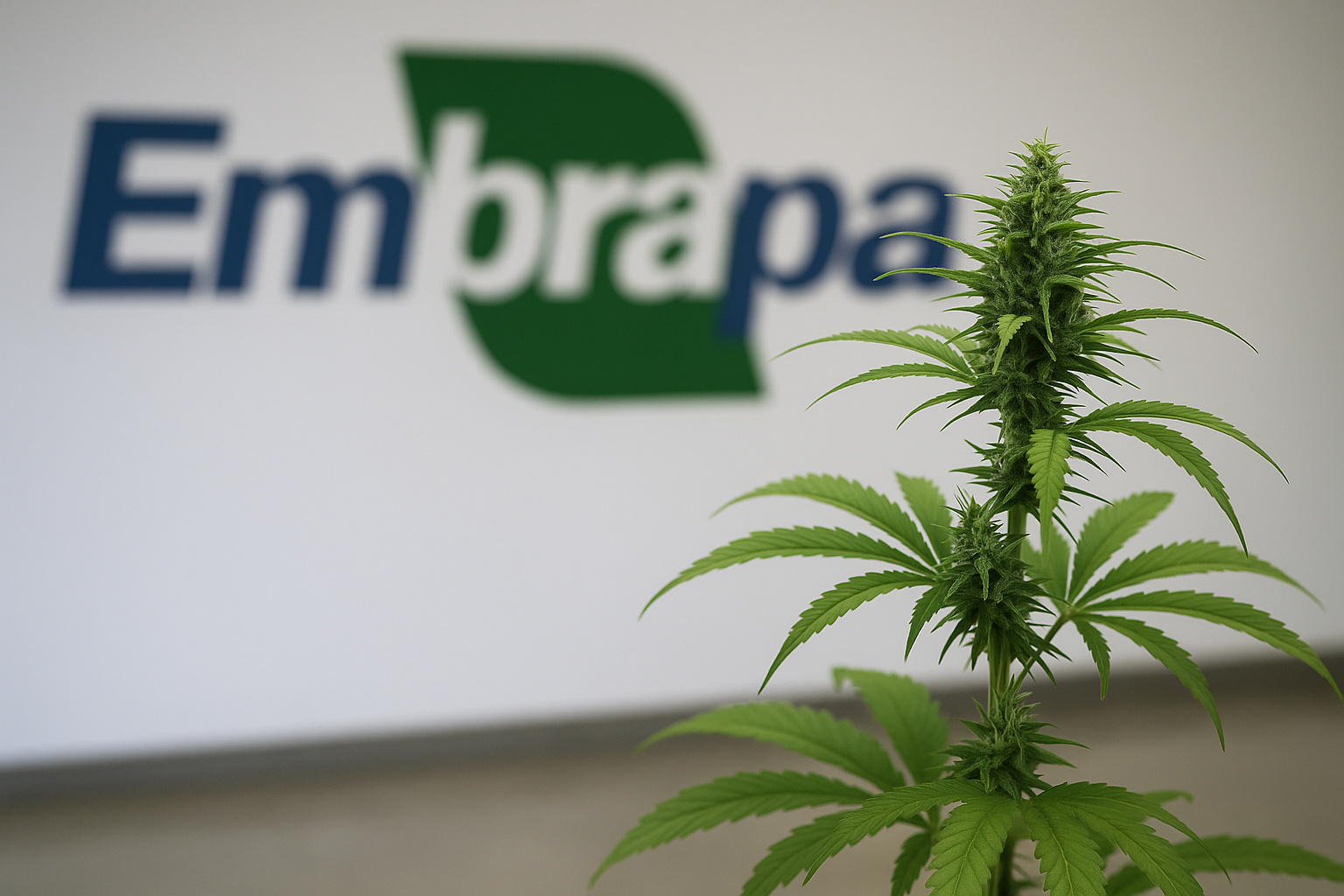


Anvisa Authorizes Embrapa Research with Cannabis and Reinforces Advances in Science in Brazil. Understand What Changes.
The expansion of research with Cannabis in Brazil has gained a new chapter after Anvisa authorized, this week, that Embrapa conducts studies on cultivating the plant for scientific purposes.
The release, announced after a technical evaluation and conditioned to on-site inspections, takes place in Brasília and marks a strategic advancement for the country, which seeks to strengthen its knowledge production, develop its own technologies, and keep up with the global movement surrounding cannabis.
The decision was made because, according to the Agency, only science can ensure safety, control, and rigor in investigating this type of material.
-
China Develops Custom 140-Ton Electric Mining Truck with 770 kWh Swappable Battery, Deploys 290 Units in Xinjiang’s Largest Zinc Mine

-
Meta to Launch Arena, a New Prediction App Targeting 3.56 Billion Users, Competing with Polymarket and Kalshi

-
Scientist Challenges Famous Human Evolution Theory, Argues Homo Sapiens Evolved Gradually Over Thousands of Years
-
15-Year-Old American Builds Ocean Generator with PVC Pipe and 3D-Printed Propeller for $12, Wins National Prize, Presents at White House, and Makes Forbes 30 Under 30 List




According to Anvisa, although the authorization allows restricted cultivation for research, no derived product may be marketed, reinforcing that the objective is exclusively scientific.
The measure meets strict safety and control criteria, which include specific protocols for handling, storage, and traceability of the material.
Embrapa’s Cannabis Research Gains the Green Light from Anvisa
The decision by Anvisa opens space for Embrapa to structure lines of study focused on conservation, characterization, and improvement of the plant.
The Agency informed that the institution will undergo on-site inspection and must follow a series of requirements to ensure full safety throughout the process.
In addition, additional adjustments may be requested during the monitoring.
With the authorization, Embrapa can send only vegetative material not suitable for propagation to laboratories or research centers that are also officially authorized.
This rule avoids risks of misuse and reinforces the exclusively scientific nature of the initiative.
What Will Be Studied: Germplasm, Hemp, and Medical Applications
The structuring of the research involves three scientific fronts within Embrapa, all considered strategic by the institution:
Embrapa Genetic Resources and Biotechnology: studies focused on conservation and characterization of germplasm, an essential step to map and preserve genetic diversity;
Embrapa Cotton: pre-improvement research of hemp, especially aimed at fibers and seeds, a segment that is growing in the international market;
Embrapa Temperate Climate: development of scientific and technological bases aimed at medical uses of Cannabis.
These areas will allow Brazil to advance in botanical, agronomic, and industrial understanding of the plant. In addition, they strengthen the national innovation agenda and expand scientific support for future public policies.
Science at the Center of the National Strategy, Says Anvisa
Upon announcing the release, Anvisa reinforced that the decision seeks to strengthen the country’s technological autonomy.
“Science must guide the country. This authorization allows Brazil to produce its own knowledge, strengthens its technological autonomy, and fulfills its duty to public health and national development,” said the director of Anvisa’s Fifth Directorate, Thiago Lopes Cardoso Campo.
The statement echoes the understanding that the advancement of cannabis research must be conducted with responsibility, safety, and a solid scientific basis.
In this regard, Anvisa’s continuous monitoring will be essential to ensure that the entire process follows the required standards.
Why Does Embrapa Want to Research Cannabis?
Embrapa justified the request by citing the growing global interest in Cannabis, driven by economic, social, environmental, and medical applications.
In different countries, the sector already stands out for job creation, biotechnology development, and the establishment of new production chains.
Furthermore, the company stated it is fully capable of meeting all technical requirements established by Anvisa, which includes strict access control, secure storage, and scientific handling protocols.
Thus, Embrapa reinforces its position as a reference institution in Brazilian agricultural and biotechnological research.
Brazil Aims for Autonomy and Innovation Based on Science
With the authorization, the country takes an important step towards strengthening national scientific research in cannabis, aligning with international practices and promoting innovation.
The combination of Anvisa’s regulatory rigor and Embrapa’s expertise creates a secure environment for knowledge to advance without risks and with a focus on public interest.
As research evolves, it will be possible to expand the scientific database, support the formulation of public policies, and stimulate new technologies, always prioritizing science and safety.






