Portuguese
  Spanish


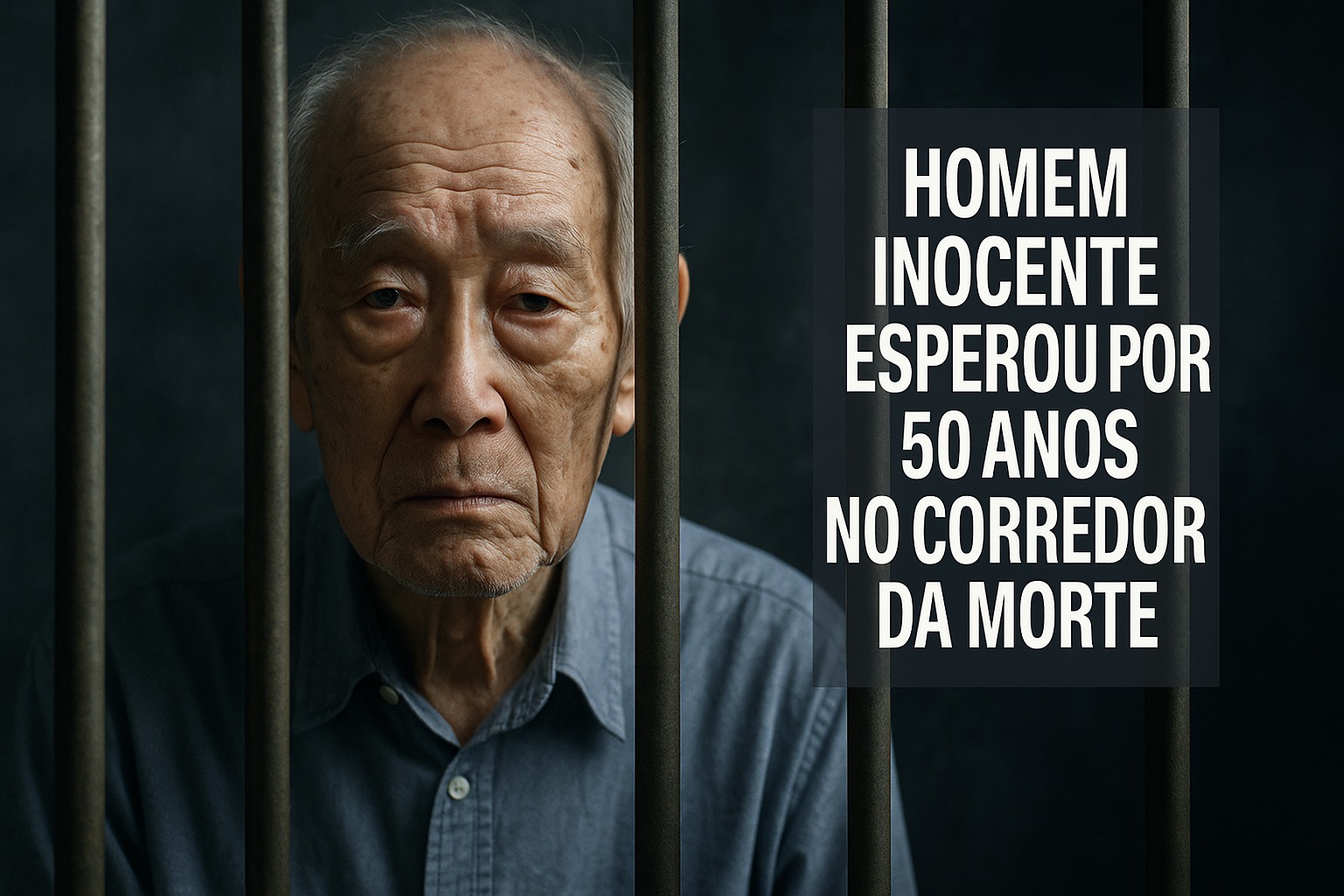


Iwao Hakamata Case Exposes Deep Flaws in Investigations, Debate on Forced Confessions, and Decades of Waiting for Justice in the Japanese System
A Japanese man who spent nearly 50 years on death row received what is considered a historic compensation in the country. Iwao Hakamata, now 89 years old, spent decades serving a sentence that was ultimately annulled because the new trial concluded that there was not enough evidence to sustain it.
He will now be compensated 217 million yen (approximately R$ 8.25 million), an amount representing the largest payment ever recorded in a criminal case in Japan.
His lawyers argued that the long detention caused deep psychological damage. Therefore, they insisted on the maximum ceiling allowed.
-
How to Prevent Brown Recluse Spider Bites: Common Hiding Spots and Free Tips to Reduce Risks

-
Natto: The Unusual Japanese Superfood Gaining Popularity on Social Media and Driving Record Exports
-
Brazilian Mayor Goes Undercover as Homeless for 24 Hours to Assess Public Services

-
15-Year-Old Entrepreneur Malu Lira Publishes 20 Children’s Books on Financial Education, Earns $500,000, and Expands Her Project to the Amazon Rainforest




They stated that no other death row inmate had waited so long for execution, which exacerbated his mental condition.
Court Decision and Acknowledgment of Damages
Judge Kunii Koshi accepted the arguments and recognized extremely severe physical and psychological damages.
Additionally, he ordered the government to bear the full compensation. The decision concluded one of the most well-known legal trajectories in the country.
Hakamata had been sentenced in 1968. He was accused of murdering his boss, the boss’s wife, and the couple’s two children.
The case gained significant attention because the accusation involved multiple deaths and a fire that destroyed the family’s home.
Suspicions That Changed Iwao Hakamata’s Fate
Years later, doubts arose about how the investigation was conducted. Lawyers and supporters claimed that evidence may have been planted.
Additionally, they pointed out that the DNA found on the victims’ clothing did not match Hakamata’s.
These inconsistencies paved the way for a rare new trial.
In 2014, he left prison after nearly half a century of detention. Since then, he had been living under the care of his older sister, Hideko, who spent decades advocating for his innocence.
The Acquittal and Public Impact
In September of last year, hundreds of people gathered in front of the Shizuoka court. The judge announced the acquittal amid applause and shouts of banzai. The scene symbolized the end of a wait that was far too long.
Hakamata did not attend due to his fragile mental state. He had also been released from all previous sessions precisely because of the same condition.
Even in his absence, his acquittal was celebrated as a milestone that exposed flaws in the Japanese justice system.
Origin of the Accusations and the Contested Confession
The crime for which he was tried occurred in 1966. At the time, he was working in a miso processing factory.
The bodies of the boss, his wife, and the children were found after a fire at the family’s residence in Shizuoka, west of Tokyo. All had stab wounds.
The authorities said that Hakamata killed the family, set fire to the house, and stole 200,000 yen. He initially denied it.
Later, he confessed to the crime but claimed that the confession had been coerced. He reported beatings and interrogations lasting up to 12 hours a day.
Consequences for the Justice System
The lawyers insisted for years that the investigation was flawed. Therefore, they requested a new trial repeatedly. The process only started again last October, after a long wait.
The case raised debates about forced confessions and the slow pace of judicial reviews in Japan.
It also rekindled discussions about the death penalty and detention conditions in the country.
The information is from the BBC.