






 Portuguese
  Spanish


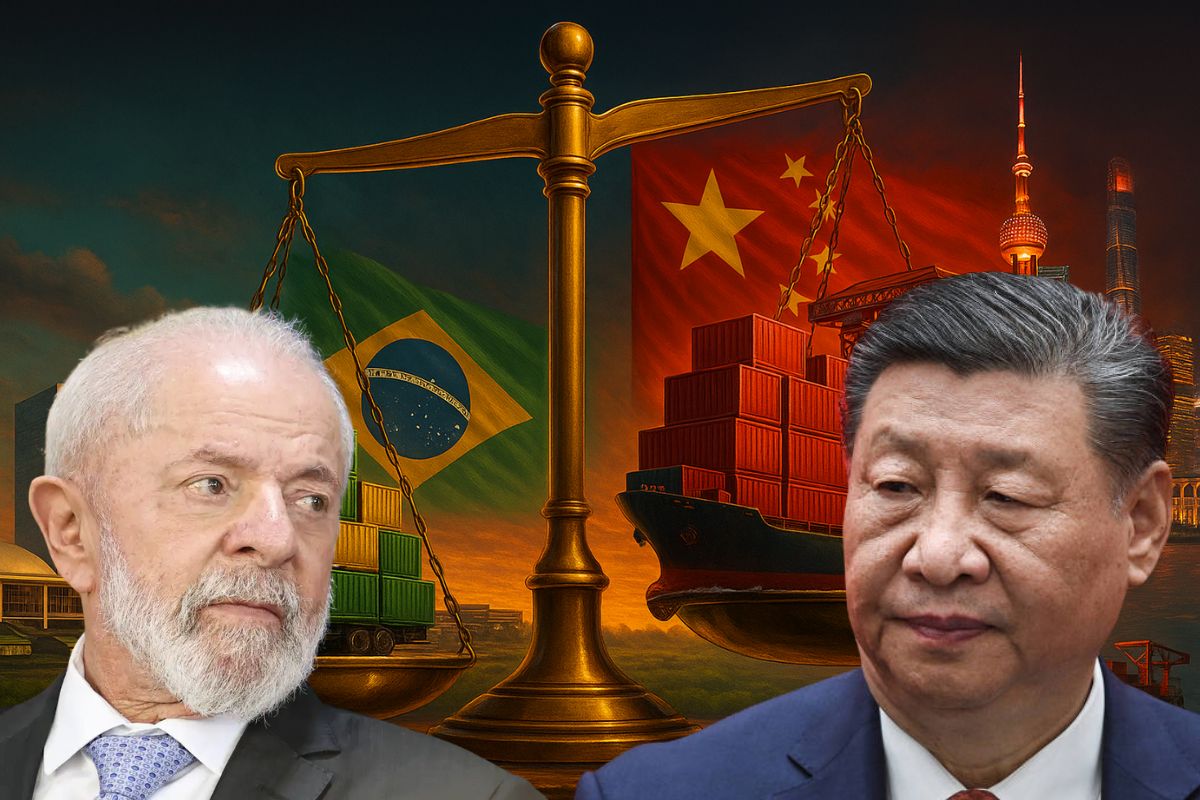


China Concentrates Unequal Trade With Brazil: 40 Thousand Companies Import, Less Than 3 Thousand Export, and 75% of Sales Are Soybeans, Ore, and Oil.
A study by the Brazil-China Business Council (CEBC) in partnership with the Foreign Trade Secretariat (Secex) revealed a worrying fact: although China is the largest destination for Brazilian exports, the number of companies importing from the country is nearly ten times greater than those that manage to sell there.
According to the survey, 40,059 Brazilian companies imported from China in 2024, while less than 3 thousand exported.
This discrepancy reveals a structural pattern of dependence and shows that Brazil still cannot occupy a space proportional to the weight of the Chinese market.
-
Brazilian Executive Takes Helm of Heineken Amid Decline in Sales: 51-Year-Old Has Led Operations Across Four Continents and Managed a $7 Billion Empire

-
Brazilian Actress Turns Waxing Clinic into 400-Unit Chain with $50 Million Revenue, Sells Stake After 13 Years
-
Major Company Shuts Down 70-Year-Old Factory in Brazil, Relocating Production and Impacting Over 100 Families
-
Toyota Shuts Down Brazilian Plant After Producing Over 1 Million Vehicles, Plans Special Destination for Final Corolla Produced Following $2.1 Billion Investment and Expansion.


Mass Imports, Concentrated Exports
According to the portal Terra, the growth of Chinese imports is impressive: since the year 2000, the number of companies bringing products from China to Brazil has increased 11 times.
The Chinese supply everything from electronics and industrial machines to textiles and various inputs, forming a broad and diverse basket.
On the other hand, Brazilian exports to China have quadrupled in number of companies since 2000, but still remain highly concentrated.
Soybeans, iron ore, and oil represented 75% of Brazilian sales to China in 2024, highlighting the strong dependence on commodities.
Comparison With Other Partners
The contrast becomes even clearer when observing other markets. Mercosur had 11.7 thousand Brazilian exporters, the United States had 9.6 thousand, and the European Union had 8.6 thousand.
These blocs buy less in absolute values than China, but offer a more balanced space for different sectors and companies.
Despite this, there are signs of diversification: in 1997, Brazil exported 673 different items to China; in 2024, the number increased to 2.5 thousand products, according to the common nomenclature of Mercosur. Nevertheless, commodities continue to dominate trade flows.
Strategic Challenge for Brazil
In the presentation of the study, the Foreign Trade Secretary, Tatiana Prazeres, emphasized that China continues to offer opportunities, but that Brazil needs public policies capable of expanding the export base:
“More companies, more regions, and more workers need to benefit from the opportunities in the Chinese market, which are still growing.”
The major Brazilian challenge is to break the dependence on a few products and increase the participation of small and medium enterprises in trade with China.
Without this, the country remains a supplier of raw materials and an importer of technology and manufactured goods, in a relationship that generates surplus but maintains vulnerabilities.
Do you think Brazil should invest more in diversification to reduce dependence on China? Or is focusing on commodities still the best strategy?
Leave your opinion in the comments.





Do jeito que vai daqui a pouco Brasil será um satélite da China É absurdo
É lamentável ver e ouvir tanta “disputa” entre ideologias que não constroem a nosso favor. Essa ganância e esse egoísmo nos prejudicam enormemente. Temos que focar, cada um em si mesmo, e ser individualistas para crescermos como uma coletividade. Só podemos ser fortes se nos unirmos, independentemente se esquerda ou direita, para crescer como nação. A vida parece um jogo, mas não é futebol, não adianta torcer por um time que não joga para o coletivo, para a equipe. O TIME. O nosso time, antes de ser humano, deve ser verdadeiramente brasileiro. Esqueçamos o ódio que implantaram nas nossas mentes através da mídia. Busquemos a verdade acima de tudo.
Amanhã, nossos filhos, netos, bisnetos estarão aqui, o que deixaremos a eles? Covardia ou resistência? Pense nisso!!
Respondendo à pergunta. Sim, o brasil deve na mais que nunca investir na sua indústria e tecnologia. Ao invés de exportar matéria prima, vender o produto industrializado, seja qual segmento for, principalmente na área de energia. Refinar o petróleo. Mas em contra medida, manter o comércio bilateral a todo vapor, e quando tiver tecnologia para industrializar, focar nessa evolução