






 Portuguese
  Spanish


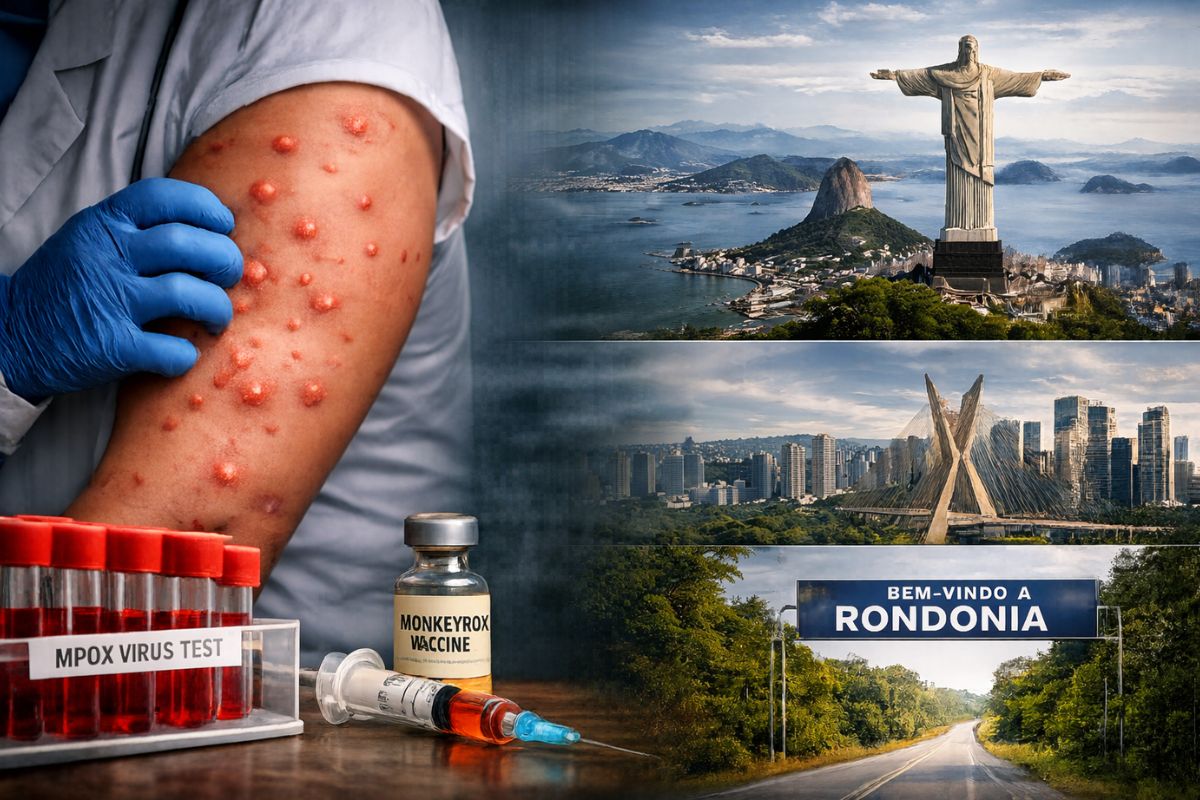


The Ministry of Health Affirms That Mpox Has 62 Confirmations in the Country and Is Concentrated in the Southeast, with São Paulo Adding 44 Records, Followed by Rio de Janeiro with 9; Rondônia Appears in Third with 4, While 180 Suspected Notifications Continue Under Surveillance and Examinations in the SUS, Without Deaths.
Mpox returned to the radar right after Carnival, when the Ministry of Health detailed where the confirmed cases are in Brazil. So far, there are 62 confirmations, with São Paulo Leading by a Wide Margin and a scenario that, according to the monitoring itself, does not have serious cases or deaths recorded.
In the background of these numbers, there are also the suspected notifications under investigation, some of which have already been discarded and others still awaiting examinations, with special attention to the volume of pending analyses in São Paulo. The logic is clear: identify early, guide isolation, and reduce the risk of transmission, using the SUS network as the entry point.
Where Mpox Is More Concentrated and What the Numbers Show
The data released places the Southeast region as the main focus of confirmations, driven by São Paulo, which accounts for 44 of the 62 records.
-
China Develops Custom 140-Ton Electric Mining Truck with 770 kWh Swappable Battery, Deploys 290 Units in Xinjiang’s Largest Zinc Mine

-
Meta to Launch Arena, a New Prediction App Targeting 3.56 Billion Users, Competing with Polymarket and Kalshi

-
Scientist Challenges Famous Human Evolution Theory, Argues Homo Sapiens Evolved Gradually Over Thousands of Years
-
15-Year-Old American Builds Ocean Generator with PVC Pipe and 3D-Printed Propeller for $12, Wins National Prize, Presents at White House, and Makes Forbes 30 Under 30 List




This means more than 70% of the confirmations concentrated in a single state, a weight that helps understand why local surveillance tends to be stricter and why the flow of examinations becomes a sensitive point for quick decisions.
Following are Rio de Janeiro, with 9 records, and Rondônia in third, with 4 confirmed cases, showing that the distribution is not limited to a single region.
There are also confirmations in Bahia (2) and isolated records in Rio Grande do Sul, Santa Catarina, and the Federal District (1 case each).
The pattern does not suggest clinical severity now, but reinforces the need to trace contacts and guide behavior, because that is how the transmission chain is interrupted.
Suspected Notifications, Examinations in Analysis, and the Reason for the Alert to Remain On
Besides the confirmed cases, the country is monitoring 180 suspected notifications, with 57 already discarded. This number of suspicions serves as an operational thermometer: it says less about “how many cases exist” and more about how much the system is being activated to investigate compatible signs, collect samples, and close the diagnosis with the laboratory.
In detail, São Paulo was still awaiting the results of more than 70 examinations in analysis, which helps explain why statistics may fluctuate as these results come in.
In another report presented by the authorities, there is a reference to more than 120 suspected notifications still awaiting laboratory exams, which points to the same foundational scenario: a backlog of analyses in progress.
In practical terms, what changes for the population is simple: suspicion is not confirmation, and the safest response continues to be to seek guidance, reduce close contacts when there are signs, and follow isolation recommendations when indicated.
How Mpox Is Transmitted and Why Direct Contact Becomes the Central Point
Mpox is a viral disease whose transmission occurs mainly through intimate or direct contact with the skin of infected individuals, especially when there are lesions.
This focuses on what happens in real life: physical proximity, skin-to-skin, and exposure to injured areas increase the risk, even without the person immediately realizing they are facing a compatible condition.
Another described route is the sharing of personal items, such as clothes and towels, which can act as a bridge when used by different people without precautions.
There is also a warning that infected individuals can transmit the virus through saliva, which sends a direct message for common interaction situations: kissing and very close contact may increase the chance of transmission if the person is infected. It’s not about panic; it’s about understanding the mechanism to make simple and effective daily decisions.
Signs and Symptoms: What to Observe Without Paranoia and When to Seek Care
The signs and symptoms described include fever and headache, muscle pain and weakness, in addition to skin lesions. These lesions can appear as blisters or rashes, often starting on the face and potentially spreading throughout the body.
The key point is the combination of the overall condition with skin changes, as that is what typically triggers suspicion and leads to investigation.
In practice, the most prudent recommendation is: if compatible symptoms arise, especially with lesions, seeking evaluation helps guide actions, reduce exposure of others, and expedite diagnosis when necessary.
The earlier the identification, the sooner isolation measures are implemented, which are crucial for containing transmission without relying on complex solutions.
Surveillance in the SUS, Isolation, and What It Means “There Are No Serious Cases” Now
The Ministry of Health claims to maintain continuous monitoring and emphasizes that the SUS is equipped to identify new episodes early, prioritizing rapidly isolating patients and containing the transmission chain.
This strategy is classic in surveillance: detect, guide, isolate, and monitor, so that an event with few cases does not gain momentum.
At the same time, it is important to understand the phrase that brings relief and responsibility: despite the increase in notifications, there are currently no recorded deaths or severe hospitalizations.
This does not eliminate the need for caution, as the official guidance reminds that, in critical scenarios and without proper monitoring, the disease can be dangerous and the mortality rate can reach 10%.
In other words: the current scenario is controlled, but it depends on a quick response and adherence to isolation when there is confirmation.
Treatment and Prevention: What Can Be Done with Precision and Without Promises
According to the Pan American Health Organization, there is still no specific medication for Mpox. Therefore, care focuses on relieving symptoms and preventing complications, with monitoring according to each individual’s needs.
The goal is to navigate the period of illness safely, avoiding worsening, intense discomfort, and new transmissions.
For those diagnosed, the guidance is to remain in total isolation until the wounds heal completely, which can take two to four weeks.
In daily life, prevention translates into direct actions: avoiding intimate or direct contact with the skin of someone with lesions, not sharing personal items such as towels and clothes, and seeking guidance at the first sign of compatibility. This type of care may seem simple, but it changes the course of an outbreak, as it cuts off transmission opportunities before the numbers grow.
With these data concentrated in a few states, what catches your attention more: São Paulo having over 70% of the confirmations or Rondônia appearing in third place even far from the Southeast axis?
And, considering your daily life, do you think the people around you take seriously the idea of avoiding kissing, close contact, and sharing towels when there is suspicion of Mpox?






