






 Portuguese
  Spanish


Survey with data from ANEEL shows 10 parks and 235 wind turbines entering the technological update phase in the pioneering state of Brazilian wind energy. Composite blades still do not have large-scale recycling in the country, but local recyclers and global manufacturers are already moving to prevent them from becoming a mountain of waste.
The wind turbine alert gained concrete numbers on September 30, 2025, when the series of reports Cycle of Winds, from the newspaper Tribuna do Norte, published a survey based on data from the National Electric Energy Agency, ANEEL. The cross-referencing showed that 10 wind farms in Rio Grande do Norte, totaling 235 wind turbines and 705 blades, will enter the technological update phase by 2032, in which each plant will need to be repowered with new equipment or decommissioned, that is, completely dismantled.
The bill is due now because the state’s first wind turbine parks began operating in 2005 and the typical lifespan of these equipment is between 20 and 30 years. According to the regional director of Senai in Rio Grande do Norte, Rodrigo Mello, in an interview with Tribuna do Norte, the wind turbines of that first generation have become outdated compared to current machines with up to seven times greater capacity, which forces the park owners to decide between modernizing or dismantling their structures in the state that helped inaugurate wind energy on a commercial scale in Brazil.
Why wind turbine blades are the Achilles’ heel of recycling
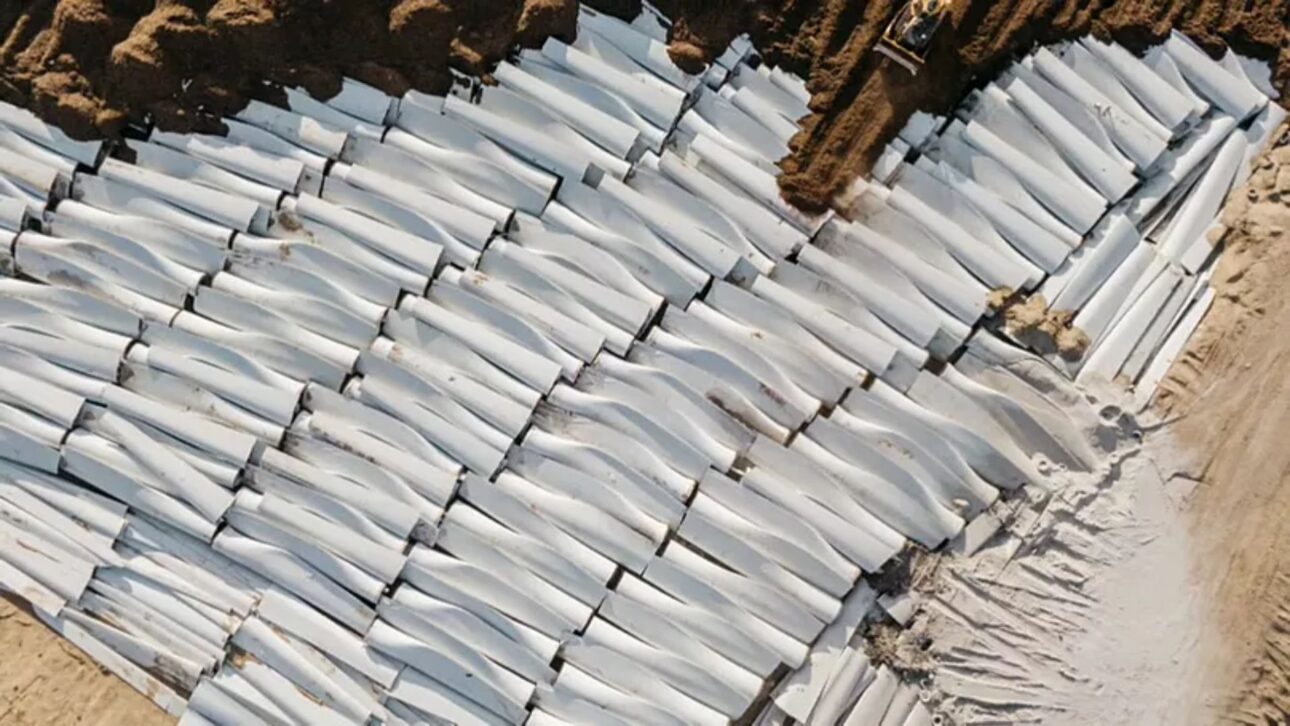
They are manufactured from composite materials, a combination of fiberglass with chemically bonded plastic resins, designed to withstand decades of strong winds and weather conditions.
-
Engineers Develop Jacket That Converts Air Humidity Into Drinkable Water, Producing Up to 900 ml Daily for Hikers, Campers, Rescuers, Rural Workers, and Military in Remote Areas

-
NASA Plans to Repurpose Mars Rover for Lunar Mission, Sending a 1-Ton Nuclear-Powered Vehicle to Explore the Moon’s South Pole Without Solar Dependence
-
Early Humans Made Beds Nearly 200,000 Years Ago in African Caves, Study Reveals

-
Japanese Smart Bike Detects Cyclist’s Intent to Turn and Potential Falls


This same resistance makes the separation of materials expensive and complex, and the scientific reference study on the subject classifies the blades as currently considered non-recyclable on a large scale.
This study, authored by researchers Pu Liu and Claire Barlow from the University of Cambridge, and published in 2017 in the scientific journal Waste Management, projects 43 million tons of accumulated blade waste worldwide by 2050.
According to the projection, which is a scenario estimate and not a foregone conclusion, China would account for 40% of this volume, Europe for 25%, and the United States for 16%.
Modern blades exacerbate the logistics problem: the largest already exceed 100 meters in length and are usually located in remote areas, which increases the cost of transportation to any final destination.
What Rio Grande do Norte is already doing with retired blades
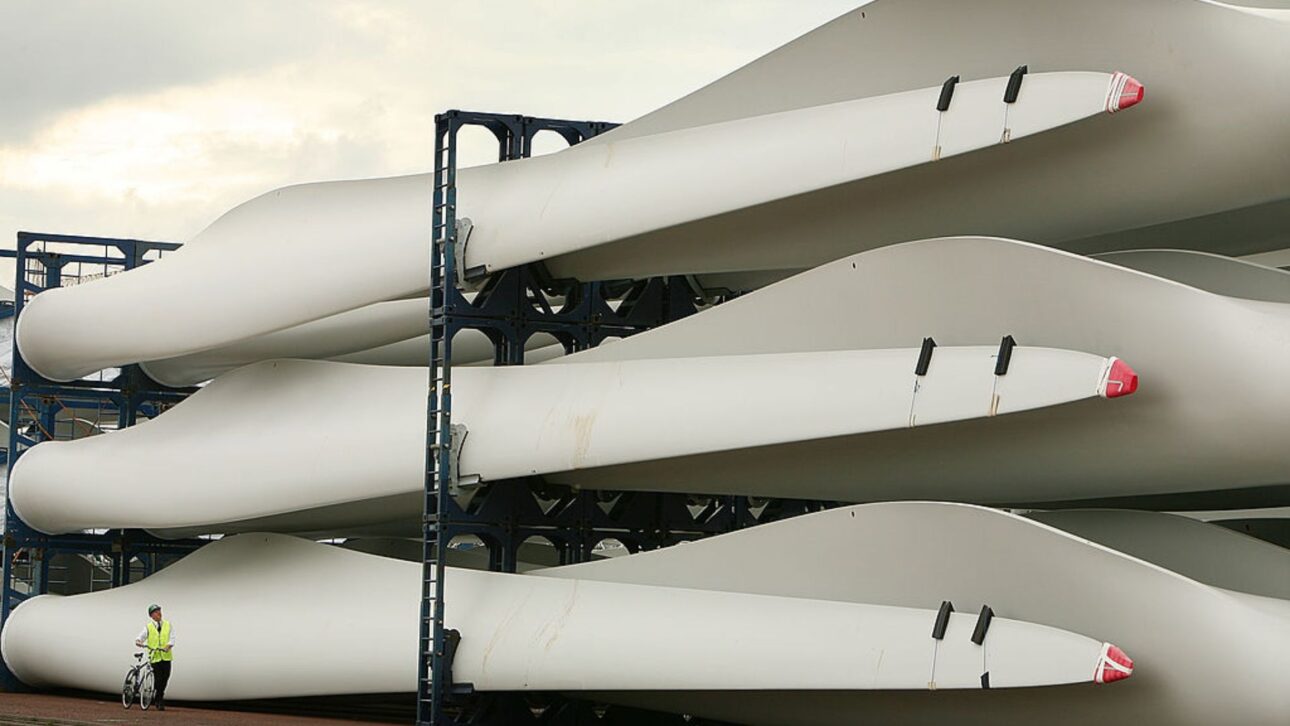
According to Tribuna do Norte, Recicla RN, led by entrepreneur Etelvino Patrício, has the capacity to store 3,000 tons of materials per month in an area of 13,000 square meters and is preparing to absorb the dismantling of parks from other states as well.
Regarding the blades, Patrício was straightforward in the interview with the newspaper: the material has low added value and few applications, and for now, the solution found is to crush, segregate, and send the waste to cement factories, which use it as fuel and raw material in co-processing.
The recycling industry in Rio Grande do Norte already employs about 5,400 people directly and 18,000 indirectly, according to data published by Tribuna do Norte.
The president of the Fiern System, Roberto Serquiz, stated to the same newspaper that decommissioning could become an entry point for new businesses in the state, citing the expectation of a future steel mill capable of absorbing the steel from the dismantling, a project that remains in the realm of intentions and not construction.
Manufacturers promise recyclable blades but the goals are still announcements
The giants of the wind turbine sector know that the liability threatens the clean energy discourse and have started to react.
According to the Portuguese engineering institute INEGI, Siemens Gamesa launched the RecyclableBlade, presented by the company as the world’s first fully recyclable blade, while the Danish company Vestas announced the ambition to produce zero-waste turbines by 2040, and LM Wind Power, part of the GE group, set the same goal for 2030.
All these commitments are claims and timelines from the manufacturers themselves, still without independent large-scale verification.
Outside the factories, creative reuse is gaining ground as a partial alternative.
INEGI cites the use of entire blades in bridges, playgrounds, urban furniture, and shelters, solutions that extend the material’s life but do not solve the projected volume for the coming decades, as each reused blade is an exception compared to the thousands that will go out of operation.
The stakes for Brazilian wind energy
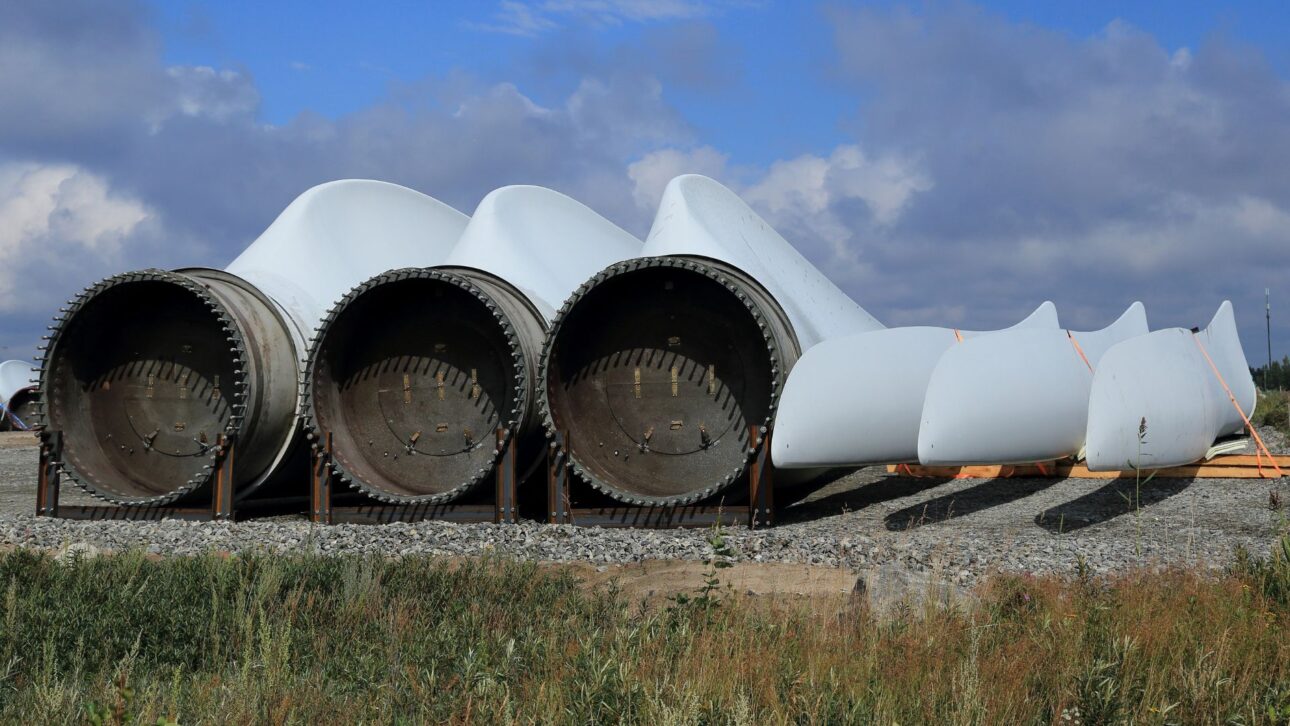
In 2024, Brazilian wind turbines generated 107.6 terawatt-hours, a growth of 12.2% over the previous year, a volume equivalent to 16.7% of all energy injected into the National Interconnected System, according to ABEEólica.
The Northeast concentrates most of this generation, and it is precisely there that the first wave of dismantling will occur.
ABEEólica itself acknowledges that the decommissioning debate is still recent in Brazil.
According to the association, in a statement to Tribuna do Norte, manufacturers and operators are seeking references in countries that already carry out park dismantling to adapt the solutions to the national reality.
The time window exists: most of the 705 blades in Rio Grande do Norte will only go out of operation over the coming years, and the decision between repowering or decommissioning each park still depends on a case-by-case economic analysis, as explained by Senai to the report.
Clean energy also needs to solve its own waste
The history of wind turbines repeats the script that the sector has already seen with electric car batteries and solar panels: the technology that solves an environmental problem creates another that needs to be managed in time.
The difference is that, in the case of the blades, Brazil has the chance to establish the recycling chain before the mountain of waste forms, transforming the end of the parks’ useful life into industry, employment, and raw material.
And you, do you believe that Brazil will manage to structure the recycling of the blades before the problem grows, or will we repeat the mistakes of other sectors? Leave your opinion in the comments and join the conversation, always with respect for different opinions.




43 million tons by 2050! This is an urgent problem, I’m glad that the industry and governments are working to fix this huge problem. While we consider how these 705 blades fit into the context of global pollution, it might be helpful to remember that without a significant global energy transition to renewables we will dump at least One Trillion tons of carbon into the atmosphere by 2050. That’s 1,000,000,000,000 tons of which oil and gas will be responsible for 900,000,000,000 tons or 90%. I’m so glad that the waste from a wind turbine is in a solid state and not complex gasses in every layer of our atmosphere. I’m also glad this article isn’t reporting that wind turbines are creating toxic tailing ponds, or that operations are contaminating drinking water. It would be pretty horrible news too if the company operating the wind turbines went out of business and left the citizens on the hook for their deteriorating infrastructure. The fact is, wind accounts for more than 10% of our global energy production which means that even if we increased that to 86% (the same as the energy produced by oil, gas and coal combined) it would only produce less than 15 million tons of solid waste a year and 258 million tons of lifespan emissions a year, for a total of 273 million tons of pollution a year. That’s a far cry from the 34.3 billion tons produced currently by oil and gas. In fact it approximately 0.8% the emissions. This is just some quick math with global data, but it’s a pretty stark difference don’t you think. It’s weird that there are not more headline that say “World projects 1 Trillion tons of waste from oil, gas and coal by 2050”. I wonder why that is?
43 million tons by 2050! This is an urgent problem, I’m glad that the industry and governments are working to fix this huge problem. While we consider how these 705 blades fit into the context of global pollution, it might be helpful to remember that without a significant global energy transition to renewables we will dump at least One Trillion tons of carbon into the atmosphere by 2050. That’s 1,000,000,000,000 tons of which oil and gas will be responsible for 900,000,000,000 tons. I’m so glad that the waste from a wind turbine is in a solid state and not complex gasses in every layer of our atmosphere. I’m also glad this article isn’t reporting that wind turbines are creating toxic tailing ponds, or that operations are contaminating drinking water. It would be pretty horrible news too if the company operating the wind turbines went out of business and left the citizens on the hook for their deteriorating infrastructure. The fact is, wind accounts for more than 10% of our global energy production which means that even if we increased that to 86% (the same as the energy produced by oil, gas and coal combined) it would only produce less than 15 million tons of solid waste a year and 258 million tons of lifespan emissions a year, for a total of 273 million tons of pollution a year. That’s a far cry from the 34.3 billion tons produced currently by oil and gas. In fact it approximately 0.8% the emissions. This is just some quick math with global data, but it’s a pretty stark difference don’t you think. It’s weird that there are not more headline that say “World projects 1 Trillion tons of waste from oil, gas and coal by 2050”. I wonder why that is?
Bob your obviously not looking at how much co2 is released in the manufacture or the concrete and steel and metal to make the concrete foundation and metal pillars and fiberglass blades. The co2 pollution to make these is huge. Plus they still need oil to lubicate. Then the pollution to store the dismantled blades. It’s like plastic bags. Great idea in the beginning but long term a huge issue.
Well Dick what you think is “huge”, and what I think is huge are obviously two different things. I happen to know that producing electricity with wind power will produce significantly less waste than oil, gas and coal. Let me explain myself. Land based wind power produces a total life cycle emissions of 11 grams (𝑔) of CO2 equivalent units ( 𝐶𝑂2𝑒) per kilowatt hour (𝑘𝑊ℎ). That 11 𝑔 𝐶𝑂2𝑒/𝑘𝑊ℎ, includes everything, manufacturing, erection, maintenance and decommissioning. Here are the numbers for the 3 most common materials used in energy production:
Coal: 900 𝑔 𝐶𝑂2𝑒/𝑘𝑊
Oil: 700 𝑔 𝐶𝑂2𝑒/𝑘𝑊
Natural Gas: 475 𝑔 𝐶𝑂2𝑒/𝑘𝑊
These numbers are pretty well established numbers. Sure you’ll find some disagreement on both sides of the coin, but this is known. If we objectively compare these two things we will see that the waste caused by wind is exponentially smaller than emissions of oil, gas and coal. So, the waste by wind turbines may be huge Dick, but the waste caused by oil, gas and coal are hugerer!
End-of-life should be factored in at the beginning not at the end causing huge environmental problems.
I think “huge” is a bit of an overstatement don’t you think?