






 Portuguese
  Spanish


The robots were deployed in Kunming, in Yunnan province, and are presented as three times more efficient than manual inspection, according to the developers. They reach points where drones cannot, such as near airports. The deployment happens during the gaokao, the exam that gathers millions of students in China.
China has put snake-shaped robots into operation to inspect power lines and help maintain stable electricity supply. According to a report by the South China Morning Post published on June 11, the robots coil around the lines and use cameras and sensors to detect risks such as damaged wires, worn parts, and abnormal temperatures. So far, they have covered more than 130 kilometers of cables.
According to the SCMP, the robots were deployed in Kunming, the capital of Yunnan province, and developed by the Guandu District Power Supply Department. According to the developers, the system is about three times more efficient than traditional manual inspection, although this number comes from the team responsible. The great advantage, however, appears in locations where drones have difficulty operating.
Snake-shaped robots that crawl along power lines
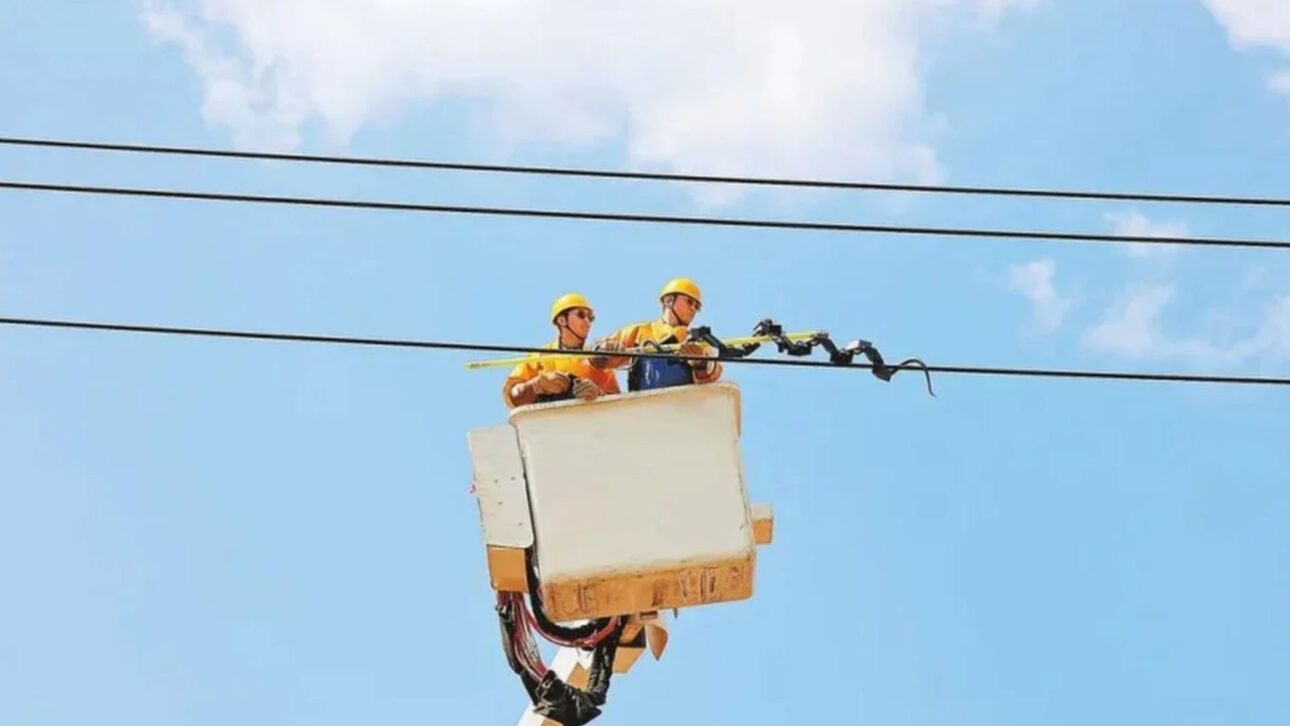
Snake-shaped robots move directly along power lines while inspecting the electrical structure. According to SCMP, equipped with cameras and sensors, they can identify faults such as broken wires, worn components, and abnormal temperature changes, which may indicate problems ahead. The operation began in Kunming and has already covered more than 130 kilometers of distribution lines.
-
São Paulo Unveils Latin America’s Largest Underground Reservoir, Holding 900 Million Liters, in the Greater São Paulo Area

-
Chinese Teen Wins Gold in Germany for Invention Turning Air Moisture into Underground Irrigation in Drought-Stricken Areas

-
Desertification Threatens Brazil’s Caatinga: 85% of Semi-Arid Region Affected, 30 Million at Risk, and Efforts Underway to Restore 10 Million Hectares by 2045
-
Brazil Secures Second Place at WorldSkills 2024 in Lyon, with 64 Young Professionals and 8 Medals, Including Gold from a Rio de Janeiro Hairdresser





According to the system developers, linked to the Guandu District Power Supply Department, inspection with the robots is about three times more efficient than manual inspection. According to SCMP, this reduces the need for heavy and dangerous work while improving the reliability and safety of the network. It is worth noting that this efficiency gain is an estimate from the responsible team itself.
Where drones can’t reach
The main difference compared to drones is that the robots work on the cables themselves. According to SCMP, this allows them to operate in locations where drone flights are restricted, such as areas near airport no-fly zones. The robots also suffer less from high-voltage electromagnetic interference, a common problem that can affect drone control and worsen image quality.
The system helps to overcome several limitations of drone inspections. According to the report, these include restricted flight zones, dependence on weather conditions, and limited battery autonomy. By offering continuous and short-range monitoring, the robots allow utility teams to locate and resolve risks more quickly, without completely replacing drones.
How the robot moves and powers itself on the line
The secret lies in the shape of the robots. According to SCMP, the flexible body with multiple joints allows the machine to slide along power lines and navigate obstacles like insulators, reaching difficult points for both human inspectors and drones. A camera and sensors installed on the robot’s head are responsible for detecting faults and safety risks.
Another detail stands out, the robots power themselves from the line they inspect. According to the report, a contactless capture system allows the equipment to obtain electricity directly from the cables. According to SCMP, after positive tests on various transmission routes, utilities have expanded the use of robots to more complex sections of the network.
Robots, robotic dogs, and guard drones during the gaokao
Snake-shaped robots are not alone in this mission. According to the SCMP, Chinese energy companies are using a range of robotic systems, including these robots, dog-shaped robots, drones, and surveillance cameras, to monitor electrical infrastructure and maintain reliable supply during national exams. The robotic dogs operate in high-voltage environments and other dangerous locations for human workers.
The deployment coincides with one of the most sensitive moments in the Chinese calendar. According to the SCMP, about 12.9 million students took the gaokao, the national higher education entrance exam, considered one of the most important in the country, and stable energy supply is seen as crucial during this period. Still, it is worth noting that this is an expanding regional deployment, and efficiency gains come from the developers, with the robots complementing, not replacing, drones and fixed systems.
The snake-shaped robots show how China is mixing robotics and energy to monitor the power grid in a way that drones cannot always achieve. They slide along the cables, feed off the line itself, and help detect failures before they turn into blackouts, in an effort that gained momentum during the gaokao. For now, it is an expanding regional solution, with efficiency still measured by the developers themselves, but it points to a path for power line inspection.
And you, what do you think about using snake-shaped robots to inspect power lines? Share your thoughts on this technology and exchange ideas with other readers about the use of robots in dangerous tasks.


Outstanding innovation for effectiveness and safety for men and infrastructure