Portuguese
  Spanish


Milestone in Garpenberg shows how autonomous trucks are already operating on a real scale in mining, with heavy transport, controlled routes, and specialized technical support, while expansion to open roads still depends on rules, infrastructure, and operational conditions different from closed industrial areas.
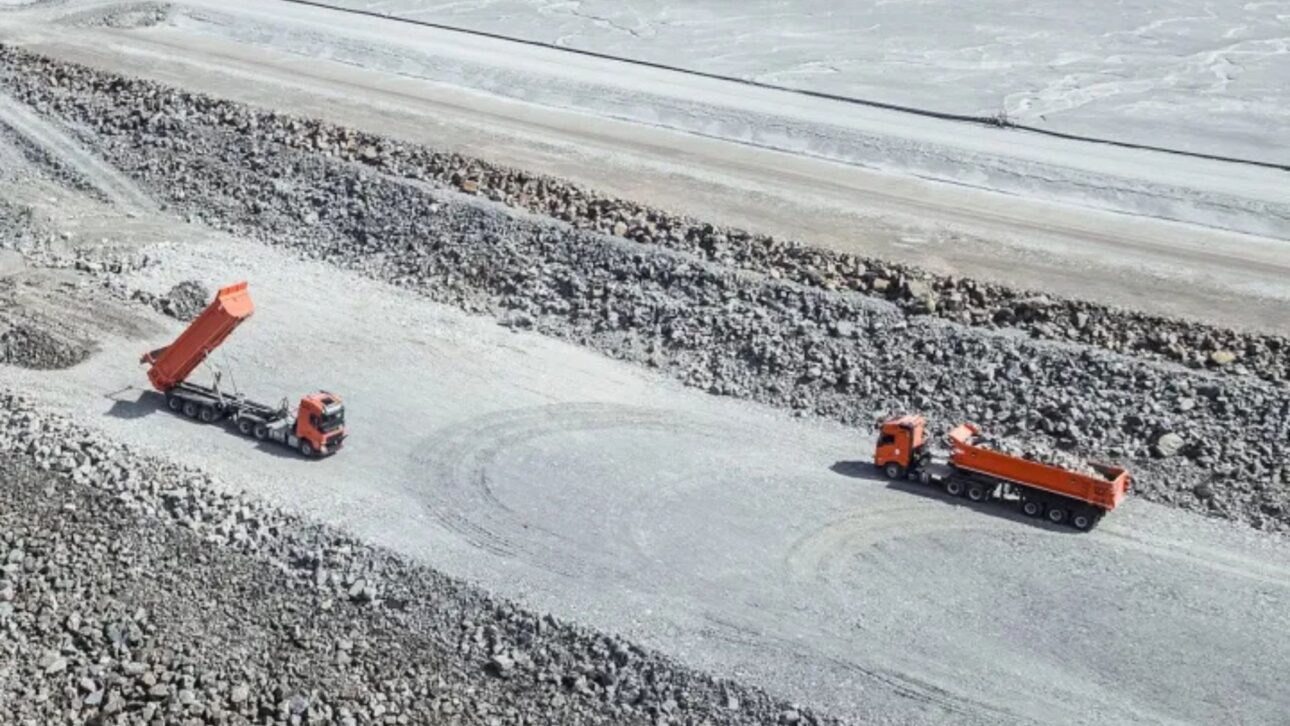
Volvo Autonomous Solutions and the Swedish mining company Boliden completed, on June 4, 2026, an autonomous transport project in Garpenberg, Sweden, in which trucks carried about 700 thousand tons of rock material to reinforce a local dam and raise its wall.
According to a statement released by Boliden, the operation totaled more than 11 thousand transport cycles and covered approximately 56 thousand kilometers, in an industrial application carried out within a controlled mining area, with defined routes and specialized technical support.
Started in 2023, the project was part of the first stage of a memorandum of understanding signed between the two companies to test and implement autonomous solutions in operations related to mining, focusing on material transport within Boliden’s facilities.
-
Scientists Warn San Andreas Fault Holds Highest Seismic Tension in 1,000 Years, Renewing Fears of “The Big One” Megaquake on U.S. West Coast

-
Brazil Advances with 14-X Hypersonic Project to Achieve Speeds Over Mach 5, Surpassing Concorde, After Two Decades of Research

-
Archaeologists Uncover 1,200-Year-Old Gold Treasure in Saudi Arabia, Ownership Remains a Mystery
-
Brazilian Startup Converts Tucumã Seeds into Bioplastic for Bicycle Pedals, Cups, and Construction Materials



In Garpenberg, the material came from a quarry located within the mining operation itself and was destined for a structure associated with the company’s tailings area, where it was used to reinforce the dam and increase the height of the wall.
The operation used Volvo FH trucks adapted for mining and equipped with a virtual driving system developed by Volvo, in a configuration that integrates vehicles, infrastructure, operational management, maintenance, and technical monitoring during activities.
Although the title highlights the circulation of driverless vehicles, the project’s configuration itself shows that the technology does not eliminate all human participation, as the operation depends on support, supervision, maintenance, and control to function on an industrial scale.
Volvo’s Autonomous Trucks in Garpenberg
The technology used in Garpenberg is called Autona / earth, a solution from Volvo Autonomous Solutions aimed at mines and quarries, with application in controlled operational environments and pre-structured routes for heavy load transport.
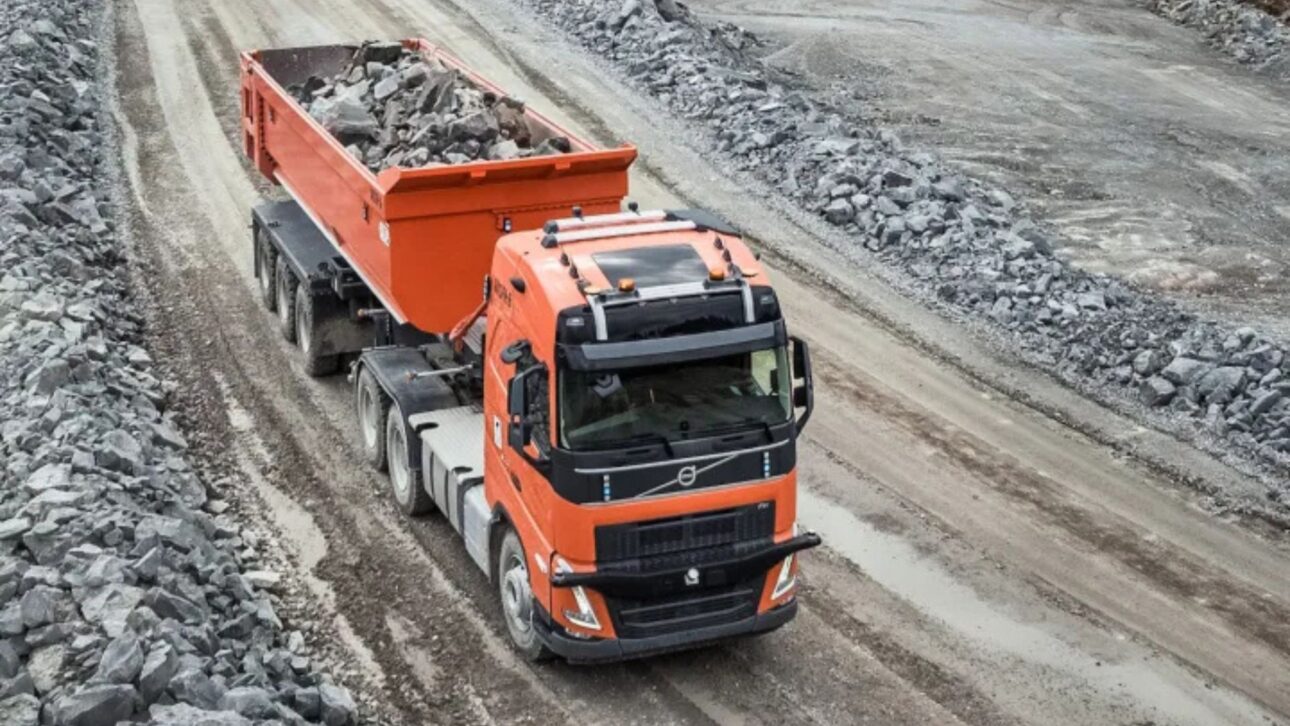
Within this model, the system integrates autonomous trucks, virtual driver, fleet management, local infrastructure, and operational support, in addition to resources aimed at keeping the vehicles circulating within the parameters defined for each facility.
In the Swedish operation, the trucks transported the rock fill material between the quarry and the dam, on an internal route within the industrial area, without circulation on public roads or exposure to common road traffic.
According to Volvo, the Autona / earth was developed for confined and controlled environments, using sensors such as LiDAR, radar, cameras, and real-time data to guide navigation and support vehicle driving.
The companies compared the 700,000 tons transported to the volume needed to fill about 280 Olympic swimming pools or to the combined weight of approximately 100 Eiffel Towers, as a way to gauge the scale of the operation.
This comparison allows understanding the scale of the transport carried out, but does not change the nature of the application, which took place in a defined industrial environment, with prepared infrastructure and conditions different from those found on public highways.
Partnership between Volvo and Boliden in mining
The collaboration between Volvo Autonomous Solutions and Boliden was announced on September 13, 2023, when the companies reported that the first application would take place at the Garpenberg mine, in south-central Sweden.
At the time, Volvo and Boliden indicated that the autonomous transport of rock material would support the long-term storage capacity of the tailings facility, linking the project to a specific operational need of the mining company.
Under the initial agreement, Volvo would be responsible for delivering a complete solution, including vehicles, hardware, software, control room, maintenance, repairs, and training, according to the information released by the companies during the partnership presentation.
Boliden would be responsible for adapting the operation and building the necessary infrastructure to receive the autonomous trucks on site, which reinforces that the application depends on prior preparation of the environment, not just the replacement of the driver inside the cabin.
The project structure indicates that the technology is not limited to the truck that “drives itself,” as it requires route coordination, vehicle monitoring, fleet data management, and operational predictability in mining areas.
In such facilities, operational risks and control requirements differ from highways, which explains the choice of enclosed environments as one of the first application fronts for heavy-duty autonomous trucks.
Safety in Mines and Quarries
Volvo states that autonomous transport can reduce workers’ exposure to hazardous areas in mines and quarries by shifting part of the direct driving activities to supervised systems and operational support functions.
According to the company, the solution was designed to improve safety by keeping people away from higher-risk environments, as well as allowing greater regularity in the transport flow between loading and unloading points.
Ingo Sturmer, Technology Director at Volvo Autonomous Solutions, stated that autonomy brings benefits to mining, especially by removing people from dangerous areas and contributing to the safety and efficiency of operations.
According to the executive, the volume transported in Garpenberg demonstrated that the system “works on a large scale” in real operations, under conditions applied to the mining industry’s customer environment.
From Boliden, Rikard Mäki, Head of Electrification and Automation at the company, stated that the company was pleased to reach the mark of 700 thousand tons transported autonomously at the Garpenberg tailings facility.
The executive also said that the mining company intends to continue seeking safe and productive solutions in partnership, aiming to develop mining operations aligned with the company’s technological goals.
Autona / earth and Transport as a Service
Autona / earth is offered by Volvo as Transport as a Service, a model known by the acronym TaaS, in which the provider delivers technology, operational structure, and support for integration into the client’s environment.
In this format, the company manages part of the technical and regulatory complexity required to put autonomous transport into operation, including software, hardware, infrastructure, monitoring, and maintenance components associated with the operation.
Volvo’s proposal is to allow mining and quarry companies to adopt autonomous trucks without fully assuming the process of implementation, validation, maintenance, and technical supervision necessary to keep the system active.
According to the company’s description, the solution can be adjusted to the needs of each location, with route definition, operational domain, infrastructure, training, and integration into the client’s existing operation processes.
In the presentation of Autona / earth, Volvo states that the trucks can operate without human intervention in controlled environments, while the virtual driver takes over navigation within the limits defined for the application.
Even in this model, the operation remains linked to a structure of control, monitoring, maintenance, and support, which keeps workers in roles different from direct driving, but still necessary for the system’s functioning.
Automation advances in closed industrial areas
The Garpenberg case reinforces the use of autonomous trucks in closed industrial areas, especially in mining, where routes tend to be more predictable and environmental control is greater than on open roads.
This scenario differs from common road transport, which involves open traffic, pedestrians, other vehicles, urban variations, specific regulatory requirements, and less controlled situations along the circulation routes.
For this reason, the Volvo and Boliden project represents a relevant application in a specific operation, but it does not allow us to assert that truck drivers will be broadly and immediately replaced in general road transport.
The experience took place in a prepared environment, with a partnership between companies, dedicated infrastructure, specific operational rules, and technical control designed for the internal transport activity in a mining facility.
In operations of this type, automation can shift part of the human functions to areas such as supervision, maintenance, fleet management, data analysis, and operational safety, as technology advances within controlled environments.
Wider-scale adoption will depend on the combination of safety, predictability, regulatory compliance, adequate infrastructure, and operational cost, factors that vary according to the sector, type of route, and level of environmental control.