





 Portuguese
  English
  Spanish
  4 min of reading
  0 comments


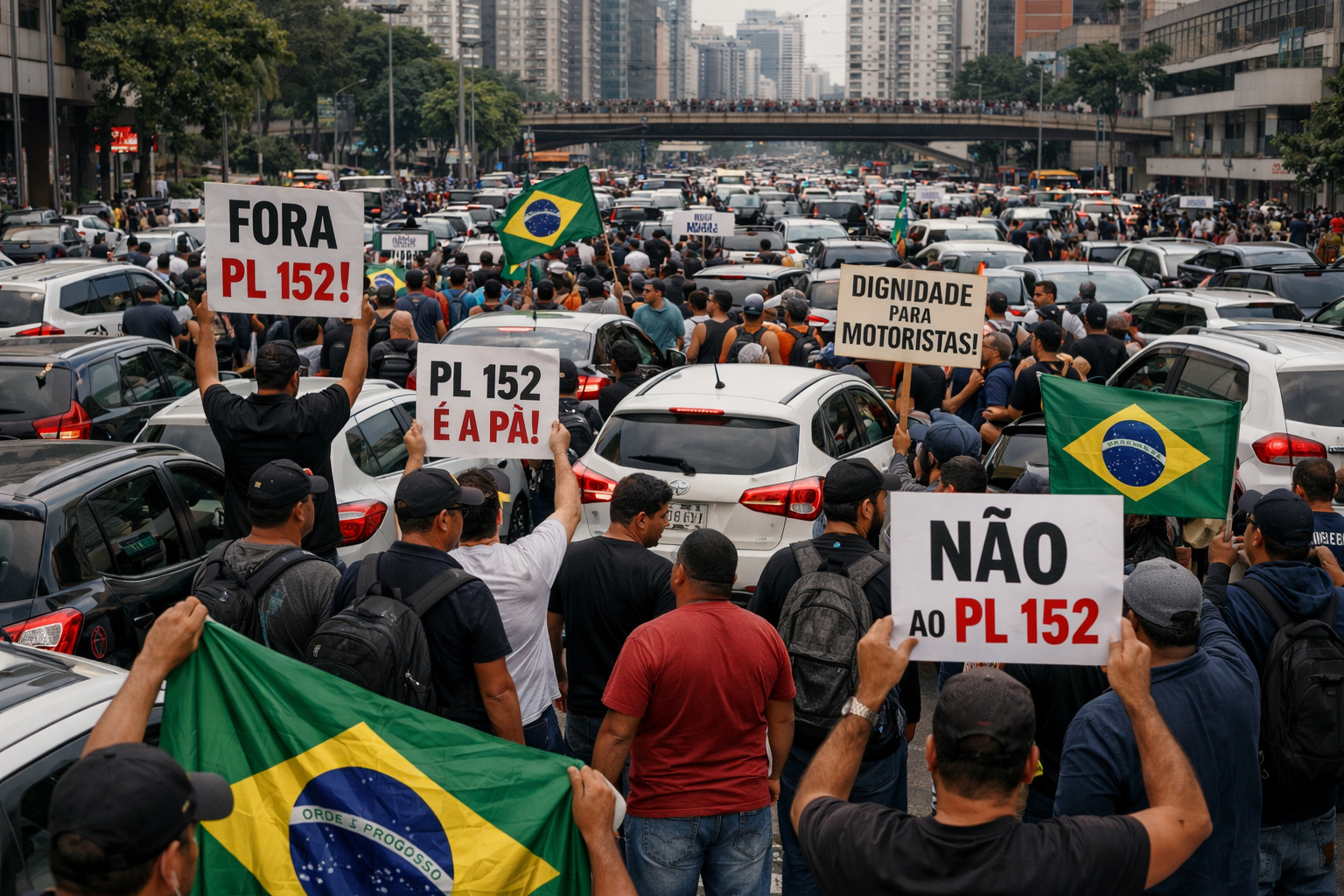
Mobilization gains strength in several cities and exposes growing tension between workers and digital platforms amid a decisive vote in Congress
The growing dissatisfaction among app drivers reached a new level this Tuesday (04/14), when professionals from across the country decided to strike in a national stoppage against Complementary Bill 152. The mobilization, which occurs simultaneously with the analysis of the text in the Chamber of Deputies, reveals a scenario of tension, uncertainty, and a struggle for better working conditions in the sector.
The information was released by “Tribuna do Paraná”, which closely follows the developments of the strike and the impacts of the proposal under discussion. Additionally, other sources also highlight that the movement has gained support in various regions, demonstrating the strength of the category.
In Curitiba, for example, drivers organized a gathering at 9 AM in Barigui Park. Following that, the protesters marched towards the Civic Center, increasing the visibility of the protest. At the same time, in São Paulo, workers gathered from 10 AM at Charles Miller Square, heading towards Uber’s headquarters in the western zone of the capital.
-
A major Asian power makes Brazil its primary investment target, accounting for 10.9% of its global total and billions in investments.

-
The country records its first surplus in six months and hits an all-time export record, with oil and gold sharply rising, while the Middle East crisis triggers inflation in the United States and redraws the map of global energy trade.

-
Coinbase announces mass layoff of 700 employees, cuts 14% of staff amid AI wave and leads the crypto giant with operations in Brazil to a billion-dollar restructuring.

-
New import rule raises the quota to 50% in Dionísio Cerqueira, draws more trucks to the border with Argentina, and could unlock R$ 650 million in the Far West of SC


Bill 152 divides opinions and raises debate about income, autonomy, and labor rights


The Complementary Bill 152, which is at the center of the controversy, proposes to regulate the work of app drivers and delivery workers in Brazil. However, the proposal has generated strong reactions from the category, mainly for creating an intermediary figure of worker — without an employment relationship under the CLT — classified as “platformized autonomous”.
On one hand, the text guarantees freedom for the professional to manage their own time and work for multiple platforms. On the other hand, it eliminates the possibility of a traditional employment relationship, which, according to many drivers, could compromise important rights.
Furthermore, the project establishes specific remuneration rules. Among the main points is the minimum of R$ 8.50 for short trips — up to 3 km for cars and 4 km for motorcycles or bicycles. Still, the hourly rate cannot be less than the proportionate amount of two minimum wages, considering the period between accepting and completing the ride.
Another point that generates debate is the division of income: only 25% is considered the real earnings of the worker, while the remaining 75% is allocated to operational costs, such as fuel and maintenance. At the same time, platforms may retain up to 30% of the amount paid by the user — or 15% in fixed fee models.
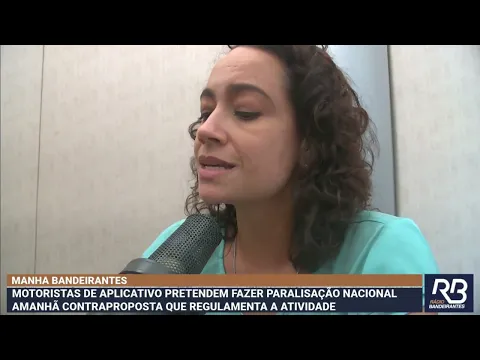
Workers demand changes and report loss of rights and rising costs
In light of this scenario, leaders of the category emphasize that the struggle goes far beyond regulation. According to Sérgio Guerra Correa, representative of drivers in Paraná and creator of the group Amigos do Guerra — which brings together about 15,000 members — the main guidance is to keep the apps turned off during the protest.
“We need to earn by kilometer and by time, in addition to having a minimum fare of R$ 10. And we also need to fight against unjust bans on the platforms,” he stated.
Additionally, workers are demanding points considered essential, such as:
- Fair remuneration per kilometer and time
- Guaranteed minimum fare
- Maximum platform fee reduced to 20%
- Defense of Labor Justice
- Classification of the category as App Transport Driver (MAT)
However, the most recent version of the project brought changes that further increased dissatisfaction. Among them are the removal of the night additional, the exclusion of a 30% bonus in December (similar to the 13th salary), and the end of the 12-hour daily work limit.
Safety, benefits, and social security take center stage in the discussion
In the field of social protection, the project also establishes new guidelines. Drivers will become mandatory individual contributors, with a contribution of 5% on the contribution salary — calculated based on 25% of gross revenue.
Meanwhile, companies must collect 20% on this same basis or opt for 5% on gross revenue in Brazil. Furthermore, the text provides for mandatory life and accident insurance with a minimum coverage of R$ 120,000.
Another benefit provided is the exemption from IPI and IOF on vehicle purchases, provided the driver proves at least 2,000 hours of service in a year. Still, points such as the mandatory “panic button” were removed from the final version, which also generated criticism.
Pressure increases and voting may define the future of the category in Brazil
In light of the imminent vote in the Chamber of Deputies, the atmosphere among workers is one of apprehension. The report from the rapporteur, Deputy Augusto Coutinho (Republicanos-PE), will be analyzed in a special committee, potentially paving the way for definitive changes in the sector.
Meanwhile, representatives of the category claim that the new text was approved without consensus. According to Leandro da Cruz, president of the Union of App Drivers of the State of São Paulo (STATTESP), the current proposal “ignores the reality and rights of workers.”
As a result, the project has come to be referred to by some as “PLP 152 of the Employers,” highlighting the level of dissatisfaction.
Furthermore, the Brazilian Association of Mobility and Technology (Amobitec), which represents companies like Uber, 99, and iFood, has not yet officially commented on the matter.
Thus, the outcome of the vote could completely redefine the future of thousands of workers across Brazil, directly impacting income, rights, and the dynamics of app-based work.








Be the first to react!