Portuguese
  Spanish


Canada reversed deficit projection and closed March 2026 with a surplus of 1.78 billion Canadian dollars after the country’s exports jumped 8.5%, driven by oil and precious metals amidst the crisis triggered by the conflict in Iran, which raised the Brent barrel to 119 dollars.
The country, which was heading for another quarter of trade deficit, found in international turbulence the unlikely fuel to turn the tide. According to information from Revista Fórum, Canada registered a surplus of 1.78 billion Canadian dollars in March 2026, the first positive result in the trade balance in six months, according to data from Statistics Canada. The country’s exports grew 8.5% and reached 72.8 billion Canadian dollars, the second highest value in the entire historical series, a result sustained by the surge in international oil and gold prices amidst the escalating conflict in the Middle East.
The turnaround was surprising because the previous projection pointed to a deficit of approximately 2.88 billion Canadian dollars. Instead of deepening the losses accumulated throughout 2025, the country reversed the negative scenario all at once, benefiting from a conjuncture that, for most global importers, means exactly the opposite: rising inflation, spiraling energy costs, and instability in financial markets. What is a crisis for some turned out to be a surplus for others.
Oil on the Rise and the Weight of the Crisis in Iran
The main driver of the Canadian surplus was the energy sector. The country’s exports of oil and derivatives grew 15.6% compared to the same period last year, reaching their highest level since 2022. The impetus came directly from the crisis triggered by the attacks of the United States and Israel on Iran, which caused an abrupt escalation in global fossil fuel prices and led the Brent oil barrel to hit 119 dollars during the peak of the conflict.
-
A city with 8,000 inhabitants will receive R$ 25 billion to host the largest single-stage pulp mill in the world, with a production of 3.5 million tons per year and a cost of R$ 45 million.

-
He left India for Oman in 1976, entered through the door of luxury finishes, and took Sobha to the premium real estate market in the Middle East.

-
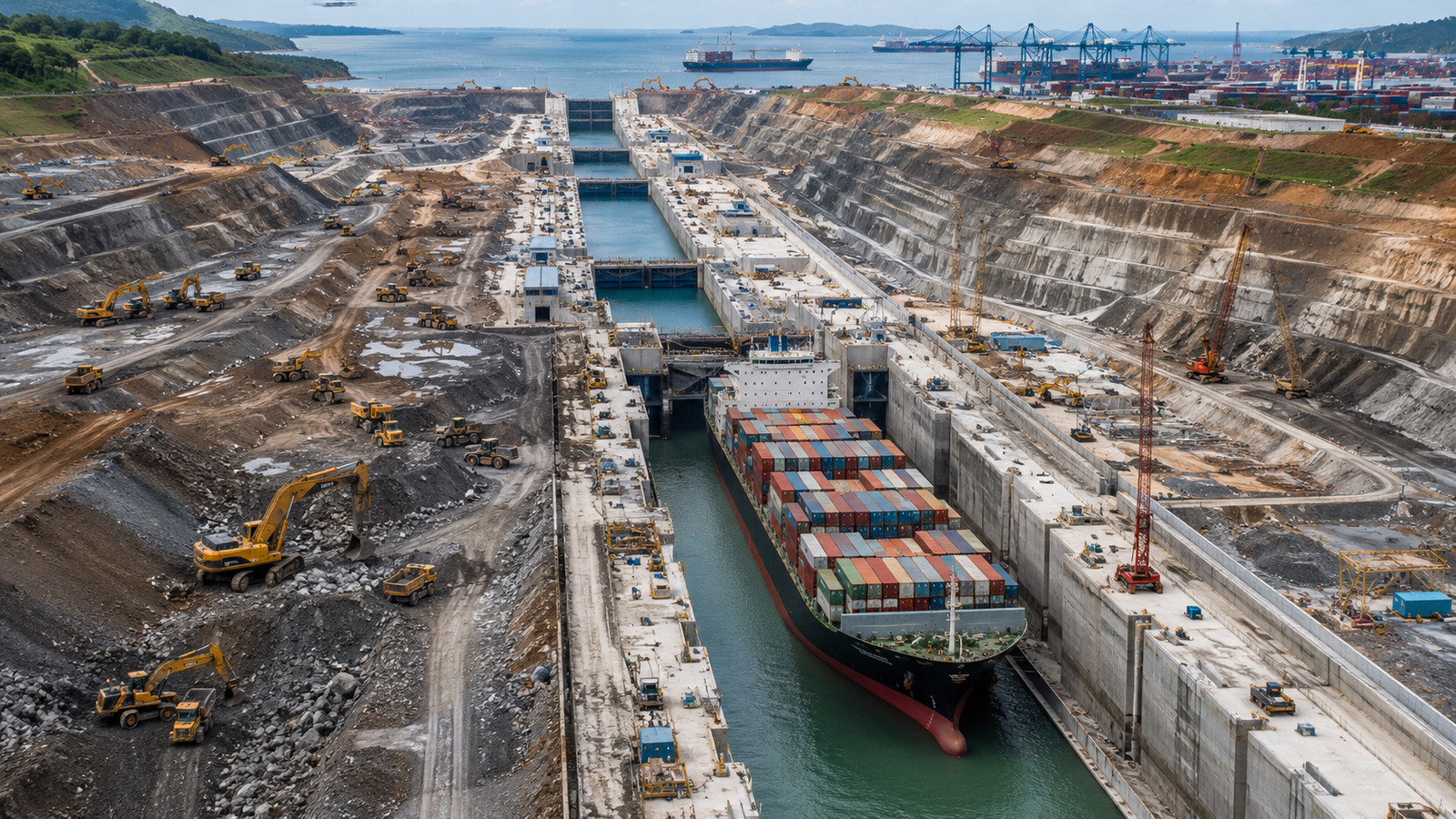
China wants to impress the world once again with a mega canal featuring giant locks, deep waters, and space for the largest ships, in a project aimed at shortening journeys, reducing queues, and rivaling the Panama Canal in global trade.

-
Brazil saved US$ 32.4 billion in 2025 by switching from fossil to renewable energy and only ranked behind China and the United States on the IRENA global podium.



Canada holds the position of the fourth largest crude oil producer in the world and is among the largest suppliers to the North American market. According to the International Energy Agency, more than 80% of Canadian oil exports are destined for the United States. This concentration makes the country a kind of inverted thermometer for global energy crises: while importing nations suffer from the rising cost of the barrel, Canada converts the same increase into export revenue and trade surplus. The paradox becomes even more evident when observing that the physical volume of the country’s total exports decreased by 0.3% during the period, meaning that the positive result stemmed exclusively from price increases, and not from a real increase in production.
Record Gold and Export Diversification
Oil did not act alone in building the surplus. Exports of metallic and mineral products reached a record high of 15.3 billion Canadian dollars, representing an annual increase of 24%. Gold led this advance after reaching historical highs of 5,400 dollars per ounce during the most tense period of the conflict in Iran, although subsequent corrections adjusted the price to about 4,700 dollars per ounce.
The main destination for Canadian gold exports was the United Kingdom, consolidating a trade route that gains relevance as the country seeks to reduce its dependence on the North American market. Canada is home to some of the largest global mining companies in the precious metals segment and functions as one of the main global financial centers for trading these minerals. Analysts attribute the surge in gold to a combination of speculative movements on the metal, historically considered a stable store of value, and a shift in US monetary expectations amidst a scenario of sharp dollar volatility in the international market.
American Tariffs and the Historic Decline in US Dependence
A detail that went relatively unnoticed in the surplus announcement reveals an ongoing structural change. In March 2026, the United States accounted for only 66.7% of the country’s total exports, the lowest relative participation of Canada’s largest trading partner in the entire historical series. For a country that historically directs more than 70% of its foreign sales to a single buyer, this decline signals a reconfiguration of trade routes that could become permanent.
The decline in American participation is directly linked to tariffs imposed by Washington on a wide range of Canadian products. Rates reached 50% on steel, aluminum, and copper, 35.2% on lumber, and 25% on automobiles, creating barriers that forced the country’s exporters to seek alternative buyers on other continents. The March surplus, therefore, carries a dual interpretation: the positive balance sheet result is supported by exceptionally high oil and gold prices, but the geographical composition of exports indicates that the country is adapting to a trade environment in which its main buyer has also become its biggest tariff obstacle.
Interest Rates, Inflation, and the Paradox of the Surplus
The same crisis that generated a surplus for Canada is fueling inflationary pressure in the United States, the main destination for Canadian energy exports. In March 2026, the Federal Reserve kept American interest rates in the range of 3.5% to 3.75%, interrupting the previous cycle of cuts to assess the inflationary impacts of the conflict in Iran and the slowdown in the labor market. Investors began to project new interest rate hikes until the end of 2026, a scenario that adds uncertainty about future oil demand and, consequently, about the country’s ability to maintain the export pace that sustained the surplus.
The dilemma is structural. Canada benefits from high energy prices in the short term but depends on the economic health of its largest buyer to sustain export volumes in the medium term. If American interest rates rise enough to slow down the United States economy, demand for Canadian oil could decline even with high prices, and the March surplus would become an isolated peak instead of a trend. International price instability favored the country’s trade balance this time, but the same mechanism could reverse with the same speed if the conflict subsides or if the global economy enters a recession.
And what do you think of this surplus built on the crisis of others? Do you believe the country can maintain this result, or will its dependence on oil and exports to the US take its toll? Leave your comment and say whether this commodity-based growth model is sustainable in the long term.