






 Portuguese
  Spanish
  4 min of reading
  0 comments


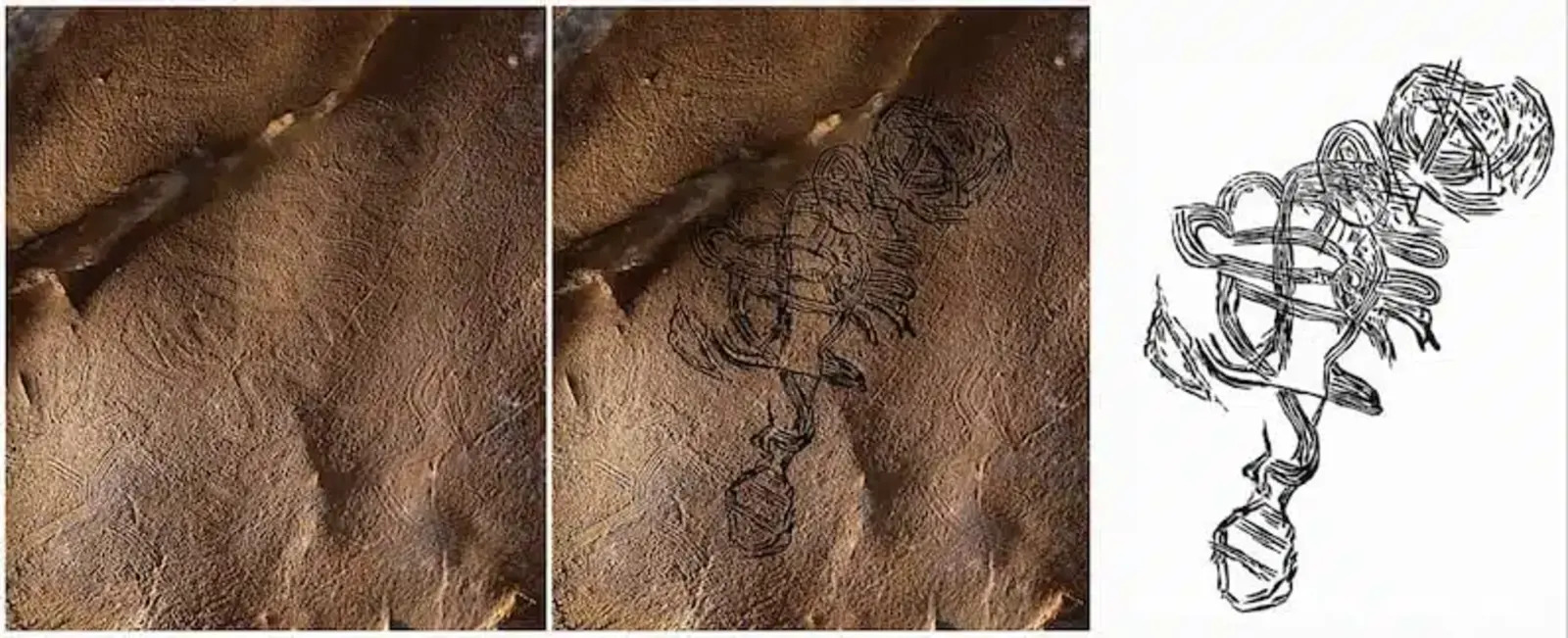
Discovery in cave in Alabama reveals 3-meter rattlesnake painted with mud and identifies five monumental glyphs invisible for centuries
A giant 3-meter rattlesnake, painted with mud on the ceiling of a cave in Alabama and identified with 3D images, has become the largest known Indigenous rock art image in the United States, revealing works hidden for decades.


Discovery changes the dimension of rock art
The monumental work is located on the ceiling of a cave known as “19th unnamed cave,” an archaeological site long recognized for its concentration of Indigenous rock art.
Archaeologists identified the figure and several other monumental glyphs dated to about 1,000 years ago. The images remained hidden from view due to the extremely low ceiling, which prevented full visibility.
-
Helicopter Drops 180 Tons of Sand and Gravel on Swedish River to Revive Ecosystem Damaged by Decades of Exploitation

-
Brazilian Company Launches Retro Smartphone with 48 MP Camera, T9 Keyboard, and Privacy Features for Social Media-Free Use

-
Self-Taught Chinese Farmer Builds 5-Ton Submarine from Scrap, Launches It in Anhui River
-
Invisible Induction Technology Enables Wireless Power for Blenders, Coffee Makers, and Air Fryers, Reducing Countertop Cables





The artworks remained invisible for decades, even though they were in a well-known location. The very low ceiling prevented anyone from seeing the full-scale drawings, which delayed their recognition.
The discovery was detailed in a recent study and gained attention for bringing to light a type of figure that had not been documented in caves of the southeastern United States.
Giant rattlesnake stands out among the glyphs
The most striking figure is a giant 3-meter rattlesnake, or 10 feet, recognized by its diamond-shaped pattern, similar to that of the diamondback rattlesnake, Crotalus atrox.
Information published in the journal Antiquity indicates that this animal was considered sacred by the Indigenous peoples of the region. The find alters the previous understanding of what existed in these caves.
Jan Simek, a professor at the University of Tennessee, stated that large-scale figures had not been recorded in caves of the southeastern United States until now.
For him, these caves are special because there had not been, until now, large figures in this region. The discovery, he said, changes the perspective on what may exist in these subterranean spaces.
Simek also stated that the discovery places the rock art of the southeast in the discussion about other monumental images seen in different parts of North America.
3D technology made the invisible visible
To locate the images, researchers used photogrammetry and gathered hundreds of photographs into a navigable 3D model of the cave.
Simek explained that this methodology allows for the creation of a virtual model of the space and its digital manipulation, which made it possible to see the complete set of figures.
The first author of the study indicated that the confined space made it impossible to have a clear and complete view of the work on site. The digital reconstruction revealed five large glyphs previously unknown.
The identification of the five monumental glyphs previously unknown shows how the combination of archaeological recording and digital reconstruction expanded the scope of the research and opened possibilities to examine similar spaces.
Stephen Alvarez, an ancient art photographer and founder of the Ancient Art Archive, stated that the team obtained a huge cloud of data with the exact position of the elements in 3D space.
With this, it was possible to virtually illuminate the ceiling and identify figures that would otherwise remain invisible. The technology thus revealed images that the eyes could not perceive within the cave.
Cave Holds Paintings and Extensive Reach
The cave extends over 5 kilometers, or 3 miles, and was first documented in 1998.
Previous research, published in the journal Southeastern Archaeology, identified a large chamber that concentrates most of the rock paintings at the site.
This set reinforces the relevance of the site, already known among researchers for the density of indigenous marks preserved within it over time.
Cultural Value and Spiritual Meaning of the Space
The researchers highlighted the cultural importance of the cave and noted that these spaces did not function solely as shelters for the indigenous communities of the Southeast.
In this belief system, caves were associated with the underworld, while mounds of earth connected to the upper world. This context helps to give meaning to the images found in the depths of the earth.
The figures may be linked to ritual or spiritual meanings. In this scenario, the giant rattlesnake and the other glyphs enhance the understanding of the artistic heritage present in the region.
The discovery also reinforces the idea that the rock art of the southeast integrates a broader and more complex panorama of monumental images existing in other parts of North America.
With information from Daily Galaxy.




Be the first to react!