Portuguese
  Spanish


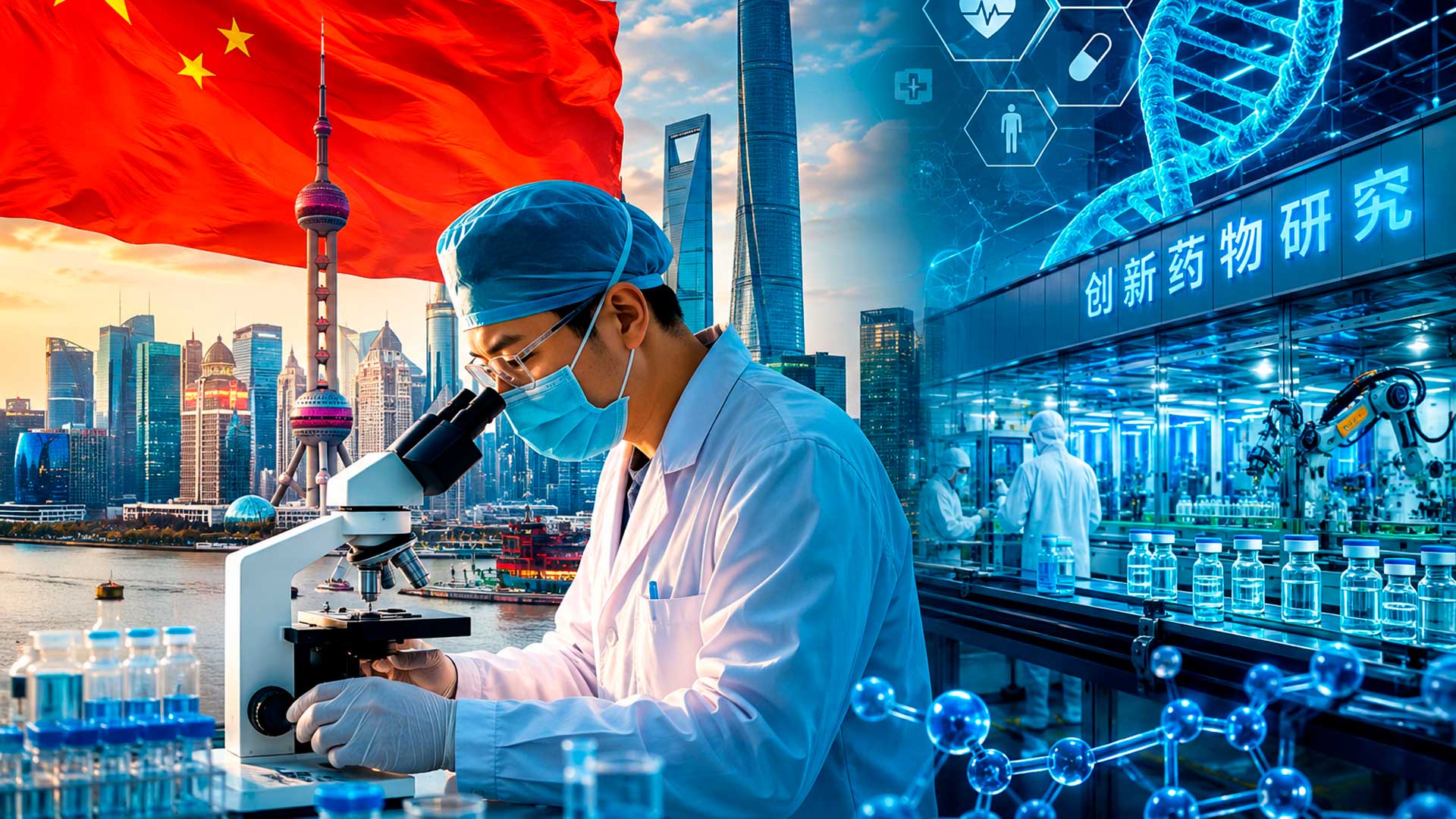

The Chinese advancement in health has ceased to be a promise and has become a global dispute for research, medicines, and medical technology, with implications for patients, governments, and industries
China is leaving behind the image of a country associated only with cheap production of inputs and equipment. The new point of attention is another, much more strategic, the construction of a global power in health, biotechnology, medical research, and the development of new medicines.
The discussion gained momentum after the Crônicas de Peso column in Veja, addressed the Chinese transformation in the health area, comparing this advancement to a new wall, not made of stones, but of universities, laboratories, factories, hospitals, researchers, and technology.
The topic matters because health has become one of the centers of the global dispute for influence. Those who dominate research, innovative molecules, medical artificial intelligence, hospital equipment, and pharmaceutical production gain more power over prices, access, treatments, and technological dependence.
-
How Much Does Starlink Satellite Internet Cost for Cars, Trucks, and RVs? Prices for Antenna, Accessories, and Plans

-
Scientists Convert Food Waste into Aviation Fuel, Successfully Test 50% Blend with Conventional Kerosene to Cut Emissions and Promote Sustainable Flights
-
OnePlus N6 Smartphone to Launch in India with 8,000mAh Battery and 45W SuperVOOC Charging, Lasting Up to Three Days
-
Scientists Plan to Release Air Bubbles Underwater to Protect Antarctica’s “Doomsday Glacier” from Melting




This movement also interests Brazil. A country that depends on imports, faces queues in the public system, and deals with the advancement of chronic diseases needs to closely observe how other nations are organizing prevention, innovation, and large-scale production.
From basic medicine in the field to the laboratory that disputes the future of medicines
The Chinese turnaround in health did not start with the big laboratories. One of the historical bases was primary care, symbolized by the so-called “barefoot doctors,” workers trained to provide basic guidance, prevention, and care to rural areas with little access to doctors.
This model was not sophisticated, but it helped consolidate a central idea for any modern health system. Preventing, guiding, and treating early costs less than waiting for the disease to advance.
Decades later, China began to combine this logic of population reach with an aggressive policy of education, engineering, research, and industry. The Healthy China 2030 agenda placed health at the center of national planning, focusing on development, chronic disease prevention, and integrated public policies.
The result is a change of level. The country that was once seen as a major supplier of generic products and lower-cost equipment has come to be observed as a protagonist in biomedical research, clinical trials, biotechnology, and new treatments.
Chinese biotechnology has changed the map of the pharmaceutical industry
The Chinese pharmaceutical industry is undergoing an important transition. The country has moved from a market dominated by generics to an environment of innovative drug development, with regulatory modernization, expansion of clinical trials, and the emergence of more advanced therapies between 2019 and 2023.
This change is not happening by chance. China has invested in training researchers, laboratory infrastructure, factories with international standards, and mechanisms to accelerate the approval of research and new products. As a result, it has started to compete in areas such as cancer, metabolic diseases, cell therapies, immunology, and biological drugs.
A statistic summarizes the speed of this transformation. Mainland China became the second-largest market in the world for first launches of new molecular entities in 2024, with a share of 18%, in addition to recording 50 billion dollars in aggregate licensing deal values by August 2025.
In practice, this means that major international pharmaceutical companies no longer see China just as a factory. They have started to seek molecules, research, and technological platforms developed by Chinese companies.
This movement became evident in recent agreements. Pfizer closed a partnership of up to 10.5 billion dollars with Innovent Biologics to develop 12 early-stage oncology drugs, while Eli Lilly signed an agreement with a unit of Haisco that could reach about 3 billion dollars in milestone payments.
Obesity and chronic diseases show the most difficult side of this revolution
Despite technological advancement, China also faces a typical problem of countries that have rapidly become wealthy. Increased income, urbanization, more sedentary work, dietary changes, and an aging population have increased the burden of chronic diseases.
Obesity has become one of the clearest examples of this challenge. More than half of Chinese adults are already overweight or obese, and the rate could reach 65.3% by 2030, while the country published its first national guidelines to standardize the diagnosis and treatment of obesity in October 2024.
This scenario helps explain why medications for diabetes, obesity, and metabolic diseases have gained so much attention worldwide. Drugs from the GLP 1 class, popularized globally, have sparked a race for more effective treatments, national versions, new combinations, and more competitive prices.
But the main lesson is not just in the medication. No country can overcome obesity, diabetes, and hypertension with cutting-edge technology alone, because these diseases also depend on diet, income, work routine, sleep, access to medical care, and health education.
This is the most relevant part for Brazil. The Chinese advancement shows that innovation matters, but it also highlights that prevention, primary care, and continuous public policy remain the foundation for reducing costs and preventing simple-to-manage diseases from becoming serious problems.
What this new health wall could mean for Brazil
For Brazil, Chinese growth in health brings opportunities and risks. The opportunity lies in access to new technologies, equipment, medications, industrial partnerships, and possible price alternatives in a market dominated by a few global giants.
The risk lies in dependency. If the country only imports ready-made solutions, it will remain vulnerable to price variations, trade disputes, logistical bottlenecks, and decisions made outside the national territory.
The most strategic path would be to use this movement as a warning. Brazil has universities, researchers, the Unified Health System, experience in vaccination, public production of immunobiologicals, and industrial capacity, but still faces difficulty in transforming scientific knowledge into scale, innovation, and quick access for patients.
China shows that health is no longer just public expenditure. Health has become industrial policy, technological competition, economic strategy, and an instrument of international influence.
The Chinese advance also raises questions about quality, transparency, and competition
The rapid growth of China in health does not eliminate questions. As happens in any country that advances very quickly, there are debates about the quality of studies, data transparency, oversight, intellectual property, regulatory safety, and the ability to maintain international standards.
These doubts do not negate the advance but help place the topic in the right context. China did not become a global reference just by producing a lot, but because it started competing in areas where the United States and Europe previously seemed almost unreachable.
Competition is likely to increase in the coming years. Large Western laboratories need to renew their portfolios, while Chinese companies seek international recognition, billion-dollar deals, and presence in more regulated markets.
For patients, this competition can have positive effects if it increases competition, accelerates research, and reduces prices. For governments, however, the challenge will be to separate promise from evidence, speed from safety, and real innovation from mere commercial race.
The new Chinese wall is technological, scientific, and political
The major change is that China is building a wall different from the one known by tourists. It is made of medical research, data, modern factories, strong universities, highly trained professionals, and companies capable of negotiating with global giants.
This wall does not isolate the country. On the contrary, it projects China into the world’s health systems, whether through medications, equipment, partnerships, clinical studies, or biotechnology platforms.
The question for countries like Brazil is straightforward. Are we just going to buy the solutions that other countries develop, or are we going to invest to also participate in the next phase of medicine?
The Chinese advancement in health divides opinions because it can lower the cost of treatments and accelerate discoveries, but it can also increase dependency on other countries in sensitive areas. Do you think Brazil should get closer to this Chinese model of innovation, or should it prioritize its own strategy to avoid dependence on any power?