






 Portuguese
  Spanish


An Unprecedented Discovery Was Made at the Drumanagh Promontory Fort and Reinforces Ancient Commercial Links Between Ireland and the Roman Empire.
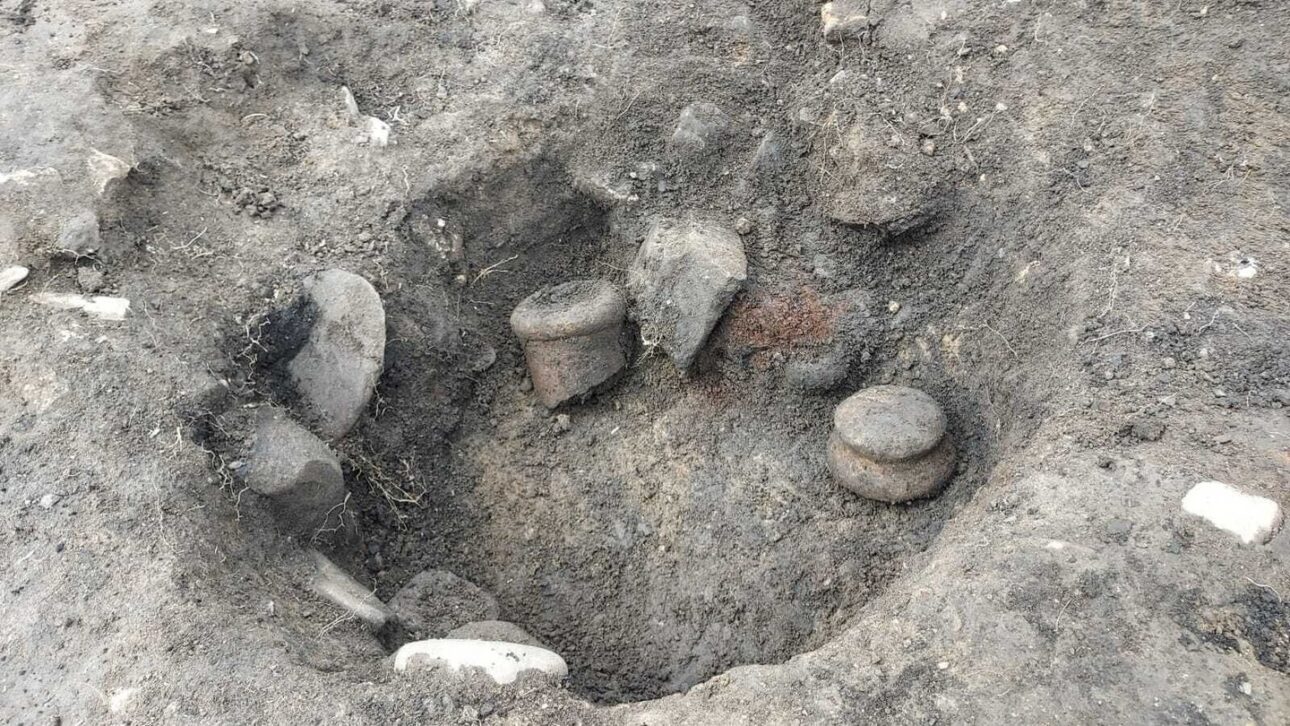
An unprecedented discovery has shaken archaeology in Ireland. For the first time, a completely intact Roman pot was found in the country. The artifact was excavated at the Drumanagh Promontory Fort in County Dublin, leaving archaeologists “breathless with excitement.”
The piece draws attention not only for its rarity but for what it represents: concrete proof that Ireland maintained strong commercial ties with the Roman Empire, even without having been conquered by it.
A Site with Few Roman Records
Until now, there were few records of Roman presence in Ireland. Experts knew of only five or six Roman objects found in the country, and none were preserved in this manner. The pot now discovered appeared alongside a broken amphora and was located in one of the fort’s ditches. The state of preservation is considered impressive.
-
Abandoned warehouse hid a giant collection of rare computers, with over 2,000 artifacts from the 1930s to the 1980s.

-
Scientists warn that melting ice is triggering an alarming chemical transformation in preserved areas, and the first signs are already concerning researchers worldwide.

-
China placed 198 robotic legs under a 7,600-ton school and made the building walk 62 meters in 18 days, rotating the historic structure as if a concrete structure had gained feet to escape demolition.

-
Distributor confirms the premiere of ‘Dark Horse’, Bolsonaro’s film, in 650 cinemas with 99% of copies dubbed.



The discovery occurred during an excavation led by county archaeologists and volunteers. The site had already been under investigation since 2017 when the Fingal County Council purchased the land for one million euros. Since then, excavations have been carried out every summer.
Fort with a Strategic Role
The Drumanagh Promontory Fort seems to have played an important role in the relations between the Irish and the Romans.
It is located on the coast, in a strategic position for maritime trade. The Roman Empire negotiated with the Irish there, but never established a permanent settlement. This is considered unusual and raises debates among experts.
Some scholars believe the site served as a military support base for Roman campaigns in Britain. Others believe it was merely a prosperous trading post used by native Irish in contact with the Roman world.
Findings Reinforce Intense Commercial Relationship
The excavations revealed a series of items pointing to intense trade with different parts of Europe. Objects from Spain, Gaul, Britain, and other regions were found.
Among the items were Roman ceramics of the Dressel 20 type, olive oil, spelt bread, jewelry, bone combs, dice made from horn, and even a carbonized fig over two thousand years old — considered the oldest exotic Mediterranean fruit ever discovered in Ireland.
These products were not found in Irish territory, showing they were brought through trade. In return, the Irish likely offered gold, wolfhounds, and even slaves.
Contact Without Conquest
Despite the intensity of trade, the Romans never invaded or dominated Ireland. This makes the relationship between the two peoples a rare example of peaceful contact based on commercial interest.
The discovery of the intact pot reinforces the idea that Ireland was not isolated in antiquity. On the contrary: it was part of a trade network that reached even to the Mediterranean.
The Roman pot, along with other objects found during the excavations, is now on display at the National Museum of Ireland. The piece has become a symbol of a forgotten connection, but one that now gains new prominence based on concrete evidence.





