Portuguese
  Spanish


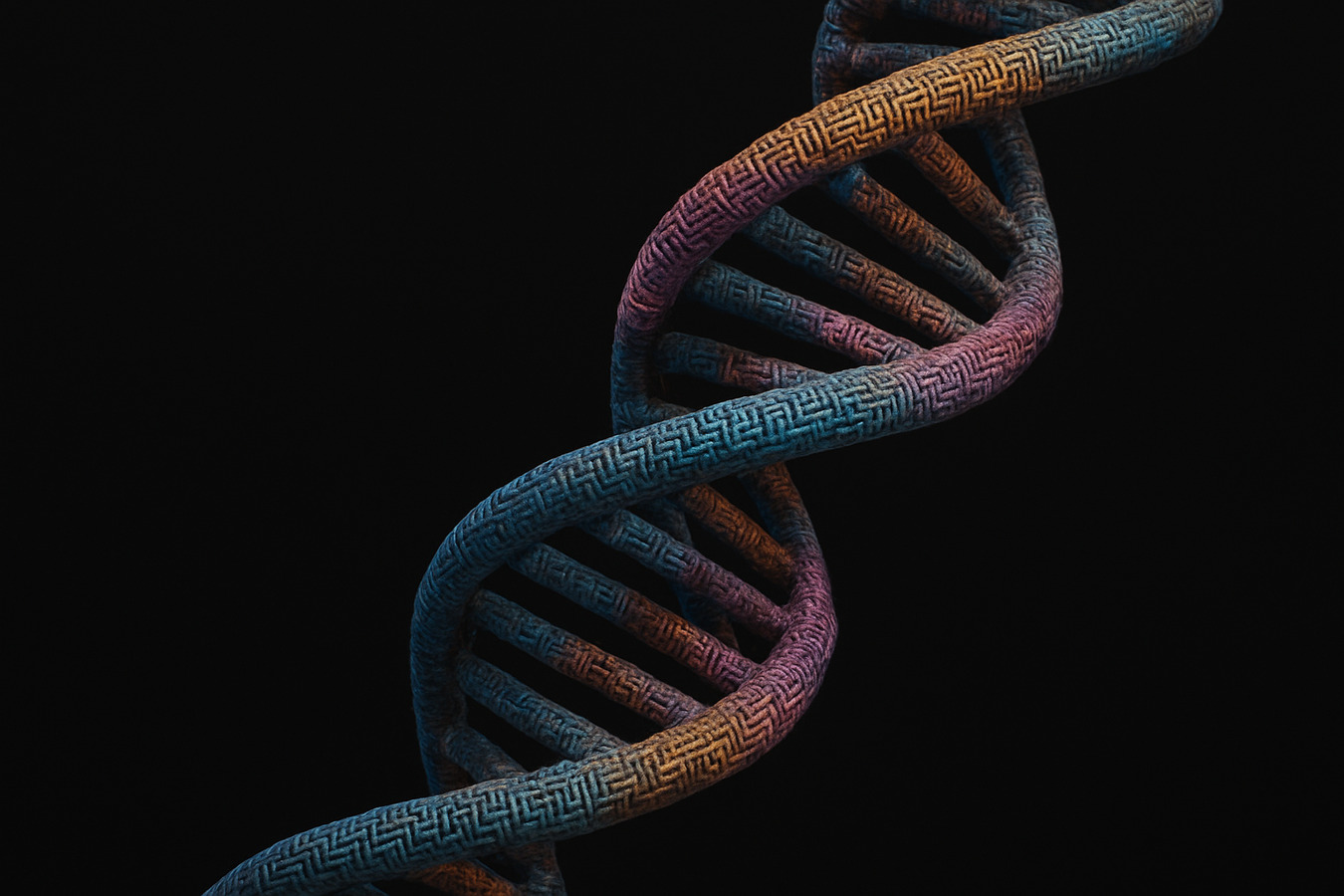


Project Combines Poetry and Biotechnology by Recording Verses in the DNA of Resistant Bacteria, Preserving Art and Culture for Billions of Years
The Greek physician and philosopher Hippocrates said that “life is short and art is long.” Now, this idea has taken on biological form. Canadian poet Christian Bök and chemical engineer Lydia Contreras from the University of Texas at Austin inserted a poem into the DNA of Deinococcus radiodurans.
Known as “Conan the Bacteria,” this species survives intense radiation, freezing, and even the vacuum of space.
Under ideal conditions, it can persist over geological time scales, practically immortal by human standards.
-
OnePlus N6 Smartphone to Launch in India with 8,000mAh Battery and 45W SuperVOOC Charging, Lasting Up to Three Days

-
Scientists Plan to Release Air Bubbles Underwater to Protect Antarctica’s “Doomsday Glacier” from Melting

-
Chinese R6000 Drone Combines Airplane and Helicopter Features, Carries Up to 12 People for Multiple Missions
-
In the World’s Most Densely Populated Desert, Families Dig Funnel-Shaped Underground Cisterns to Capture Rare Rainfall and Store Drinking Water for Up to Eight Months




Moreover, when the microbe “reads” the poem, it produces a protein that encodes a second complementary poem — and it glows red during the process.
A 25-Year Project
The initiative is part of Bök’s decades-long project called “The Xenotext.” It explores poetry as a biological artifact and reached its peak in the book “The Xenotext: Book 2,” the result of 25 years of trial and error.
“We’ve done very few things that could survive the Sun,” said Bök. For him, this is a gesture that shows how to preserve messages throughout Earth’s entire lifespan, protecting cultural heritage against planetary disasters.
In 2015, “The Xenotext: Book 1” presented a poem embedded in a fragile bacterium. The ultimate goal, however, has always been to work with D. radiodurans, which is resistant to fatal conditions for nearly all living beings.
Scientific Partnership
Bök sought out Contreras, whose lab already had experience with the species. “The synthetic use of this organism to unite genetic language and English is philosophically very exciting,” the researcher stated.
The recorded poem is called “Orpheus” and begins with “Any style/of life is primitive.” When activated, the microbe transforms this DNA sequence into a chain of amino acids.
Each amino acid corresponds to a letter, thus forming a second poem, “Eurydice,” which starts with “The fairy/is pink with glow.”
Poetry in Code and Protein
Bök developed a “mutually bijective cipher,” where each letter of one poem corresponds to a fixed letter in the other. This work took four years to complete.
The resulting protein glows red, visually representing the imagery described in the verses. It’s as if poetry takes on a living, luminous form.
Art and Application
The artistic aspect is evident, but the project also points to practical uses. D. radiodurans can store data for unimaginable periods, surpassing any file format created by humans.
“In the end, it’s about how we store information that will survive forever,” said Contreras. For her, living organisms are the best guardians of that information.
The idea resonates with research exploring DNA as a medium for archiving digital records or messages for the future, including extraterrestrial civilizations.
Between Life and Art
For Bök, the achievement is both scientific and poetic. Just like in the story of Orpheus and Eurydice, it crosses boundaries — between life and art, language and biology, mortality and permanence.
And, like the myth, it attempts to bring something back, but now in the form of immortal verses engraved in the code of life.
With information from ZME Science.