






 Portuguese
  Spanish


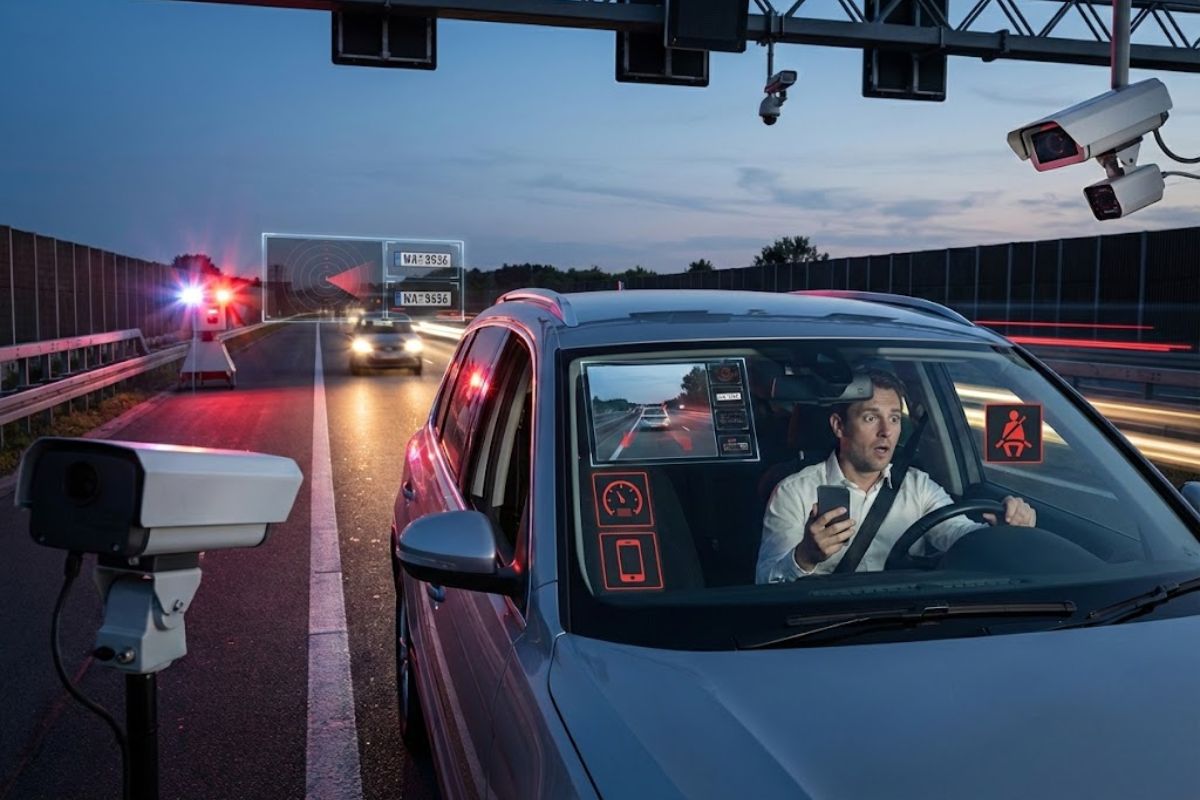


Since 2015, cameras on highways can support the capture of traffic violations, but fines require live video monitoring and signage warning drivers. A resolution from the Contran detailed the rules, and in 2022 TRF5 confirmed the legality of remote monitoring, including for six common violations on Brazilian roads.
Highway cameras can catch you in the act and result in fines for traffic and conduct violations, as long as the recording happens live within the rules of video monitoring in Brazil.
The discussion on the topic existed, but in 2022 a decision from the Federal Regional Court of the 5th Region (TRF5) officially confirmed the legality of remote monitoring, consolidating the use of images to support inspection on highways.
What Justice Confirmed About Cameras on Highways
The central point confirmed was the legality of remote monitoring conducted by cameras on highways. This resolves the main legal doubt that fueled debates since this type of inspection began to be applied in the country.
-
Seniors Over 60 Can Travel for Free Across Brazil: Elderly Statute Ensures Two Free Bus Seats and 50% Discount When Full for Low-Income Passengers

-
Detran RJ starts requiring a toxicological test for those obtaining their first driver’s license in the car and motorcycle category starting June 29; see who will be affected.

-
Florida takes TikTok to court and accuses the Chinese giant ByteDance of ignoring the law that bars minors under 14, while parents and authorities demand more protection for children on social networks.
-
Chamber approves constitutional amendment reducing the age of criminal responsibility from 18 to 16 years; what now?




In practice, the confirmation from TRF5 reinforces that video monitoring can support fines, as long as it respects the already established rules for capturing violations and how the inspection is conducted.
What Contran Determined for Fines with Cameras on Highways
Since 2015, it has been permitted to use cameras on highways to capture violations. In the same year, Contran (National Traffic Council) published a resolution to clarify the rules of video monitoring.
Two points stand out. First, cameras on highways can be used to issue fines for traffic and conduct violations as long as the capture is live.
Second, monitoring by cameras can only occur on roads with specific signage informing drivers about the presence of this type of monitoring.
Why Monitoring by Cameras on Highways Is Not Automatic
Even with cameras, the fines do not operate as a completely automatic system.
The general rule presented is that, in most cases, the presence of a traffic agent observing the images is necessary to characterize the capture and enable the fine.
At the same time, there are already cameras on highways that adopt artificial intelligence technology in monitoring, showing an evolution of the system, but without eliminating the requirement for live observation as the basis for the described inspection.
Six Common Violations That Cameras on Highways Can Capture
According to the mentioned list, these are six common violations that can be recorded and result in fines with the support of cameras, within the rules of video monitoring:
- Using a Cell Phone While Driving
- Not Wearing a Seatbelt
- Running a Red Light
- Illegal Parking in Special Spaces
- Driving on the Shoulder
- Speeding, if the camera is integrated with a radar
Other Violations Can Also Be Included
The six listed violations are the most common, but they are not the only ones. Monitoring by cameras on highways can register other behaviors, as long as they are classified under the Brazilian Traffic Code (CTB) and comply with live monitoring and signage rules.
In your city or on the highway you use most, is the signage warning about cameras on highways clear, or do you only notice it when you are already passing through the area?








