Portuguese
  Spanish


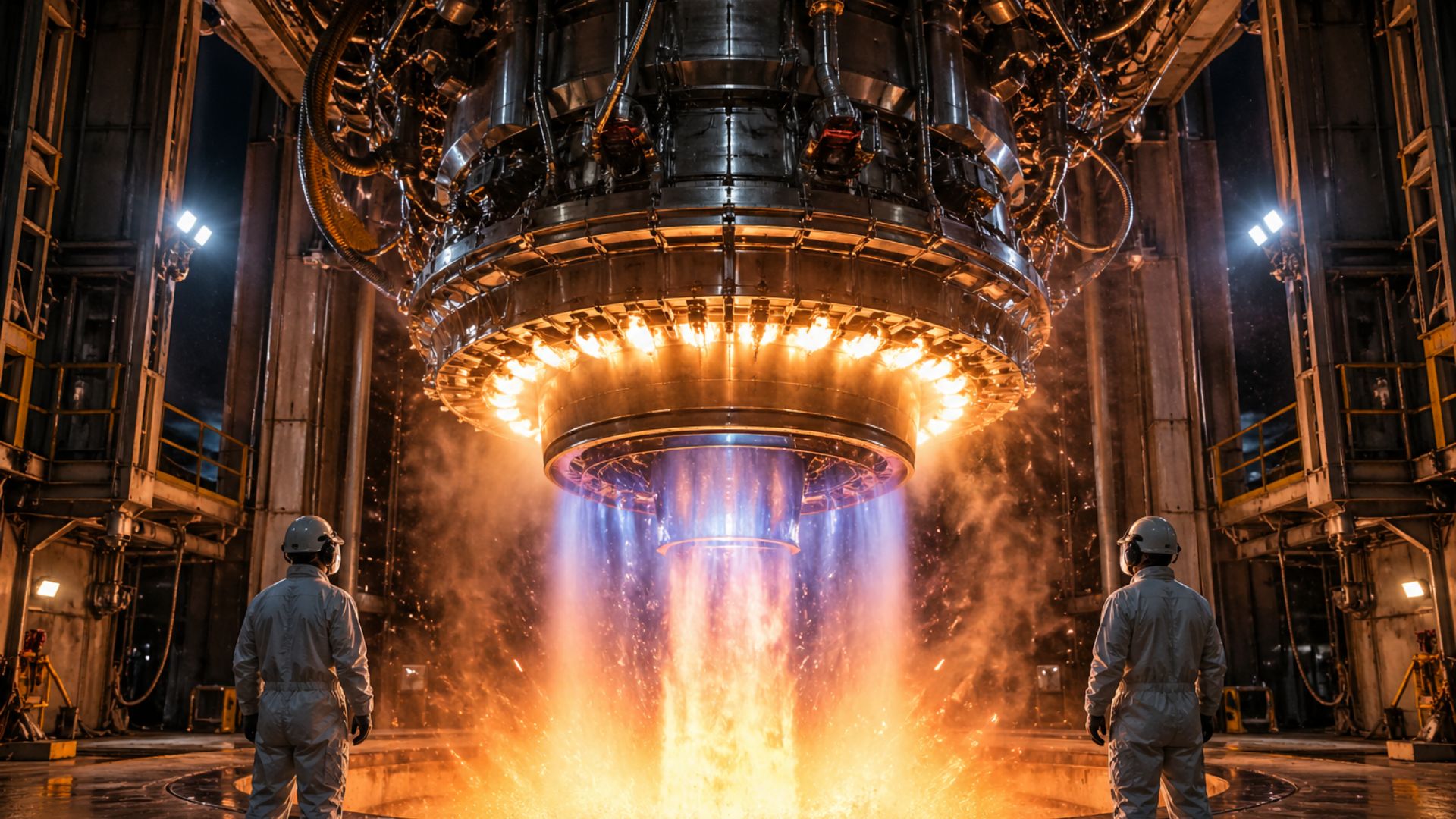

Advancement in space propulsion places experimental engine at new performance level, with prolonged burn and high thrust, paving the way for lighter, more efficient lunar spacecraft with greater cargo capacity in future missions.
Astrobotic concluded a test campaign with the Chakram engine, an experimental rotating detonation thruster that maintained a continuous burn of 300 seconds and exceeded 4,000 pounds of thrust per unit during trials conducted at NASA’s Marshall Space Flight Center.
During the series of experiments, two prototypes underwent eight static fire tests, accumulating over 470 seconds of operation throughout the campaign, with no apparent damage observed in the components after the tests.
Highlighting the result, the company indicated that the continuous five-minute burn may represent the longest time ever recorded for an engine of this category, which reinforces the technical relevance of the experiment in the current landscape of space engineering.
-
She spent 73 years breathing inside an iron lung, survived the aftereffects of polio, and became the last woman in the United States dependent on the equipment before dying at 78 years old.

-
Brazilian students created a $1 filter using pine bark, cotton, and 3D-printed parts to clean cassava wastewater, reduce the toxicity of a hazardous waste, and transform contaminated water into biofertilizer.

-
Astronaut from Artemis II steps down after mission to the Moon and decision surprises after a record of 406,771 km, a historic 10-day journey, and an unprecedented achievement for Canada.

-
A fossil kept for years in a small museum in Montreal concealed 450-million-year-old soft tissue, a discovery that has only happened once before in history.


With this performance, the Chakram joins the group of projects aiming to enable lighter and more efficient lunar landers, while also increasing payload capacity in missions to the Moon’s surface.
Chakram Engine and Efficiency in Lunar Landers
Unlike conventional chemical engines, the rotating detonation system operates with supersonic detonation waves that continuously travel through an annular chamber, creating a more efficient process of energy release from the propellant used.

This approach allows for greater performance with the same amount of fuel, which translates into direct gains in thrust-to-weight ratio, in addition to contributing to the reduction of the volume occupied by the propulsion system.
When applied to lunar vehicles, this gain is reflected in greater design flexibility, as a more compact engine can free up internal space for scientific equipment, navigation systems, or even commercial cargo.
Within this strategy, Astrobotic plans to use the technology in future versions of Griffin-class landers, as well as considering applications in reusable rockets and vehicles for cislunar space transport.
NASA Tests and Chakram Engine Performance
Conducted at the Marshall Space Flight Center, the campaign utilized infrastructure traditionally dedicated to the development of propulsion systems, which allowed for tests with greater control over thermal and operational variables.
During the firings, the prototypes reached thermal stability conditions in most tests, with the exception of two short activations related to the ignition system, which did not compromise the overall result obtained.
This aspect gains importance because thermal stability is among the main challenges for engines of this type, especially when seeking continuous operation at high levels of temperature and pressure.
Furthermore, the recorded thrust level reinforces the technical advancement, as each unit reached over 4,000 pounds of force, positioning the Chakram among the most robust experiments ever conducted by the company in this line of development.
Another relevant point is the duration of the continuous test, which differentiates the campaign from shorter demonstrations, by demonstrating the system’s ability to maintain consistent performance over an interval closer to real operational requirements.
Metal 3D Printing and Innovation in Space Propulsion


The engine’s development received support from contracts under NASA’s Small Business Innovation Research program, in addition to a specific agreement with the Marshall center for collaboration on testing and engineering.
In parallel, Astrobotic linked the Chakram’s performance to the use of metal additive manufacturing, highlighting PermiAM technology, developed in partnership with Elementum3D.
This method allows for the production of components with controlled porosity, a characteristic that can contribute to improving internal thermal management and increasing the stability of the combustion process within the engine.
Thus, the advancement is not limited to the concept of rotating detonation, but also involves the evolution of materials and manufacturing techniques capable of withstanding extreme conditions without premature loss of structural performance.
Based on these results, the next phase of the project should focus efforts on solutions such as regenerative cooling, more precise power control, and further reduction of the assembly’s mass.
Challenges and Future Application in Lunar Missions
Even with the results obtained, Astrobotic has not yet defined when the engine will be integrated into a space mission, as the transition from a test environment to real-world applications requires new phases of qualification and validation.
Historically, rotating detonation engines have been studied as an alternative to increase efficiency without significantly increasing the total mass of vehicles, a critical factor in operations outside low Earth orbit.
In the context of lunar landers, this equation directly influences the amount of payload carried, in addition to impacting aspects such as autonomy, safety, and maneuverability during descents and surface operations.
Within this scenario, the Chakram represents an advancement within Astrobotic’s broader strategy, which seeks to consolidate its presence in cislunar space logistics services and in the development of vehicles dedicated to lunar missions.
Although the test does not represent immediate flight readiness, the demonstration of 300 seconds of continuous operation expands the technical foundation necessary for future development stages and integration into complete space systems.