Portuguese
  Spanish


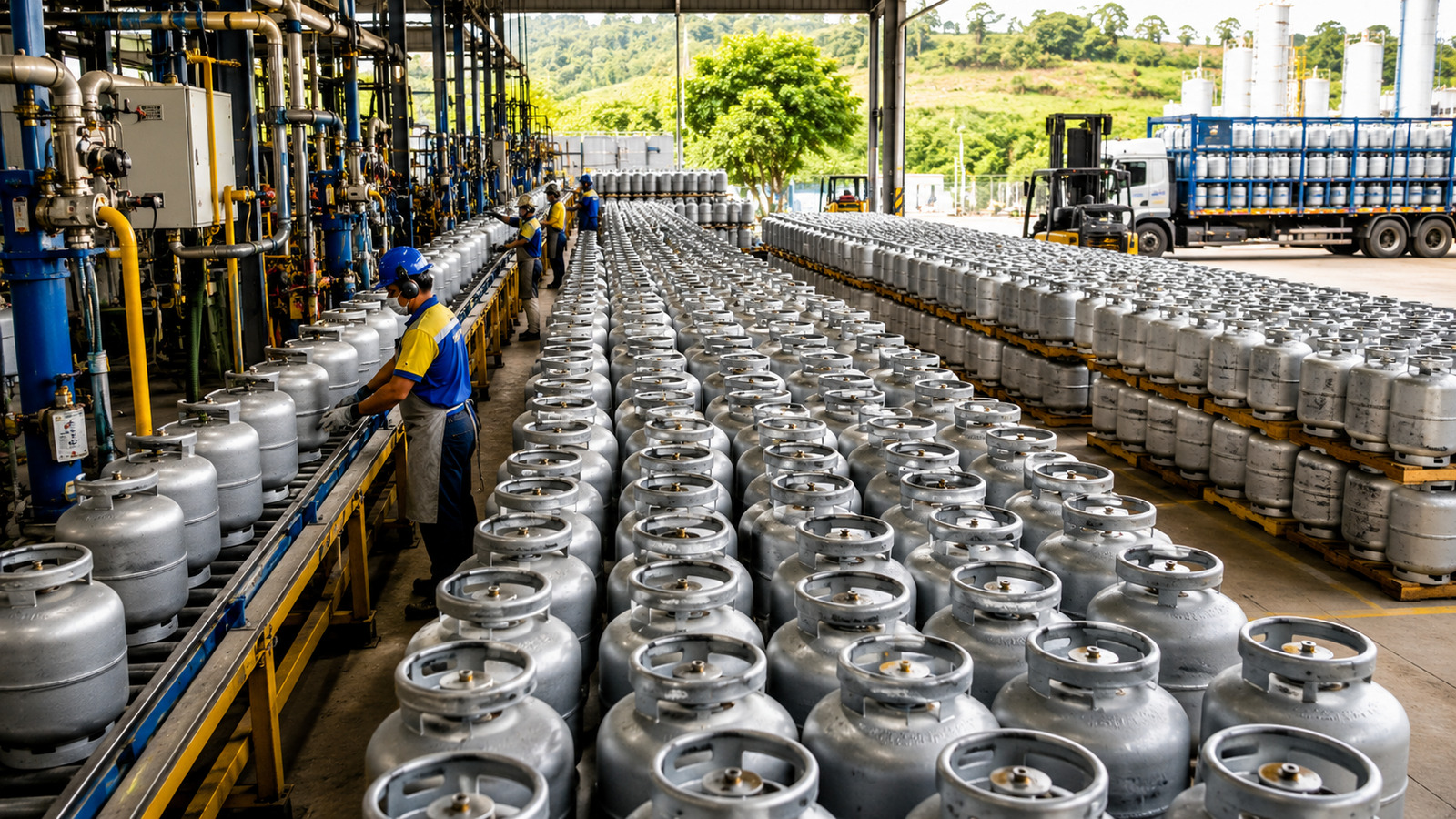

Gás do Povo Program uses national LPG network, with 59 thousand authorized resellers and delivery of 13 cylinders per second, to ensure free refills for more than 15 million families
Brazil delivers about 13 gas cylinders per second thanks to an LPG distribution network present in all municipalities, with approximately 59 thousand authorized resellers. This structure supports the Gás do Povo, a program sanctioned this year to ensure free refills for more than 15 million families.
National network supports Gás do Povo
The Gás do Povo provides free refills for an audience equivalent to about 50 million Brazilians. The operation does not start from a new state logistics created from scratch.
The program relies on an already installed structure, built over decades, with national presence and the ability to quickly serve different regions. In practice, the public policy uses a chain that already reaches consumers.
-
Ancient Mines in Spain Reveal Tools and Metals That May Explain Bronze Age Trade with Scandinavia

-
Facing a housing shortage, Hong Kong uses prefabricated concrete modules to construct a 12-story public building with the help of massive cranes and trucks.
-
Brazilian City Innovates Waste Collection with Underground Vacuum System
-
Amsterdam Repurposes Retired Boats and Plants to Restore Contaminated Industrial Land Instead of Removing All Polluted Soil


Country has about 59 thousand authorized resellers
LPG distribution in Brazil depends on a broad and integrated operation. The approximately 59 thousand authorized resellers form the base that allows the continuous delivery of cylinders in Brazilian municipalities.
This capillarity is what transforms the sector’s scale into practical effect for families. Without this network, the free delivery provided by Gás do Povo would require a much more complex logistical structure.
Cylinders have technical control and traceability
In addition to distribution, the Brazilian model involves technical control of the containers. Each cylinder is linked to a company responsible for filling, maintenance, and requalification.
Monthly, about 1.9 million containers undergo inspection and technical requalification. The embossed mark of the distributing company identifies the origin of the product, as explained by Claudia Viegas, PhD in Economics from FEA-USP and partner at Ecoa Economic Consulting.
This physical identification allows knowing which company is responsible for the safety protocols and maintenance of each container along the chain.


Regulatory discussion involves LPG filling
The sector follows discussions on alternative models for filling and marketing LPG. Today, filling is concentrated in 19 authorized companies, responsible for the traceability of the cylinders.
Proposals under debate would allow anyone to operate the filling. Technical studies presented in the process indicate that the change would require greater inspection capacity, in contrast to the 18% drop in regulatory agency inspection actions between 2023 and 2024.
The operation of LPG, often invisible to the consumer, is what allows a public policy to be converted into gas available at home.
This article was prepared based on information from the material provided on LPG distribution in Brazil, Gás do Povo, and analyses, with data, numbers, and statements preserved as per the material consulted.