Portuguese
  Spanish


The company from Araucária, founded in 2008 by Bruno Borgonovo and Ricardo Lecink, projects to exceed R$ 300 million in 2026, launches the Brilhaê line that mixes stationery and makeup for the 7 to 15-year-old audience, and invested R$ 40 million in a new headquarters of 16 thousand square meters
On July 7, 2026, Pequenas Empresas & Grandes Negócios revealed the numbers of a company from Paraná that turned school supplies into a coveted item. According to PEGN, BRW, headquartered in Araucária, in the Metropolitan Region of Curitiba, earned R$ 242 million in 2025, grows 20% annually, and projects to surpass R$ 300 million in 2026.
The company’s newest weapon is the Brilhaê line, which merges stationery and makeup for girls aged 7 to 15: there are 32 products, including 11 unprecedented and patented hybrids, such as the highlighter with attached lip gloss, the stamp with lip balm, and the highlighter with a stamp on the cap and water-based nail polish underneath. It’s the kind of invention that seems like a game and moves millions.
The 21-year-old, the family’s investment, and the “W” in the name
The story of BRW began in 2008, when Bruno Borgonovo, at 21 years old and newly returned from an exchange program in Canada, received R$ 200,000 from his father and uncle, owners of the industrial holding Wave, to start his own business, according to PEGN. That’s where the name comes from: the “B” for Bruno, the “R” for partner and co-founder Ricardo Lecink, and the “W” for Wave, the family holding, which has a tradition in the automotive sector and a factory in China, although BRW maintains independent management.
-
End of an Era in Brazil: Automaker Shuts Down Mega Factory After Sales Slump, While Chinese Company Plans to Revive It with 100,000 Vehicles Annually

-
Petrobras Invests $350 Million to Revive Long-Stalled Fertilizer Plant in Brazil’s Agricultural Heartland

-
Brazilian Industrial Complex to Double Biodiesel Production Capacity by 2027 with $1.2 Billion Investment, Currently Produces 900 Million Liters Annually
-
As Millions Receive Bolsa Família, Brazilian Companies Struggle to Fill Jobs as 80% Report Hiring Challenges


The initial design was also different from the standard: instead of manufacturing, the company started by importing raw materials on demand from China, licensing and distributing, first with corporate gifts, then migrating to stationery with its own brand upon seeing the potential of the segment. “Obviously, we are inspired by this trajectory, but it’s not the same business,” said Borgonovo to PEGN about the relationship with the family company.
The bet on “cute” stationery that turned into a gold mine
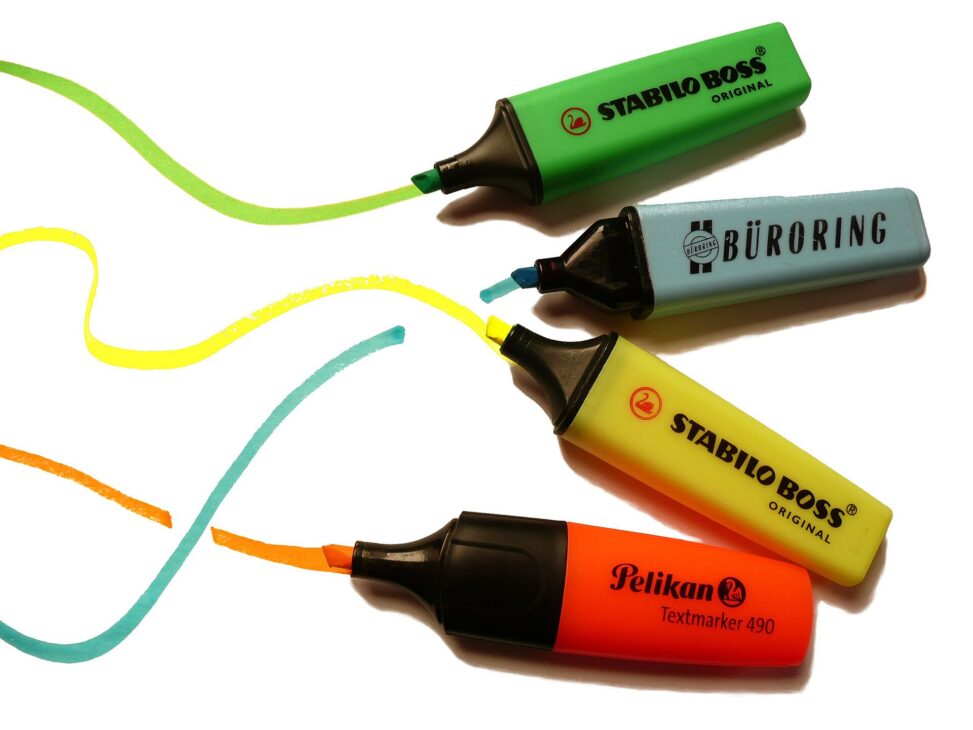
The leap came when the company decided to set trends instead of following them. Between 2020 and 2021, BRW grew 70% by betting on innovation within the sector, and the CEO summarizes the thesis: “Stationery is a universe of opportunities. BRW was one of the pioneers during the pandemic by bringing the cute and fun stationery proposal to the Brazilian market,” he told PEGN. The notebook stopped being a mandatory list item and became an identity accessory.
To sustain the trend machine, the company assembled an internal team that monitors consumer behavior, neighboring markets like fashion, and even Pantone colors, and is now expanding this department to dedicate it to research and development. The mission is to keep up with a generation that consumes trends at the speed of the feed.
20,000 points of sale and 87% of medium-sized municipalities in the country
The operation’s reach is impressive for a company with 176 employees. There are 2,200 items in the catalog, about 4,000 orders shipped per month, and presence in 20,000 points of sale, reaching 87% of Brazilian municipalities with more than 30,000 inhabitants, in addition to exports to Argentina, Paraguay, Bolivia, and Uruguay, according to PEGN. By the end of 2026, the goal is to launch 240 products.
The logistics that support this reach have found a new home. According to Gazeta do Povo, BRW invested R$ 40 million in the new headquarters in the Curitiba region, a 16,000 square meter complex that tripled the previous structure and operates with automation like picking by light, a system that uses lights to guide operators in order picking, without a manual list.
The 11 patents and the response to copies
The Brilhaê line marks a shift in the company’s stance. BRW applied for 11 patents for the hybrid launches developed internally, inaugurating a phase of intellectual property defense, and in June the company hit the goal of having 5% of annual revenue coming from innovation, driven by orders from the new line, according to PEGN. Innovating attracts copiers, and the company has learned to shield itself.
The CEO himself addresses the issue without drama: “In the past, we used to get a little upset with the imitations. Today, we see that when you are a reference in something, it’s natural for people to copy. So, patents also serve to shield us in more strategic moves,” he told PEGN. The company also rebranded, replacing the star in the logo with a period.
Play-Doh, Pringles, and the Plan to Conquer Europe and the United States
The 2026 portfolio shows the brand’s appetite. In addition to its own lines, BRW bets on global licensing such as Play-Doh products, erasers shaped like Pringles chips, and Senninha school supplies, aiming for international expansion beyond South America, focusing on Europe and the United States, according to PEGN. All production already leaves the factory with trilingual packaging, in Portuguese, Spanish, and English.
The bridge to the world already exists at home: the family’s holding company operates a factory in China that exports to more than 60 countries and maintains a distribution center in Poland. “Whoever exports to South America exports anywhere. This is not a limitation for us,” summarized Borgonovo to PEGN.
What This Story Teaches About Inventing in a Common Market
BRW is growing in a sector that many consider a commodity, and that’s exactly where the lesson lies. Stationery is a mature market, contested by giants, and yet a company from Paraná found a R$ 242 million space by inventing what no one had thought of: turning school supplies into fashion accessories for teenagers, with a patent and all. It wasn’t price or scale that opened the way, it was creativity with method.
From the family investment of R$ 200,000 to the plan to cross the Atlantic, the company shows that a “cute” product can be serious business.
Tell us in the comments: would you buy a highlighter with gloss for your daughter, or do you think stationery and makeup shouldn’t mix?