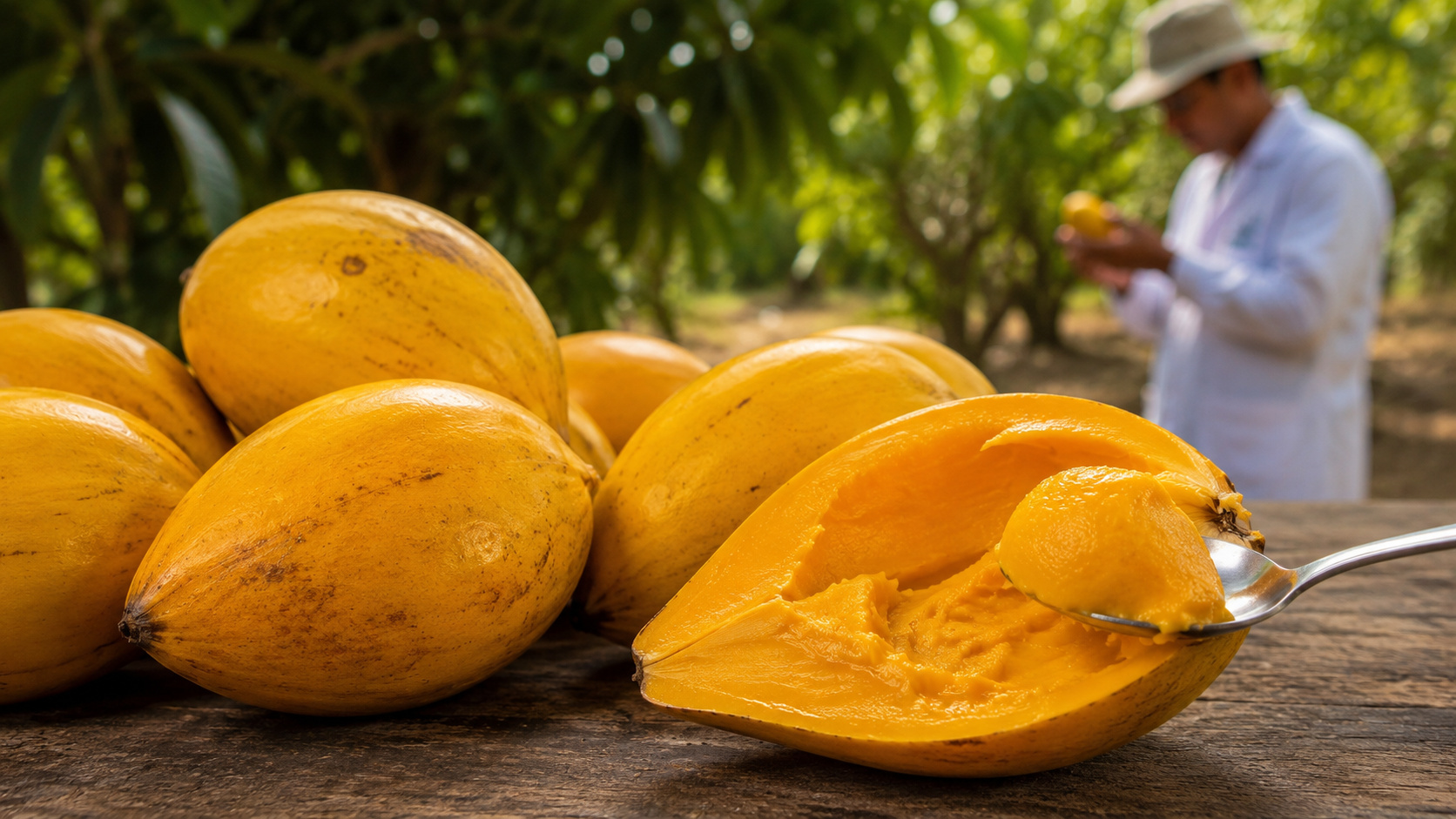

Little known outside Latin American backyards, the canistel attracts attention for its buttery texture, discreet aroma, and composition already studied by scientists interested in its high beta-carotene content
It has a discreet yellow skin but hides a pulp that resembles the color of an egg yolk and a flavor that often surprises those who try it for the first time. The canistel, nicknamed the golden fruit, is starting to gain space among those seeking less obvious tropical flavors. According to a report on the Catraca Livre portal, the fruit is still rarely seen at Brazilian stalls, despite being old in Latin American regions and having characteristics that spark interest from both consumers and researchers.
Why this golden fruit is still rare in Brazilian stalls
Although it has been circulating for a long time in Latin American countries, the golden fruit remains outside the broader commercial circuit. This happens, among other reasons, because it ripens quickly, is delicate in transport, and does not have the same standardization as fruits already established in retail, like mango, papaya, and banana.
Therefore, in practice, the canistel tends to appear more in backyards, home orchards, and local markets than on supermarket shelves. When it reaches the ideal point, the skin yields slightly to the touch, and the pulp gains an almost buttery consistency — a detail that helps explain the frequent comparison to creamy desserts.
-
Brazilian Farmers Develop Wheeled Metal Lever to Ease Cassava Harvesting Without Heavy Machinery

-
Study of Brazil’s Tietê River Finds 25 Pesticides in Water, Including Cancer-Linked Substance Near Source
-
Young Entrepreneur Expands from 50 to 1,400 Chickens, Proving “Happy Hens” Can Be a Viable Business
-
Small Farm in Brazil’s Minas Gerais Produces 403 Liters of Milk Daily, Sets Benchmark for Rural Producers


Moreover, identifying the right point requires attention, as the external appearance can be deceiving. The skin tends to maintain the yellow tone even before complete ripening, making the observation of some signs an essential step to avoid taking home a hard and bland fruit: slight softness when gently pressed, absence of deep cracks or soaked parts, discreet yet noticeable aroma near the stem, and uniform pulp without excessive darkening.
The flavor that resembles dulce de leche: texture, aroma, and uses in the kitchen


The association with dulce de leche, however, does not come from an excess of moisture — quite the opposite. The pulp of the canistel is dense, dry just right, and very soft, with a mealy sensation that simultaneously resembles cooked egg yolk and sweet cream. This sensory profile makes the golden fruit an intriguing ingredient for those who enjoy experimenting with less conventional varieties.
In the kitchen, it performs best in preparations that enhance its body and natural sweetness. Among the most common uses are smoothies blended with milk or plant-based drinks, cold creams and ice creams, purées for fillings and desserts, as well as preserves, spoon sweets, and mousses. Combinations with cinnamon, cocoa, nuts, or coffee also help balance its density, making it an interesting option beyond raw consumption.
What science has already discovered about canistel
The interest in the golden fruit, however, is not limited to taste. Researchers are also analyzing its composition, especially due to the presence of carotenoids — pigments directly linked to its yolk-like color. This scientific attention helps explain why canistel appears increasingly frequently in studies on the utilization of commercially underexplored tropical fruits.
According to the study “Optimization of β-Carotene Enrichment of Coconut Oil from Canistel (Pouteria campechiana L.) Using Response Surface Methodology”, published in the scientific journal Nutrition, canistel was described as an underutilized fruit rich in beta-carotene, used in the development of coconut oil enriched with this compound. This data, evidently, does not turn the golden fruit into a miracle solution — but reinforces its nutritional and technological potential, especially due to the pigment responsible for the intense color of its pulp.
Meanwhile, canistel is also gaining ground outside the laboratory. The fruit tends to please those who prefer sweet, creamy, and less acidic flavors, and instead of being treated as a quick snack option, it performs better when included in elaborate recipes. It also sparks interest among small producers and regional food markets, as its appeal is not solely dependent on appearance: it gains strength when consumers taste the ripe pulp and understand, in practice, why the comparison with dulce de leche appears so frequently.
Therefore, the advancement of farmers’ markets, the growing interest in little-known species, and the search for new ingredients may pave the way for the golden fruit in the coming years. It combines attributes valued today, such as regional identity, culinary versatility, and a distinctive sensory profile, without sounding like a repetition of more common fruits. If harvesting, post-harvest, and distribution improve, the yellow pulp resembling egg yolk is likely to move from backyard curiosity to a clearer place among Brazilian flavors that still fly under the radar.