Portuguese
  Spanish


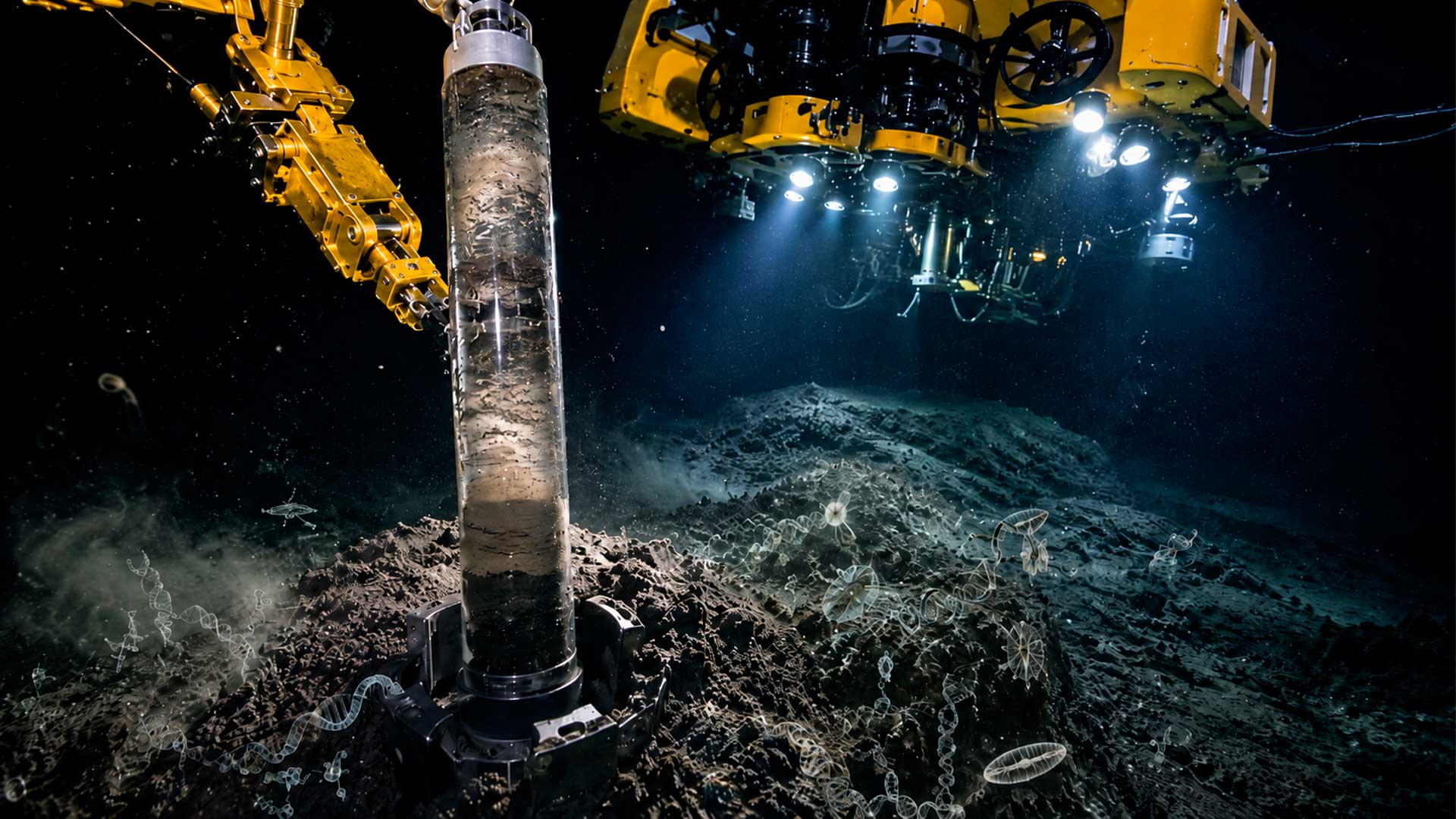

Sediments removed from abyssal plains revealed genetic fragments preserved for up to 32,500 years, indicating that the ocean floor holds a part of biodiversity that science still cannot see just through fossils
Scientists found ancient DNA preserved in sediments of the South Atlantic, at about 5,000 meters deep, in an area where sunlight does not reach and water pressure makes any collection a complex operation.
The material was in layers of mud accumulated on the seabed and was associated with unicellular organisms, mainly foraminifera and radiolarians.
The work, originally published in the journal Biology Letters, analyzed four sediment cores taken from abyssal depths in the South Atlantic and identified eukaryotic DNA in layers up to 32,500 years old, according to the dataset deposited on the scientific platform Dryad.
-
At 77 years old, a retired woman who never tires of learning completes her second degree in design in Ceará and moves people by revealing the help of her 98-year-old mother in the final project.

-
China’s masterstroke: a plant capable of regrowing even when buried by sand helps to recover more than 7,300 hectares of desert with 5 million seedlings, roots over 10 meters deep, and rainfall below 150 mm per year.
-
Portugal placed 1.4 million m³ of sand in the Algarve, spent 14.9 million euros to recover 6.7 km of beaches between Quarteira and Garrão, and is now trying to gain 37.5 meters of shoreline before the sea advances again.
-
The blacksmith’s son dropped out of school at 15, became a mechanic, lost his factory in the war, and built Honda, the Japanese giant that today sells millions of motorcycles and cars worldwide.




The finding shows that the ocean floor functions as a biological archive, capable of preserving clues of beings that lived in ancient periods and that do not always leave clear marks in the fossil record.
The mud removed from the seabed became a genetic archive of thousands of years
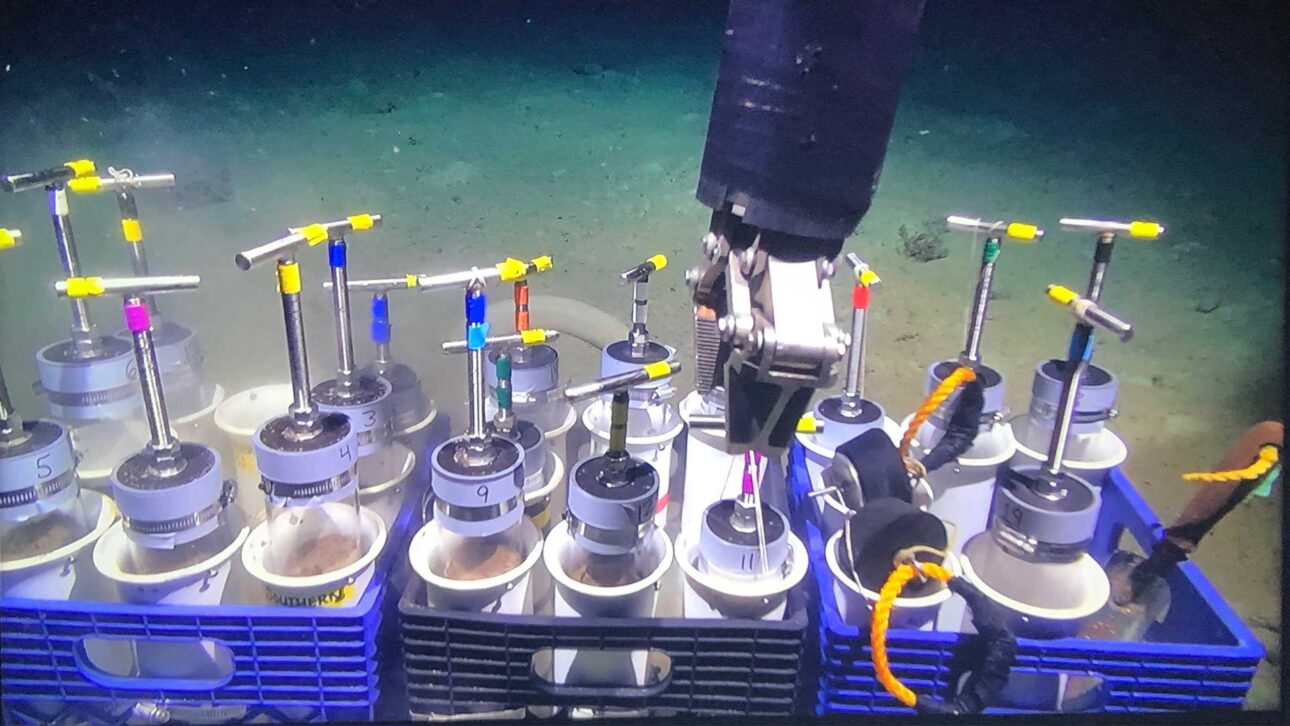
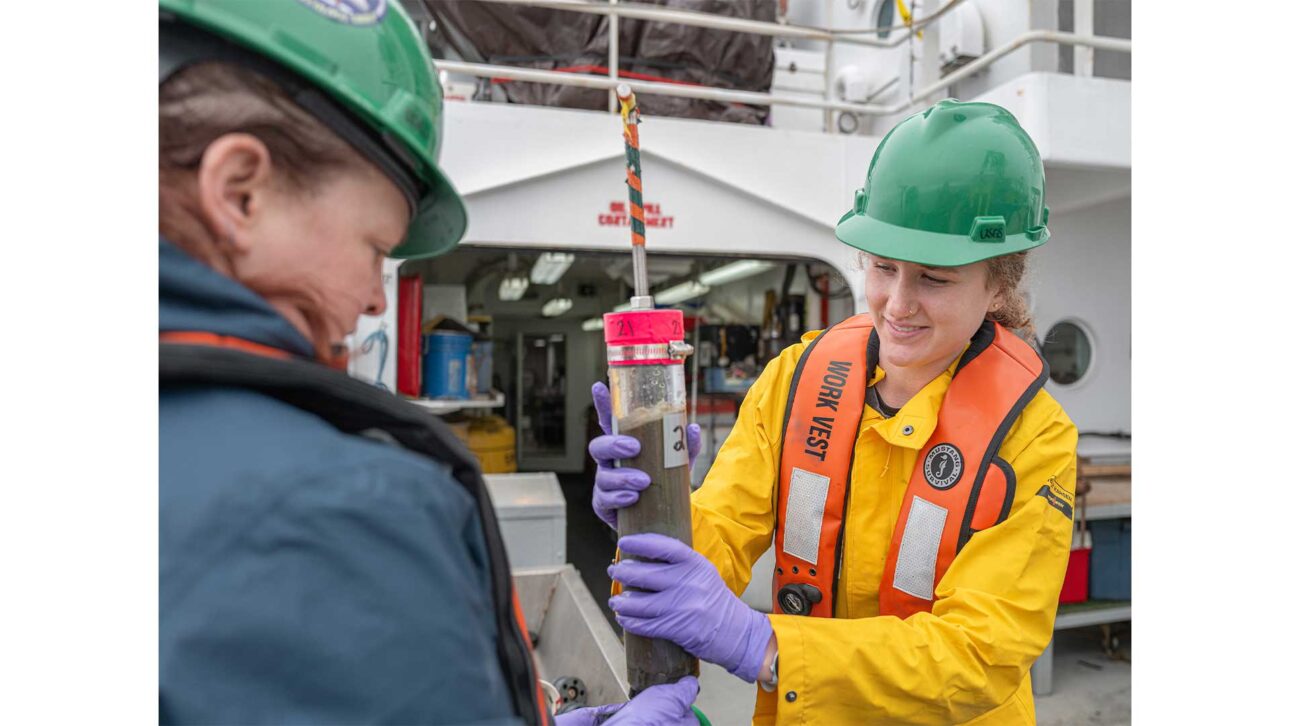
The team worked with compacted sediments, removed in columns from the ocean floor. This type of sample allows observing a temporal sequence, as the deeper layers usually hold older material, slowly accumulated over thousands of years.
According to the study, the researchers searched for DNA fragments linked to two groups of marine microorganisms, the foraminifera and the radiolarians.
Both are unicellular, but play an important role in reconstructing the history of the oceans because some species form mineral structures that can fossilize.
The difference is that sedimentary DNA also reaches organisms that do not fit well into the fossil record. This changes the reading of the marine past because it reveals groups that could go unnoticed if scientists relied only on shells, microscopic shells, or mineral traces.
What appeared in the DNA did not completely match modern databases
When comparing the recovered sequences with genetic databases, researchers found signs of diversity that do not perfectly match known records.
This does not mean that each fragment represents a newly formally described species, but it indicates poorly documented lineages or those absent from the databases used as a reference.
As reported by Science magazine in 2013, the work identified DNA from small unicellular organisms that lived up to 32,500 years ago in the South Atlantic, in an area 5,000 meters below the surface.
The report also highlighted that part of the sequences did not appear in the traditional fossil record, precisely because many of these organisms do not leave easily recognizable fossils.
This detail is what makes the finding relevant to oceanography. The seabed mud ceases to be just sediment and becomes a kind of natural library, with data on biodiversity, temperature, environmental changes, and the composition of ancient ecosystems.
Why DNA managed to resist in such an extreme environment
The preservation of DNA at the ocean floor depends on a combination of factors. The low temperature, absence of light, and physical stability of the abyssal plains reduce some of the processes that degrade genetic material.
In the depths, decomposition is slower than in warm and illuminated environments. The fine mud also helps protect organic fragments, isolating some of this material from direct contact with currents, oxygen, and microorganisms that would accelerate degradation.
The NOAA explains that environmental DNA, known as eDNA, is the genetic material released by organisms into the environment, through tissue particles, mucus, feces, or other traces. Once collected, the samples undergo filtering, preservation, and sequencing for comparison with genetic databases.
In the case of the South Atlantic, the importance lies in the use of this principle in ancient sediments. Instead of only looking for DNA present in the current water, scientists analyze layers accumulated in the past, which allows them to reconstruct part of marine life in previous periods.
The discovery shows how little is still known about the deep ocean
The ocean covers about 70% of the Earth’s surface, has an average depth of 3,682 meters, and remains little explored in detail. According to NOAA, by April 2026, 28.7% of the global ocean floor had been mapped with modern high-resolution technology, and less than 0.001% of the deep ocean floor had been visually observed.
This data helps explain why a mud sample can reveal so much. The deep ocean is larger than any terrestrial biome, but still relies on ships, remotely operated vehicles, sensors, robots, and expensive laboratory analyses to be studied accurately.
Genetic reading expands this reach. It does not replace cameras, nets, drills, or microscopes, but adds a layer of information that can detect organisms invisible on video or absent from traditional physical samples.
Sedimentary DNA can also help reconstruct ancient climate changes
A review article published in Frontiers in Marine Science in 2023 describes ancient DNA in marine sediments as a tool to reconstruct the history of ecosystems over geological time.
The text emphasizes that the method expands the analysis beyond organisms preserved as fossils, although there are still technical limitations and risk of misinterpretations when samples are not well controlled.
This care is necessary because ancient DNA is often fragmented. It can mix with more recent material, suffer chemical degradation, or be contaminated during collection and laboratory work. Therefore, studies of this type require strict protocols and comparison with different lines of evidence.
Even with these limitations, abyssal sediments can hold signs of changes in water temperature, plankton composition, and ocean circulation. Each layer functions as a partial photograph of a period, with sufficient resolution to show changes that the fossil record alone does not reach.
The advancement of submarine mining makes this mapping more urgent
Interest in minerals on the seabed has increased in recent years, mainly for metals used in batteries, electronic equipment, and energy technologies. This advancement pressures deep areas that have not yet been biologically mapped with the same detail as their mineral reserves.
The International Seabed Authority lists publications on mining, environmental protection, and the use of environmental DNA to expand knowledge of biodiversity in deep areas.
In 2024, the organization included among its documents a policy brief on the potential of environmental DNA studies to improve understanding of life on the seabed.
The practical problem is simple. If an area is disturbed before its biodiversity is studied, microscopic species may disappear without a name, without a record, and without an understood ecological function. Ancient DNA helps show that even seemingly poor sediments can carry valuable biological information.
The South Atlantic seabed did not reveal monsters, but showed something perhaps rarer
The finding in the South Atlantic draws attention precisely because it contradicts the idea that abyssal plains are empty. At 5,000 meters deep, where there is no light and pressure limits human presence, the sediment preserved genetic traces of ancient and little-known organisms.
The discovery also reinforces a change in method in marine science. Instead of relying solely on what can be seen, photographed, or fossilized, researchers are starting to read chemical fragments left by tiny beings. It is a slow, laboratory-based investigation, but capable of opening new questions about evolution, climate, and biodiversity.
The dark mud from the seabed, taken far from the coast and below kilometers of water, showed that the history of marine life is still incomplete. And part of it may be stored in thin layers of sediment, waiting for sufficient technology to be read.
Leave your comment on this discovery. Do you think the ocean floor should be mapped before any advancement in underwater mining? Science still knows little about the deep areas, and readers’ opinions help broaden this debate.