





 Portuguese
  English
  Spanish
  4 min of reading
  0 comments


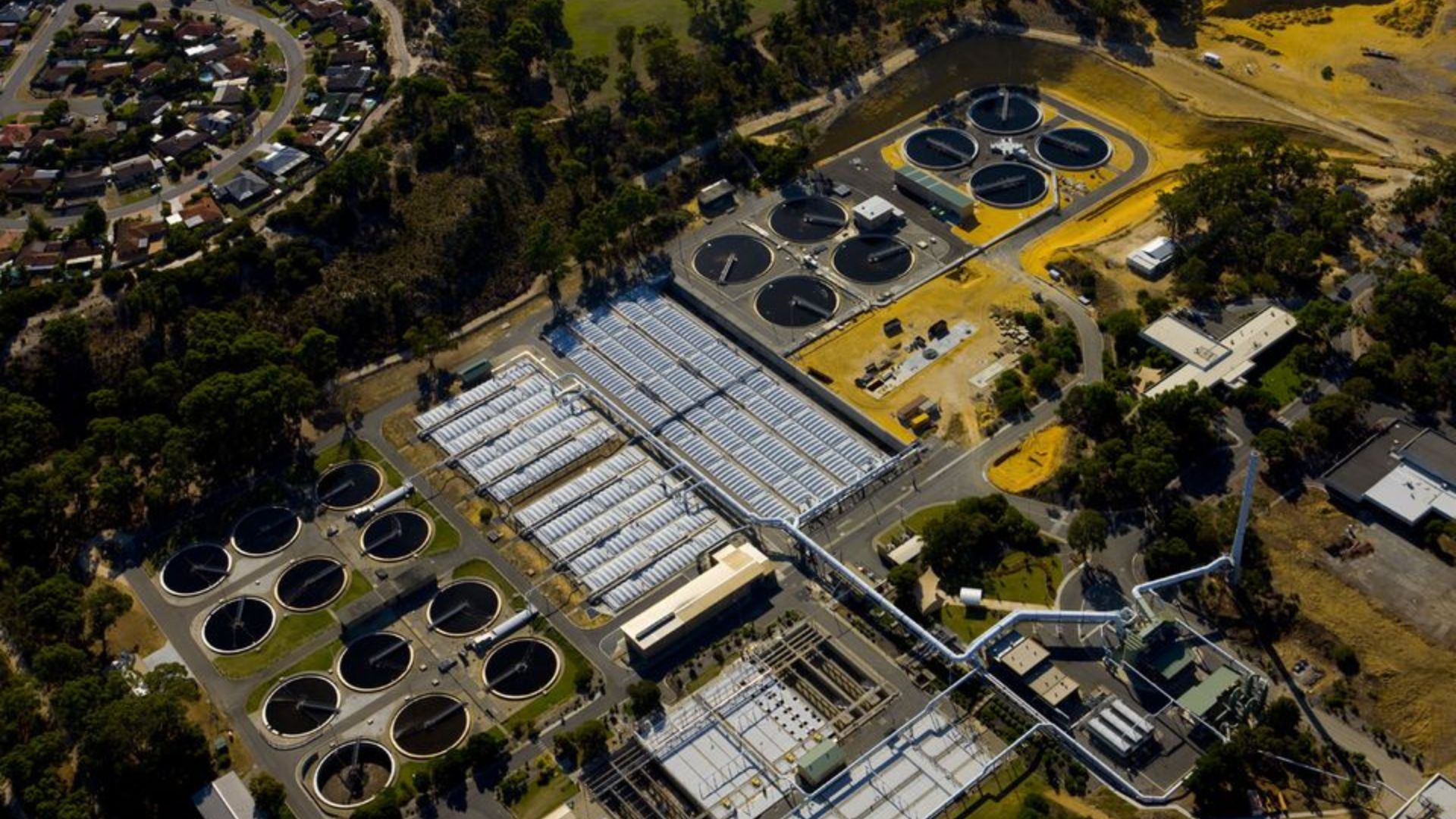
System Transforms Treated Sewage Into Strategic Subsurface Reserve in Western Australia Using Multiple Purification Barriers and Controlled Recharge of Deep Aquifers to Strengthen Urban Supply in a Drier Climate and Growing Demand.
In the arid west of Australia, Perth has started to return part of the water that would otherwise be discarded after sewage treatment back to the supply, through a system that purifies the effluent, injects it into deep aquifers, and recovers this resource when the network needs to bolster supply.
Instead of relying solely on dams, rain, and conventional collection, the strategy creates a subsurface reserve managed by Water Corporation, a state-owned company responsible for water services in Western Australia, which describes the initiative as “groundwater replenishment” with recycled water.
The mechanism operates within the Integrated Water Supply Scheme, the largest supply network in the region, connecting Perth, Mandurah, and other areas, combining sources such as desalination, surface water, groundwater, and the recycled portion that returns underground as storage.
-
The end of Japan? Population is disappearing, country loses more than 3 million inhabitants in just five years and birth rate falls for the tenth consecutive year, raising alarm about demographic collapse and lack of workers.

-
China surprises the world by inaugurating a new era: the country will create a “digital ID” for 28,000 humanoid robots from 100 manufacturers, while machines capable of cooking, doing laundry, and caring for the elderly begin free domestic testing in 2027.
-
The world’s smartest ring is now 40% smaller, measures blood pressure signals during sleep, monitors over 50 health metrics, has a battery life of up to 9 days, and features enhanced sensors for more accurate readings on any skin tone.
-
Endless Brazilian: Blumenau resident turns 107 with a lucid memory, autonomy, and more than 100 direct descendants; the secret to longevity involves homemade food, a peaceful routine in the countryside, and simple habits maintained for decades.




In performance documents and institutional pages, Water Corporation links the decision to a scenario of a drier climate, decreasing flows, and growing demand in urban centers, which has elevated the search for alternatives less dependent on rain variability.
How Aquifer Recharge Works in Perth

The water’s journey begins in traditional sanitation, with domestic and industrial sewage flowing to the Beenyup Wastewater Treatment Plant, where it goes through stages that remove a significant portion of contaminants and microorganisms before any advanced reuse attempts.
Only after this initial screening does a fraction of the treated volume go to an advanced treatment plant in the same complex, designed to elevate the purification level to standards compatible with Australian guidelines for water intended for human consumption.
The stage that distinguishes the project is precisely the “high barrier” package, described as a three-phase process that seeks to reduce solids, microorganisms, and some dissolved material, before releasing the water for subsurface recharge.
In the first phase, ultrafiltration forces the water through membranes capable of retaining very small particles, which decreases suspended solids and helps reduce the microbial load, creating an initial barrier before the more restrictive stage.
Next comes reverse osmosis, which applies pressure to force the water through even more selective membranes, leaving behind some of what was dissolved and reducing impurities that would not effectively exit through size separation alone.
The third phase uses ultraviolet light disinfection as the final barrier, aiming to inactivate remaining microorganisms before the recharge stage, reinforcing the design of multiple layers of safety in the operational sequence.

Subsurface Storage and Quality Control
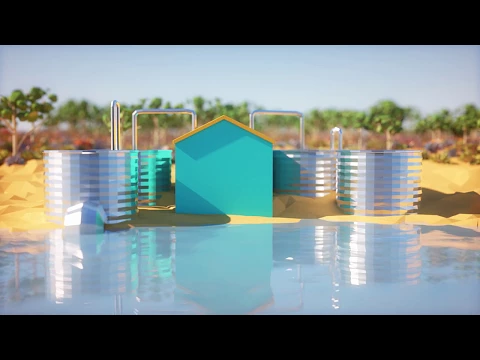
With purification completed, the water is pumped into specific wells and injected into deep aquifers mentioned by Water Corporation itself, mainly Leederville and Yarragadee, where the volume mixes with existing groundwater and remains stored for years.
This storage is not treated merely as a detail of the journey, because the subsurface operates as a water “savings account,” providing storage capacity and system buffering, in addition to adding a physical step between purification and future collection.
When the water is extracted again, it does not go directly to the taps, as Water Corporation describes the need for additional treatment before integrating into the integrated supply system, maintaining the redundancy and control logic at more than one point.
To reduce reliance on blind public trust, the project is presented with a focus on traceability, critical control points, and monitoring throughout the process, based on the premise that each barrier needs to function for the water to proceed.
If any parameter does not meet standards at one of these critical points, the established routine includes stopping operations and diverting the water for disposal instead of continuing with the recharge, as well as implementing operational corrections, according to the institutional description of the scheme.
Another central aspect is external supervision, as the Department of Health of Western Australia is cited as responsible for guidelines on quality at the recharge point and in the aquifer, while samples can be tested by independent and accredited laboratories.

Project Scale and Impact on Supply
The scale helps explain why the case sparks curiosity outside Australia, as the recharge has moved from pilot to being accounted for in supply: in the annual water quality report, the company recorded a recharge of 15.02 billion liters in 2021–22.
At the same time, Water Corporation describes the Integrated Water Supply Scheme as a network that distributes hundreds of billions of liters annually and serves over two million people, positioning recycled water as part of a larger matrix rather than an isolated source.
While the idea of “turning sewage into ‘drinkable’ water” provokes an immediate reaction, the system’s architecture seeks to shift the debate to verifiable routines, based on advanced treatment, continuous monitoring, and regulatory verification before any return to consumption.
In this design, aquifer recharge appears as an instrument to deal with climate instability and urban growth without relying exclusively on rain and reservoirs, using the subsurface as a long-term “water tank” integrated into the daily operation of the network.






-

-

2 people reacted to this.