






 Portuguese
  Spanish


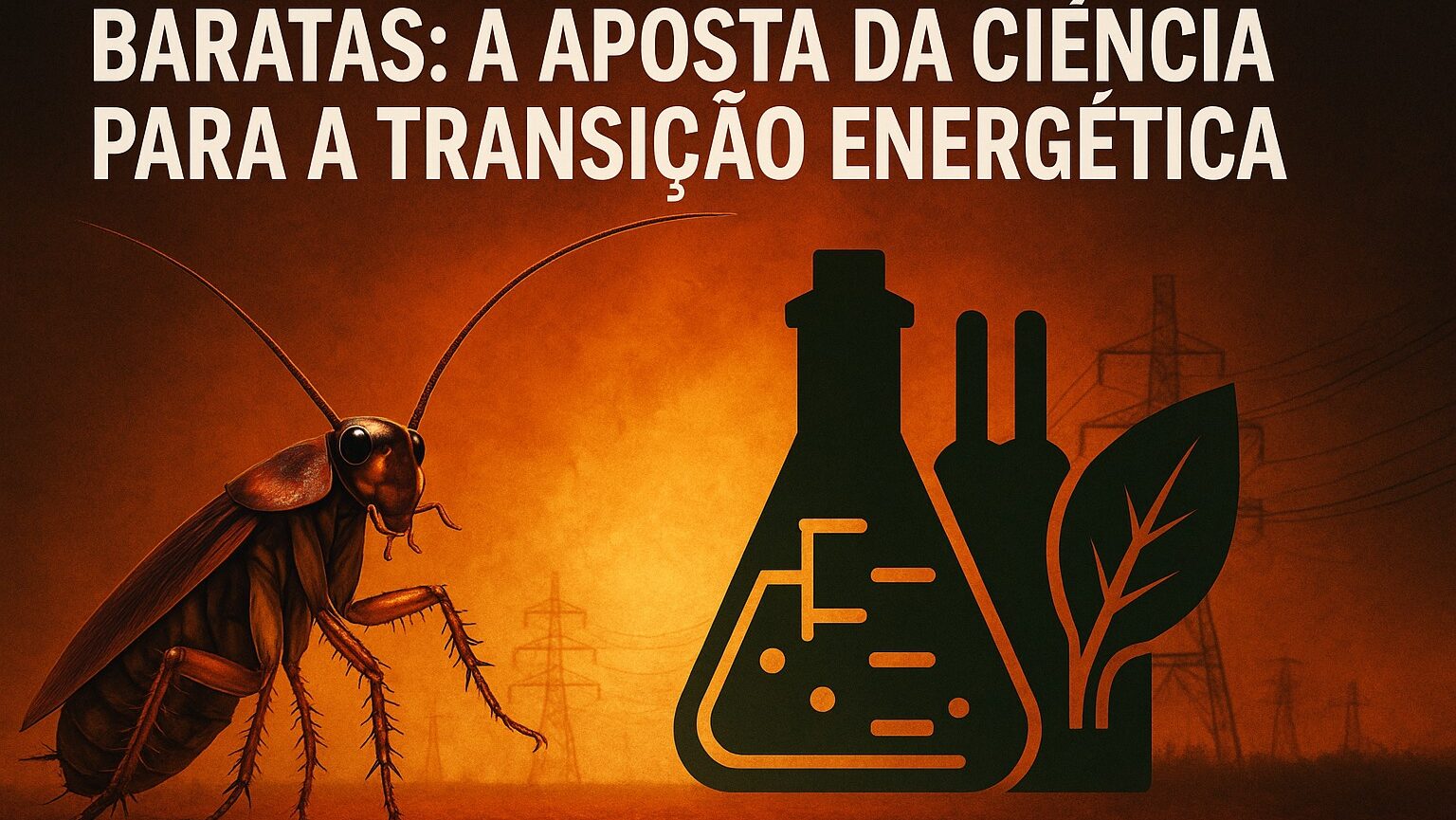


Researchers from USP and UFRJ Study the Digestive System of Cockroaches to Create More Efficient and Sustainable Industrial Processes in Ethanol Production
On the street, in the bathroom, or in the kitchen, anyone who finds a cockroach never considers themselves to be in good company. However, researchers from the Institute of Biosciences at USP and UFRJ see these insects as unexpected allies in the search for a more sustainable energy matrix.
The efficient digestion of cockroaches may inspire industrial processes that transform biomass into clean energy.
Nature’s Cleaners
Few animals are as versatile in their diet as cockroaches. Known as detritivores, they consume dry leaves, organic waste, and even feces.
-
China Develops Custom 140-Ton Electric Mining Truck with 770 kWh Swappable Battery, Deploys 290 Units in Xinjiang’s Largest Zinc Mine

-
Meta to Launch Arena, a New Prediction App Targeting 3.56 Billion Users, Competing with Polymarket and Kalshi

-
Scientist Challenges Famous Human Evolution Theory, Argues Homo Sapiens Evolved Gradually Over Thousands of Years
-
15-Year-Old American Builds Ocean Generator with PVC Pipe and 3D-Printed Propeller for $12, Wins National Prize, Presents at White House, and Makes Forbes 30 Under 30 List




This habit, although repulsive, serves an essential function. They act as “cleaners” of ecosystems, preventing the accumulation of organic matter and maintaining environmental balance.
This varied diet is only possible because cockroaches have developed, over millions of years, a highly adaptable digestive system. It was precisely this capability that caught the attention of Brazilian researchers.
The Scientific View
At the Department of Botany at USP, Professor Marcos Buckeridge analyzed the digestive system of Periplaneta americana, the most common species in cities.
The goal was to understand which enzymes and structures degrade biomass. This investigation opens up opportunities for applications in industry, as it shows how to better utilize sugarcane bagasse in ethanol production.
“We wanted to know which enzymes and which structures attacked the biomass,” explains Buckeridge. The study was published in the journal BioEnergy Research and points to cheaper and more efficient industrial solutions.
Bioenergy Inspired by Insects
Biomimetics, a field that draws inspiration from nature, guides the work. According to Buckeridge, replicating the mechanism of cockroaches could increase the degradation power of biomass, generating more ethanol.
Additionally, it would reduce costs and decrease the need for large planting areas. The space freed up could be allocated for forest restoration.
“If we can produce more ethanol more cheaply, we can use less area and emit less carbon,” says the researcher. He emphasizes that new enzymes and microorganisms discovered in insects further enhance this potential.
Cockroaches Don’t Go to the Plant
Ednildo Machado, an entomologist at UFRJ and co-author of the study, reaffirms that the goal is not to fill plants with cockroaches but to copy how they digest plant fibers. “What we are doing is looking at nature and copying what it has already solved millions of years ago,” he explains.
The two researchers have been working together for almost two decades in search of sustainable alternatives for bioethanol. They advocate for processes without aggressive chemicals and with moderate temperatures, reducing environmental impacts.
The Intestine’s Production Line
The cockroach’s intestine functions like a production line. The process has four stages. First, chitin structures grind the plant fibers.
Next, a digestive chamber with enzymes breaks down the biomass. Then, alkaline and acidic compounds deepen the degradation, releasing sugars.
Finally, specialized bacteria complete digestion, maximizing the use of the material.
According to Machado, this natural sequence is the ideal model for industry. Replicating the enzyme cocktail could increase the efficiency of ethanol and reduce costs.
Challenges and Next Steps
Despite the potential, cost remains an obstacle. Green alternatives still do not compete in price with traditional methods.
The challenge is to adapt scientific knowledge for industrial scale. Replicating the digestive enzymes of insects may be the way to overcome this barrier.
In addition to cockroaches, scientists are studying termites and darkling beetles. Termites, in particular, draw attention: they can degrade up to 90% of cellulose. This opens new perspectives for creating more powerful and sustainable enzyme cocktails.
Industry Inspired by Nature
Buckeridge believes that bioenergy can go beyond chemistry. For him, the very structure of machines could mimic nature.
Instead of rigid metals, flexible equipment that reproduces intestinal movement could further increase efficiency. “These are the best processes: solutions based on nature. It is a final goal. It’s not utopian,” he affirms.
The professor also highlights that progress depends on decades of basic science. “We’re able to think about biotechnology because we’re sitting on a mountain of scientific knowledge,” he says.
Clean Energy with Help from Insects
The work shows that even the most rejected insects can offer answers to significant challenges. By understanding how cockroaches process plant fibers, scientists envision a future with cleaner, cheaper, and more sustainable energy production.
The next step will be to transform this knowledge into technology at an industrial scale, capable of changing the bioenergy sector.
With information from Poder 360.





