Portuguese
  Spanish


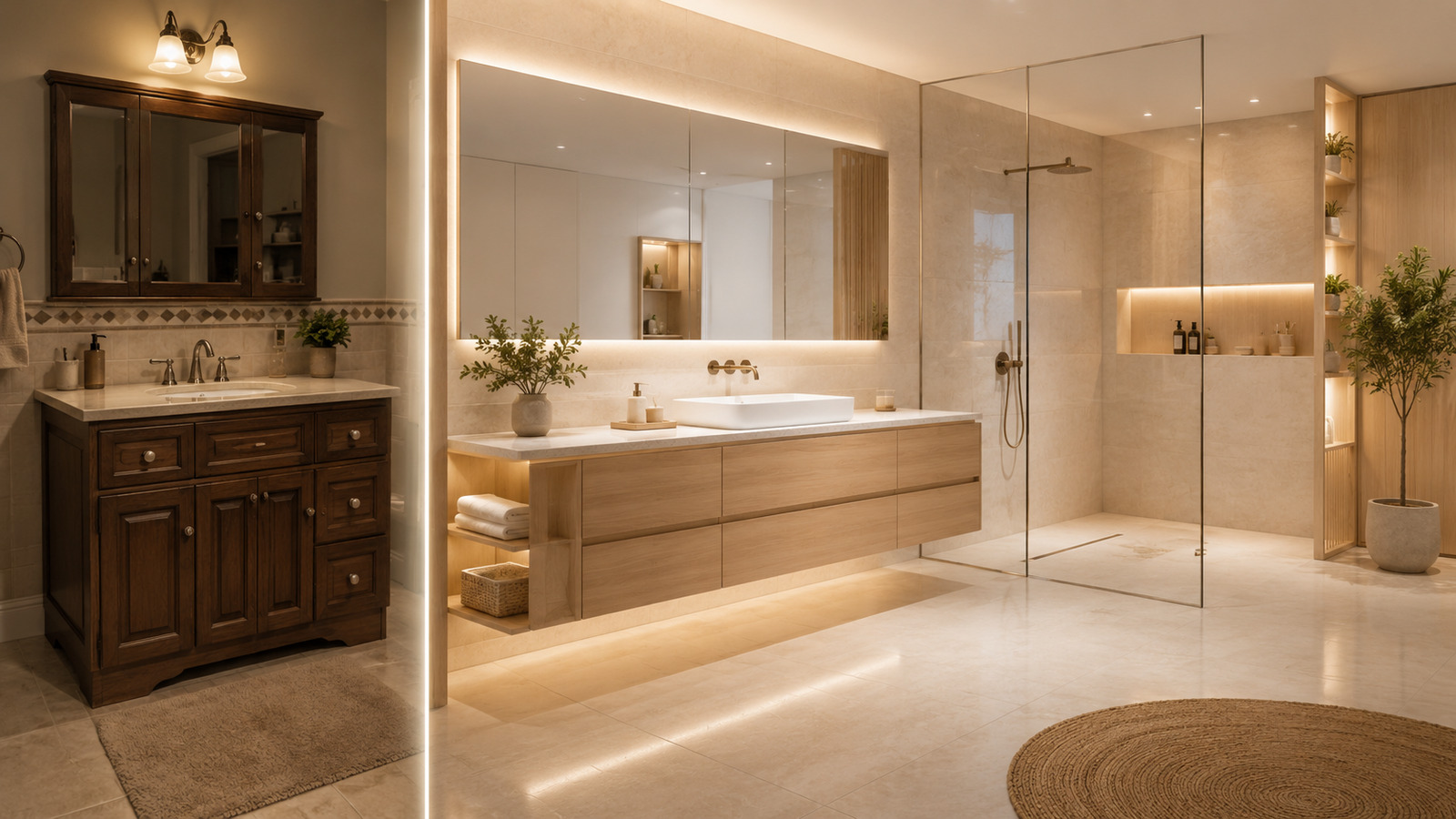

Bathrooms in 2026 start to value suspended furniture, light tones, wood, glass, and solutions that visually expand the space without requiring major renovations
Bathrooms in 2026 are leaving behind traditional cabinets and adopting suspended furniture, open shelves, natural materials, and more planned lighting. The change responds to the search for lighter environments, easy to clean, visually spacious, and integrated into the home’s decor, especially in compact spaces.


Bathrooms in 2026 prioritize lightness and circulation
For many years, traditional cabinets were a common presence in bathrooms for providing support and space to store everyday items. The current trend, however, points to a reduction of bulky furniture in interior projects.
The change occurs because contemporary environments have come to value organization, lighting, and less visual pollution.
-
At 17, she hand-painted her first watercolor design for school uniforms; her brand grew without investors, sold 135,000 pieces, and aims for $3 million in revenue by 2026.

-
Shell Discovers Intact Early 19th-Century Wooden Shipwreck in the Gulf of Mexico at Over 1,300 Meters Deep
-
Brazilian Entrepreneur Turns Door-to-Door Jewelry Sales into a Family Business Empire with Over 70 Stores

-
$75 Million Bridge in Brazil Opens to Connect Cities, Create Jobs, and Cut Travel Time from 30 to 2 Minutes; Spanning 1.24 km, It’s Among the Country’s Largest and Ends Decades of Ferry Queues.



In small bathrooms, large furniture can reduce the sense of spaciousness and hinder circulation.
Another relevant point is cleaning. Simpler solutions, elevated from the floor and with fewer visual divisions, facilitate space maintenance and help create a lighter appearance without abandoning functionality.
Suspended furniture gains space in place of cabinets
Among the main alternatives to traditional cabinets are suspended furniture. As they are detached from the floor, they create a perception of a larger and more organized environment, besides leaving the lower area free.
Open shelves also appear strongly, used for functional storage, and continuous surfaces with few visual divisions. These choices help reduce the feeling of information overload in the bathroom.
Natural and light materials also enter the composition of new projects. The proposal is to combine practicality with a cleaner, more comfortable aesthetic integrated with the rest of the house.

Lighting, Mirrors, and Coatings Expand the Space
The feeling of spaciousness in bathrooms in 2026 does not depend solely on changing the furniture. Proper lighting, the use of large mirrors, and the choice of coatings play an important role in the visual perception of the environment.
Large-format materials, such as wide porcelain tiles, help create visual continuity. As they have fewer visible joints, they reduce the fragmentation of the space and enhance the impression of a more sophisticated and spacious bathroom.
This combination of elements helps transform the environment without necessarily depending on a complete renovation. In many cases, specific changes significantly alter the appearance of the bathroom.

Light Tones, Wood, and Glass Mark the New Aesthetic
The trends also point to softer colors and nature-inspired elements. Shades like beige, cream, and warm white are among the bets to create more welcoming environments.
Wood in natural finishes reinforces this comfort proposal. Meanwhile, discreet and transparent glass partitions help maintain visual continuity, avoiding heavy barriers within the bathroom.
Other highlighted solutions include suspended and smart toilets, as well as palettes inspired by natural and earthy colors.
The priority is no longer just function. The bathroom has come to be treated as a space of well-being, comfort, and aesthetic integration.
This article was prepared based on information from the provided base material, with data, numbers, and statements preserved as per the consulted material.