






 Portuguese
  Spanish


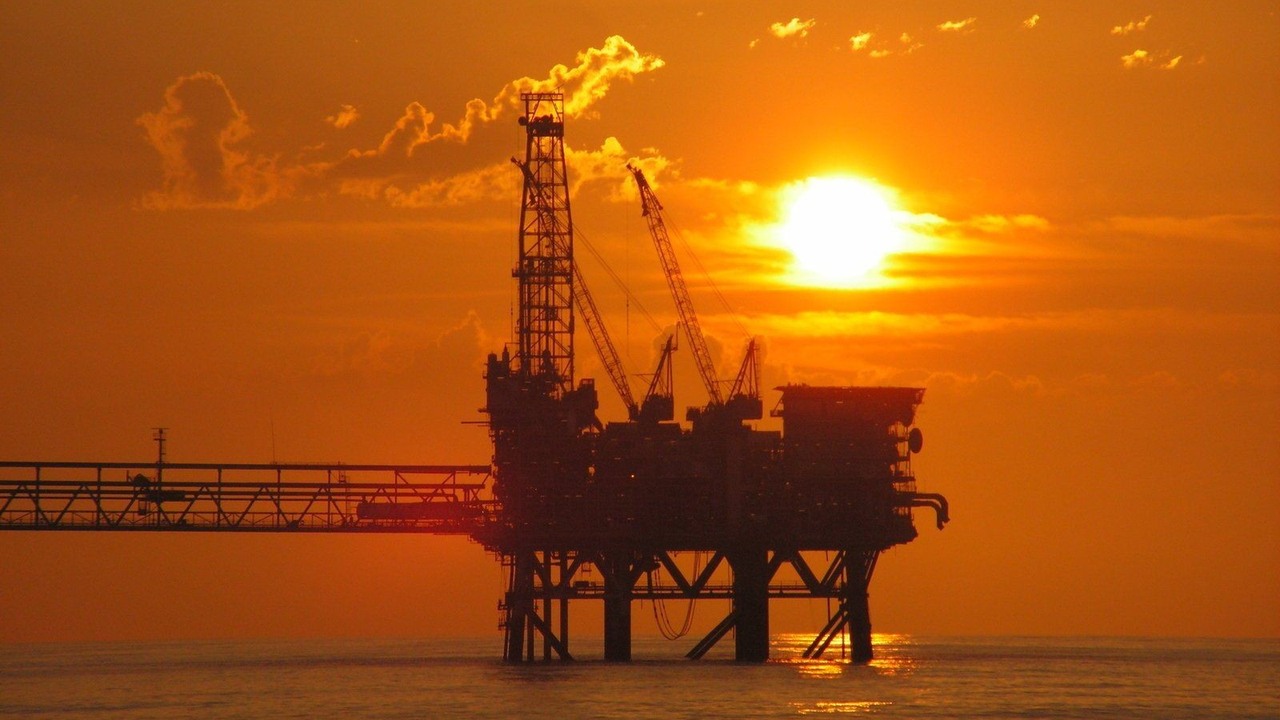


At the bottom of the Indonesian sea, the Italian oil company Eni found a giant natural gas field with an estimated volume in trillions of cubic feet, one of those discoveries that rekindles the appetite of energy giants for deep waters.
Even in a world that talks about clean energy, natural gas remains a huge prize, and oil companies continue hunting for reservoirs at the bottom of the sea. The newest major discovery came from the waters of Indonesia, by the hands of the Italian company Eni, and it is of significant size. It’s the kind of find that moves markets and redefines the plans of an entire country.
The field, named Geliga, is located in the Kutei Basin, in the Indonesian sea, and presents impressive numbers, with a preliminary estimate of about 5 trillion cubic feet of gas, as well as hundreds of millions of barrels of condensate. It’s not just any pocket, but a discovery capable of putting Indonesia in the spotlight on the region’s energy map.
The hunt for gas at the bottom of the sea
Finding gas kilometers below the ocean’s surface is one of the most challenging engineering tasks. Companies use drillships, sensors, and cutting-edge technology to see inside the rock and discover where the reservoirs are hiding. Then, drilling down there, under extreme pressure and temperature, is a feat that few companies in the world truly master.
-
Brazil’s Federal Revenue Auction: iPhone 13 for $95, PlayStation 4 for $80, and Volkswagen Jetta for $2,600 Among 232 Lots Available

-
Tech Giant Oracle Lays Off 21,000 Employees and Invests $70 Billion in Artificial Intelligence

-
Chilean Giant Acquires St. Marche, Expanding from Discount to Premium Supermarkets in São Paulo’s High-End Retail Market
-
After 60 Years of Selling Cheap Milk, Brazilian Family Invests in $4,000 Equipment to Transform Farm’s Milk into Premium Sweets, Producing 2 Tons Daily and Aiming for $6.4 Million


I confess that this invisible hunt fascinates me. While we turn on the stove or fill up the car without thinking, there is a colossal operation happening at the bottom of the oceans to extract the energy that powers the world. A discovery like Eni‘s in Indonesia is the result of years of search, calculation, and risk, in a game where hitting the mark means profiting billions.

Why gas is still so valuable
It may seem contradictory to invest heavily in natural gas at a time when there is so much talk about abandoning fossil fuels, but there is logic to it. Gas is seen by many as a transition fuel, cleaner than coal and oil, capable of generating energy while renewable sources mature. Therefore, the demand for it remains strong in much of the world.
For Indonesia, a populous and growing country, such a discovery means more energy for its own industries and cities, as well as the possibility of exporting. Having gas at home reduces the dependence on importing fuel and gives the country a valuable card at a time when energy has become a matter of sovereignty. It’s no wonder the news was received as a major strategic victory.
There is a detail about the condensate found along with the gas that increases the value of the discovery. Condensate is a light liquid, similar to a very thin oil, that appears mixed with some natural gas reservoirs and can be refined into valuable fuels. Finding hundreds of millions of barrels of it along with trillions of cubic feet of gas is like finding two treasures in the same place. This greatly improves the economic account of the project, as the company can extract and sell not only the gas but also this precious liquid, making the exploration of the Geliga field even more attractive for Eni and Indonesia.

The engineering of extracting gas from the depths
Discovering the gas is just the beginning. Turning a reserve at the bottom of the sea into energy that reaches homes requires gigantic engineering, with platforms, subsea pipelines, and installations capable of operating in brutal conditions for decades. Each stage, from drilling to transportation, involves enormous risks and costs, and any failure can have serious consequences for the environment and the company’s finances.
That’s why a discovery like Eni‘s only becomes a reality in the hands of those who master this technology. Operating in deep waters is for a few giants, who have accumulated decades of experience extracting energy from the bottom of the oceans. The Geliga field, in Indonesia, will be another test of this cutting-edge engineering, turning a promising find into real production.
It is worth mentioning that there is a long interval between discovering the gas and actually selling it. After the announcement, there are years of studies, drilling new wells to confirm the size of the reserve, platform design, and construction of the entire structure. It’s an expensive and time-consuming path, where many things can go wrong or change, from the gas price in the market to the country’s regulations. Therefore, a discovery like this is the exciting beginning of a marathon, not the finish line. Still, it marks the starting point of a project that, if all goes well, can supply Indonesia and yield billions for decades, justifying all the risk taken at the bottom of the sea.

The treasure hidden beneath the waves
I imagine the amount of energy still lying hidden at the bottom of the oceans, waiting for technology and the courage of companies to reach it. Each major discovery, like this one in Indonesia, reminds us that, as much as the world dreams of a clean future, the gas and oil from the depths continue to power much of our civilization.
The Geliga field is another chapter in this story and shows that the era of great discoveries at the bottom of the sea is not over yet. For Indonesia, it is the chance to turn a submerged treasure into development and energy. For the world, it is a reminder that the transition to clean sources will coexist, for a long time yet, with the old and contested natural gas.
Did you imagine the size of the operation that exists at the bottom of the sea to extract the energy we use?


