Portuguese
  Spanish


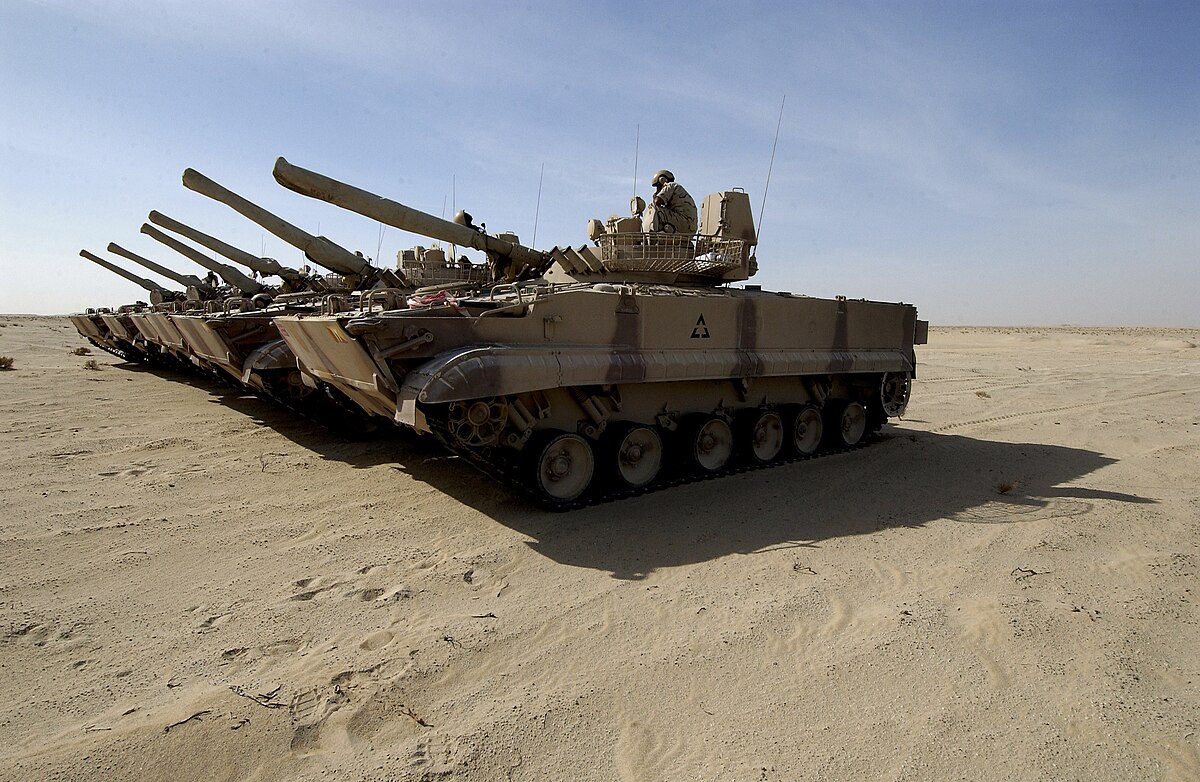


BMP-3 Armored Vehicle Combines Reinforced Hull, Real Amphibious Capability, and Heavy Armament to Cross Rivers, Mud, and Minefields, Taking Infantry to Extreme Combat Scenarios.
The BMP-3 is an infantry fighting vehicle developed by Kurganmashzavod, in the then Soviet Union, and officially introduced into service in the late 1980s, with operational adoption by the Russian Armed Forces starting in 1987. The project was born to replace earlier versions of the BMP family, incorporating greater firepower, enhanced mobility, and the real ability to operate in flooded environments and under mine threats.
The information in this content is based on technical and historical data released by sources such as the Ministry of Defense of the Russian Federation, the International Institute for Strategic Studies (IISS), Jane’s Defence and industrial documentation from Kurganmashzavod.
An Armored Vehicle Designed for the “Worst Possible Scenario”
Since its conception, the BMP-3 has been designed for a specific scenario: high-intensity conventional warfare, with battlefields saturated with artillery, landmines, rivers, deep mud, and natural obstacles.
-
The battery that promises to change cell phones and electric cars still has a microscopic enemy: researchers discover how lithium dendrites pierce the solid electrolyte and are already testing ways to prevent cracks and short circuits.

-
An old ferry rusted for more than 10 years in New York, almost sank after the engine room was flooded, and now volunteers are rushing to clean the hull, remove wires, life jackets, and loose paint before sinking it in the Atlantic to become an artificial reef full of marine life.

-
SpaceX launch turned Falcon 9 into a giant jellyfish in the night sky, with a colorful plume illuminated by the Sun at high altitude, confusing observers and showing how a routine flight can become a rare spectacle of atmospheric physics over Earth.
-
Advancement in science: a new plastic developed by researchers in the USA combines structural strength and thermal blocking in a single technology, opening new possibilities for construction, transportation, electronics, and sustainable solutions with a direct impact on global energy efficiency.


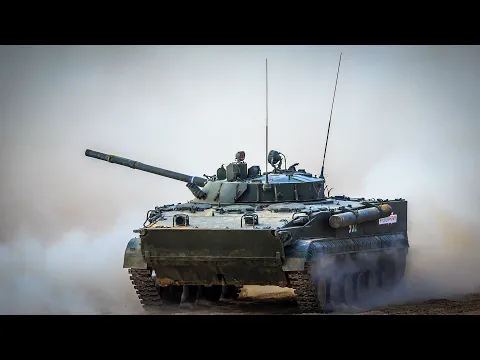

Unlike vehicles focused exclusively on transportation, the BMP-3 combines extreme mobility, full amphibious capabilities, and heavy armament, allowing infantry to reach the contact line protected and ready to engage.
Reinforced Hull and Protection Philosophy
Although often popularly described as a “titanium hull,” the BMP-3 actually utilizes a reinforced aluminum alloy hull, combined with additional steel plates in critical areas. This choice reduces the overall weight of the vehicle without compromising basic protection against shrapnel, light ammunition, and indirect explosions.
The project philosophy is not to make the armored vehicle impenetrable, but to balance protection, mobility, and buoyancy, which is essential for amphibious operations and quick river crossings under enemy fire.
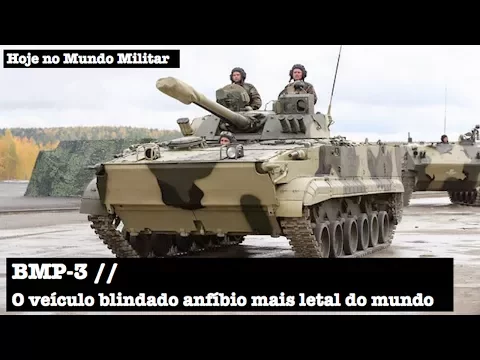
Unlike many armored vehicles that merely “float,” the BMP-3 has been designed to sail in a stable and controlled manner. It features two rear water jets, allowing speeds on water of approximately 10 km/h, even when loaded with infantry and full ammunition.
This capability allows mechanized units to cross wide rivers, marshy areas, and flooded zones without the need for bridges or engineering equipment, drastically reducing the predictability of maneuvers.
Mobility in Extreme Terrain
On land, the BMP-3 stands out for its combination of low relative weight, wide tracks, and hydro-pneumatic suspension, which ensures excellent performance in:
- Deep Mud
- Snow
- Sandy Terrain
- Soaked Agricultural Fields
With a diesel engine of approximately 500 horsepower, the armored vehicle reaches speeds greater than 70 km/h on the road and maintains good agility off-road, something rare in heavily armed vehicles.
Resistance to Mines and Explosions
Although it is not a classic MRAP vehicle, the BMP-3 incorporates solutions to reduce the effects of landmines, such as engine positioning and internal mass distribution.
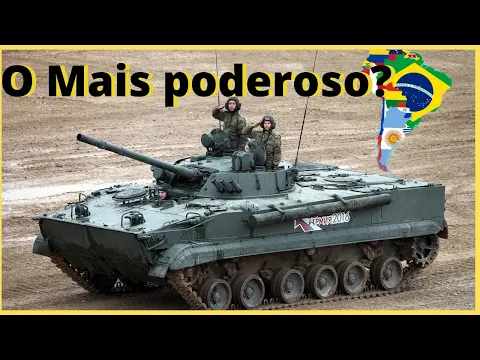
In modernized versions, additional protection kits against mines and improvised explosive devices have been incorporated, reflecting lessons learned in recent conflicts.
The goal is to allow the vehicle to remain operational after indirect explosions, protecting the transported infantry.
Concentrated Firepower in a Single Vehicle
One of the most impressive aspects of the BMP-3 is its armament array, unusual for an infantry vehicle. It combines:
- A 100 mm Main Gun, capable of firing explosive munitions and guided anti-tank missiles
- A 30 mm Automatic Gun coaxial
- Additional Machine Guns for Close Defense
This arrangement allows the BMP-3 to engage light armored vehicles, fortified positions, infantry, and even low-flying helicopters, all from a single relatively compact chassis.
Embarked Infantry Ready for Combat
The BMP-3 carries an equipped infantry team, which can disembark quickly or even fire from inside the vehicle in certain configurations. The original Soviet concept provided for the infantry to fight integrated with the armored vehicle, advancing under its protection and direct fire support.
In addition to Russia, the BMP-3 has been exported to several countries, including United Arab Emirates, Kuwait, Azerbaijan, and Indonesia, where it has demonstrated effective performance in desert, tropical, and humid climates.
Its presence in conflicts and military exercises has reinforced the reputation of an armored vehicle that is versatile, robust, and adaptable, especially in regions where rivers and challenging terrain are constant obstacles.
Evolutions and Modernized Versions
Over the years, the BMP-3 has received significant updates, including:
- Thermal Sight Systems
- Improvements in Ballistic Protection
- Integrated Digital Communication
- Additional Armor Kits
These modernizations keep the vehicle relevant even decades after its introduction.
In a scenario where many armored vehicles prioritize comfort or extreme protection at the expense of mobility, the BMP-3 represents a different philosophy: to get where others cannot, cross what seems impassable, and take infantry directly to the center of battle.
It was not created for sanitized wars but for real conflicts, in hostile terrains, where rivers, mud, and mines are part of the battlefield.