






 Portuguese
  Spanish


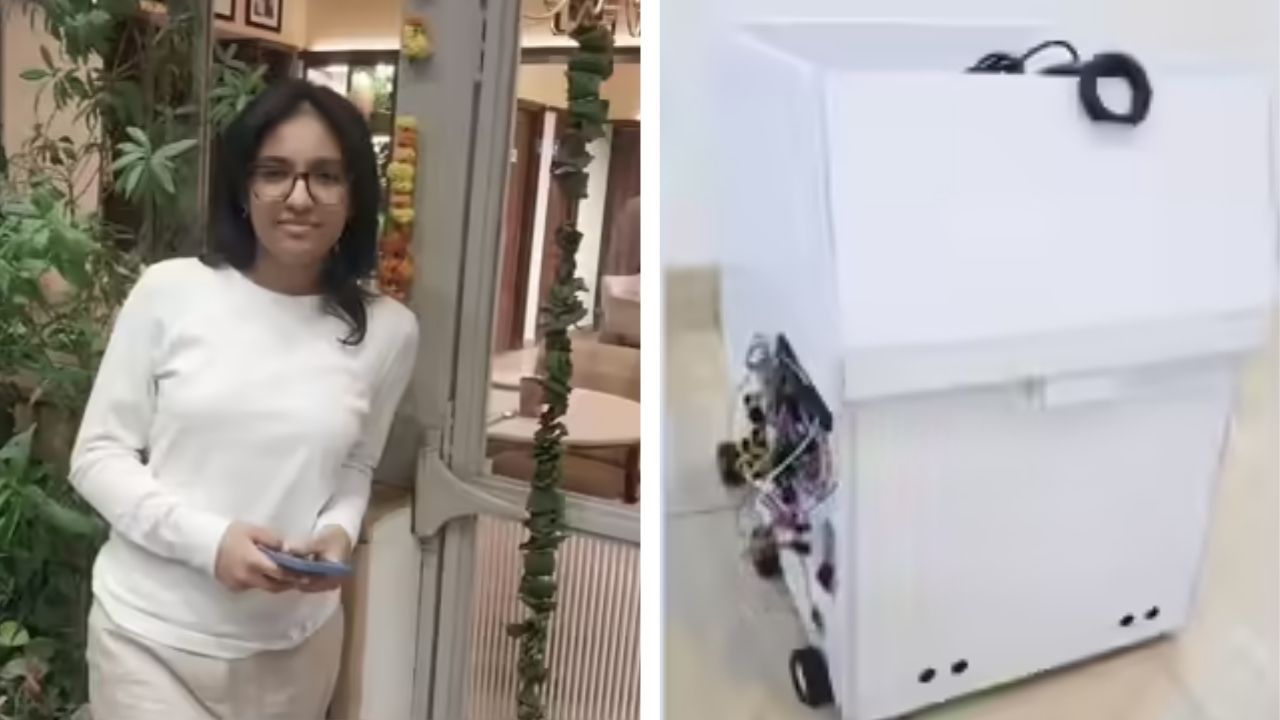

Created by Mahi Malhani, a high school student in New Delhi, the smart bin TRASHbot uses a camera, sensors, Raspberry Pi, Arduino, and artificial intelligence to navigate busy areas, recognize waste, avoid obstacles, and direct biodegradable and non-biodegradable materials to the correct compartments.
The smart bin was developed by the Indian student Mahi Malhani, 17 years old, in New Delhi, India, to collect, identify, and separate waste in busy locations. The project was born after a school trip in 2023, when the young woman saw litter scattered near empty bins.
The information was published by The Economic Times on June 27, 2026, and also reported by the Times of India on June 29, 2026. According to the publications, the TRASHbot was tested in schools, residential complexes, and municipal facilities, focusing on making disposal more automatic, visible, and practical.
Litter scattered near bins gave rise to the project
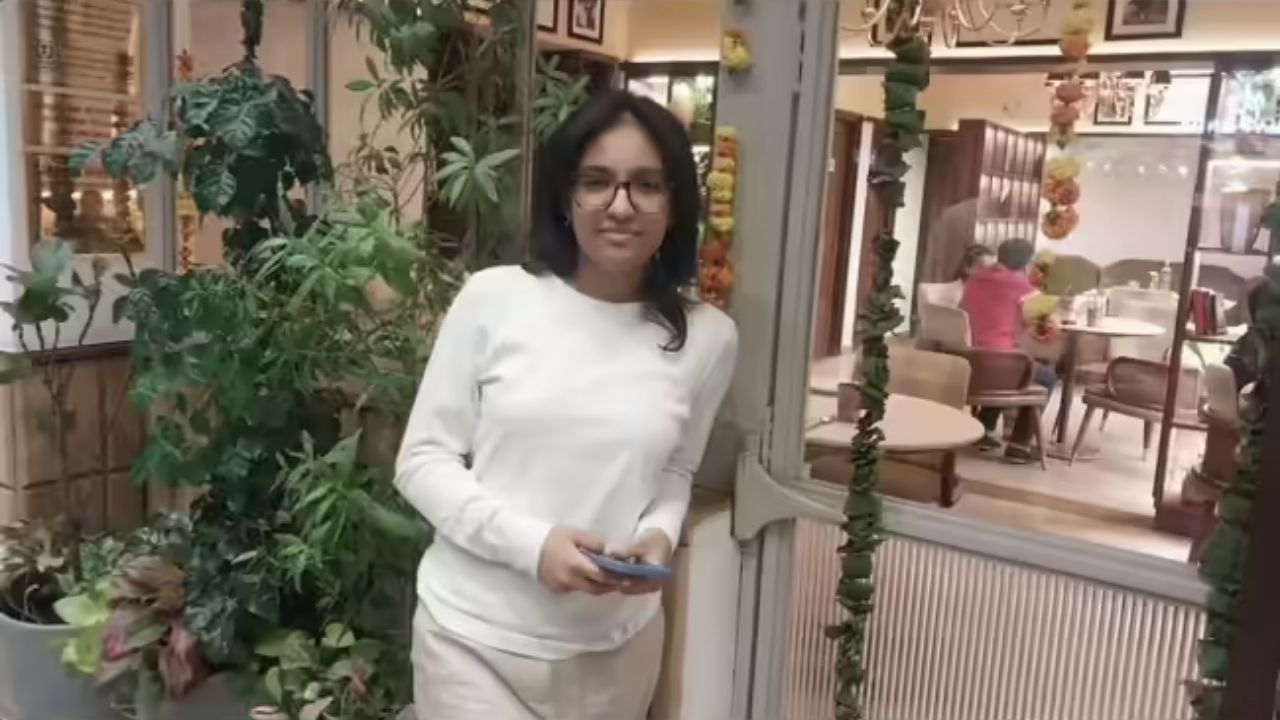
The idea arose during a school visit to parks and historical sites in Delhi. Mahi noticed that packaging and other waste remained on the ground, even when there were bins nearby. For her, the problem was not just the lack of containers, but the gap between people’s behavior and proper disposal.
-
Detectorist finds 2,700-year-old bronze sword embedded vertically in forest in Poland; artifact may reveal ancient Bronze Age ritual

-
At the bottom of the Mediterranean, Italian engineers have sunk a “plant” in the shape of a giant donut that uses the ocean’s own weight to store energy, storing electricity generated by wind and sun at the sea floor and returning it to the grid without dams, mountains, or chemical batteries.

-
Scientists create robotic bird that uses articulated wings to maintain balance, mimicking hawks and flying with stability where common drones fail.
-
U.S. university performs surgeries with remotely controlled humanoid robots

The student decided to think of a solution to reduce this obstacle. Instead of relying solely on fixed bins and the goodwill of each person, the project proposed a robot capable of navigating the environment and bringing disposal closer to the user. The logic changes: instead of waiting for the trash to reach the bin, the smart bin can also move to where the problem appears.
How the smart bin recognizes each waste
The TRASHbot uses a digital camera connected to a Raspberry Pi 3B+, responsible for processing the images. The system runs the YOLOv3 model, used for real-time object detection, and attempts to identify the type of waste placed in front of the robot.
In the current version, the smart trash bin separates materials into two main categories: biodegradable and non-biodegradable. After the reading made by artificial intelligence, an Arduino Uno R3 activates internal motors that tilt the mechanism and direct the item to the correct compartment.
Waste separation reached 90% success
According to the data released, the TRASHbot achieved about 85% accuracy in identifying waste and a 90% success rate in the sorting mechanism. This means that recognizing the material and directing it to the right compartment are different steps within the same process.
The robot also showed a 98% response in obstacle avoidance and 92% real-time waste classification, according to the Times of India. The numbers indicate a promising prototype, but do not mean the system is infallible, as lighting, material shape, dirt, and object position can influence the camera’s reading.
Sensors help the robot move without bumping
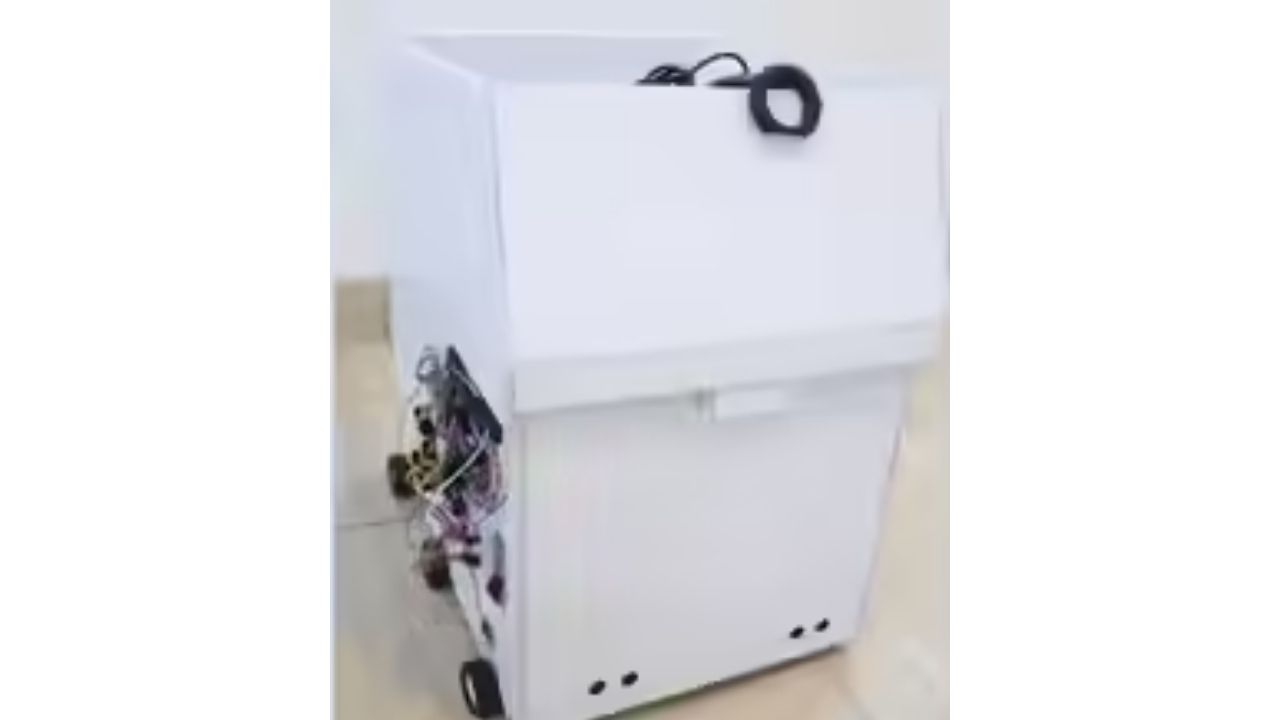
To move in spaces with people, tables, and objects, the TRASHbot is equipped with ultrasonic sensors. These sensors allow the robot to identify nearby obstacles, stop or divert before a collision, which facilitates its use in cafeterias, schools, offices, and condominiums.
The reported autonomy is about two and a half hours on a charge. The equipment can operate independently or be manually controlled via Bluetooth, through a mobile app, a useful feature in demonstrations, tests, and environments where someone needs to direct the robot to specific points.
Raspberry Pi and Arduino share functions
The Raspberry Pi functions as the visual processing center of the smart trash bin. It receives images from the camera, runs the artificial intelligence model, and sends the waste classification to the rest of the system. Meanwhile, the Arduino is responsible for controlling motors, movement, and mechanical parts of the equipment.
This division makes the prototype more organized, because each board performs a specific function. While one part of the system “sees” and interprets the waste, the other transforms this decision into physical movement, whether to move the robot or to tilt the internal separation compartment.
Project received technical guidance, but was created by the student
During development, Mahi sought guidance from mentors connected to Rancho Labs, a robotics and internet of things initiative associated with the IIT Delhi ecosystem. According to published reports, the mentors helped with practical aspects of robotics, electronics, and IoT.
Even with technical support, the student stated that the prototype was her own creation. The process involved research, testing, adjustments, failures, and reformulations. The young woman already had an interest in programming and electronics, with studies in languages like Python, C++, and JavaScript, which helped in building the solution.
Tests moved from the student’s home to schools and condominiums
The first tests took place at Mahi’s home before the TRASHbot was taken to the cafeteria of Amity International School in Mayur Vihar. In the school environment, the robot moved among tables, received packages, and attracted the attention of students due to its sensors, lights, and movements.
Later, the smart trash can began to be tested in residential condominiums. Since March 2025, according to The Economic Times, the TRASHbot has been used in two condominiums in Noida and by a municipality in Udaipur, showing application beyond the school environment.
Limits of the prototype still need to be observed
Despite the good initial performance, the TRASHbot is still a prototype. Automatic separation does not eliminate important stages of waste management, such as emptying compartments, transportation, proper recycling, and treatment of collected materials.
There are also technical challenges. Crumpled, mixed, wet, or poorly positioned waste can hinder the camera’s reading. To function on a larger scale, the smart trash can would need to undergo longer tests in varied environments and with different types of real waste.
Next versions may separate five types of materials
Mahi intends to expand the robot’s capacity to classify waste into five categories, including plastic, metal, glass, biodegradable, and non-biodegradable materials. This evolution would make the separation more complete but would also increase the complexity of the artificial intelligence.
The student is also considering adding cloud connectivity and solar power charging. Another goal is to adapt the TRASHbot for rural areas or places with less infrastructure, where uneven terrain and lack of power can hinder the use of conventional technological equipment.
Robot makes recycling a more visible action
The TRASHbot draws attention because it turns a common task into something interactive. Instead of a bin sitting in the corner, the equipment moves, avoids obstacles, receives waste, and shows that different materials need to follow different destinations. This visibility can help bring students and residents closer to the logic of recycling.
The question now is whether solutions like this can change habits in schools, parks, and condominiums or if correct separation still depends more on education, enforcement, and public infrastructure. Do you think an intelligent bin moving on its own would make people dispose of waste better? Share your opinion.


