






 Portuguese
  Spanish
  3 min of reading
  9 comments


With Record Production and Investments in Technology, Brazil Surpasses Iran and United Arab Emirates and Takes 7th Place in Global Oil Ranking, According to OPEC Report.
Brazil has secured a prominent position in the international energy landscape. According to the latest Monthly Oil Market Report (MOMR) released by the Organization of the Petroleum Exporting Countries (OPEC), the country has become the seventh largest oil producer in the world, with a production of 3.89 million barrels per day (bbl/d). This performance puts Brazil ahead of traditionally dominant nations, such as Iran (3.25 million bbl/d) and the United Arab Emirates (3.35 million bbl/d).
This advancement represents an impressive transformation in the national energy history. Four decades ago, the country faced supply shocks and external dependence on fossil fuels. Today, thanks to the efficient discovery and exploitation of pre-salt, Brazil assumes a strategic position in the geopolitical oil landscape.
Pre-Salt: The Game-Changer That Changed Brazil’s Energy Future
The production leap is a direct consequence of the exploration of large fields such as Búzios, Tupi, and Mero — giants responsible for elevating the level of Brazilian production. The Tupi field, absolute leader until August, has already surpassed the mark of 3 billion barrels produced in 15 years, while Búzios is emerging as the largest national producer.
-
Oil production grows in Rio, but reserve replacement raises a warning sign

-
Petrobras is expected to complete the drilling of the Morpho well in the Foz do Amazonas in August 2026, the first well in the Equatorial Margin, an oil frontier that the ANP estimates at more than 30 billion barrels and could redraw the map of Brazil.

-
Oil returns to the center of concerns with tension between the US and Iran

-
IEA reduces forecast for global oil demand in 2026 after impacts of the Middle East crisis
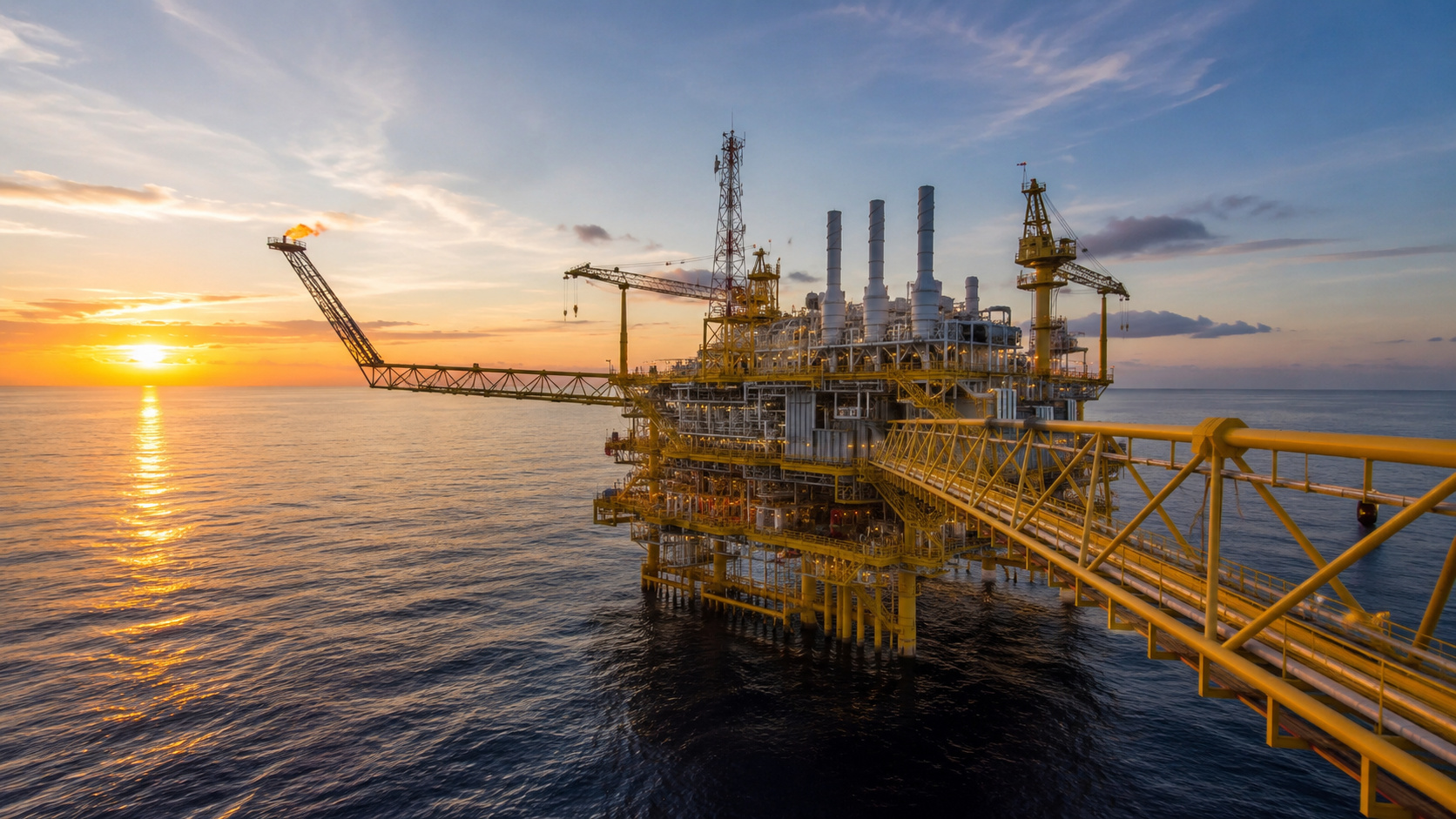


The technological revolution and mastery of operations in ultra-deep waters have placed Petrobras and its partners among the global references in offshore oil extraction. More than just volume, the country has been standing out for its efficiency and commitment to reducing emissions associated with hydrocarbon production.
Innovation and Sustainability: The Distinction of National Production
Brazil demonstrates that it is possible to grow in oil production without compromising environmental targets. The greenhouse gas (GHG) emissions per barrel of oil equivalent (boe) in Brazilian pre-salt are nearly half the global average, which ranges between 18 and 20 kg of CO₂e per boe.
This efficiency is the result of continuous investments in technological innovation and an operational model that prioritizes sustainability. According to industry experts, this combination of productivity and environmental responsibility is what gives Brazil a competitive edge over other major producers.
However, the country still faces significant environmental challenges. Data from Climate Watch, a platform from the World Resources Institute (WRI), indicate that Brazil ranks as the sixth largest emitter of GHG in the world — not due to the energy sector, but due to the impacts of deforestation and agriculture.
The Geopolitics of Oil and Brazil’s Role in the Energy Transition
Even in the face of the advancement of renewable energies, oil continues to play an essential role in global energy security. Experts emphasize that the energy transition will not occur abruptly, but rather through a gradual integration of fossil fuels and clean sources.
In this context, Brazil emerges as an example of balance: it maintains the expansion of pre-salt while heavily investing in renewable energies, such as wind, solar, and biofuels.
Petrobras, for its part, has reinforced its commitment to a more sustainable matrix, allocating part of its investments to research and development of low-carbon technologies. For industry analysts, this strategy is crucial to ensure competitiveness and environmental reputation in an increasingly demanding global market.
Brazil’s record performance reinforces its relevance in the global scene and attracts the attention of foreign investors. According to the OPEC report, global demand for oil is expected to remain high in the coming decades, even with the advancement of renewables. This opens up room for countries with stable and sustainable production, like Brazil, to expand their share in international trade.
With a robust portfolio of productive fields and cutting-edge technology, the country is set to establish itself as one of the leaders of the new oil era, balancing economic growth, energy security, and environmental responsibility.







Grande coisa essa notícia. Tudo isso de petroleo e gasolina mais cara do mundo . Grandes paises exportadores de petróleo revertem isso para o povo com uma boa qualidade de vida . Aqui só corrupção e desvios de dinheiro de tudo . Ouro , petróleo, terras raras e por aí vai . Infelizmente
Ou seja: enquanto o governos investia pesado no desenvolvimentos do Presal, essa gente toda, inclusive a imprensa, sem enxergar um palmo à frente do nariz, sem entender o que estava acontecendo, dizia que o PT estava quebrando a Petrobras.
Grande produção e não explica-se o endividamento, claro que tem **** gordo metendo a mão, só não entendo porque tanta gente defende essa turma
E estava mesmo. A operação Lava Jato salvou a empresa ao prender a quadrilha. Naquele período o valor de mercado da empresa caiu pra menos da metade.
E estava mesmo. A Lava Jato evitou isso quando prendeu a quadrilha. Naquele período o valor de mercado da Petrobras caiu para menos da metade.
Kkkkkkk, foi engraçado seu comentário
Lembro que a Petrobras estava se transformando em uma das maiores empresas do mundo até o PT resolver colocar diretores pra ****-la, e ela se tornar uma das mais endividadas.
Só falta competência p/transformar uma produção de cerca de 4 milhões de barriis/dia. São 640 milhões de litros p/dia. É muito óleo p/pouco resultado.
É preciso ser muito incompetente p/ter apenas $ 0,70 de lucro p/ ação como foi no trimestre passado. Ou seha, menos de $ 0,30 ao mês.
E o pior: A Petrobrás já baixou os preços 2 vezes na refinaria. Uma de $ 0,17 e outra de $ 0,14 e aqui em Teresina-Pi, não diminui nos postos. Ou seja, perde o país, perde a Petrobrás e as distribuidoras e os postos é que saem ganhando.
Que adianta ter muito petróleo se não temos REFINARIAS….a Venezuela está sentada na maior reserva do mundo! Nem exportar conseguem, pois a extração está sucateada! Governo de esquerda, né…aqui, importamos Diesel…