






 Portuguese
  Spanish
  4 min of reading
  0 comments


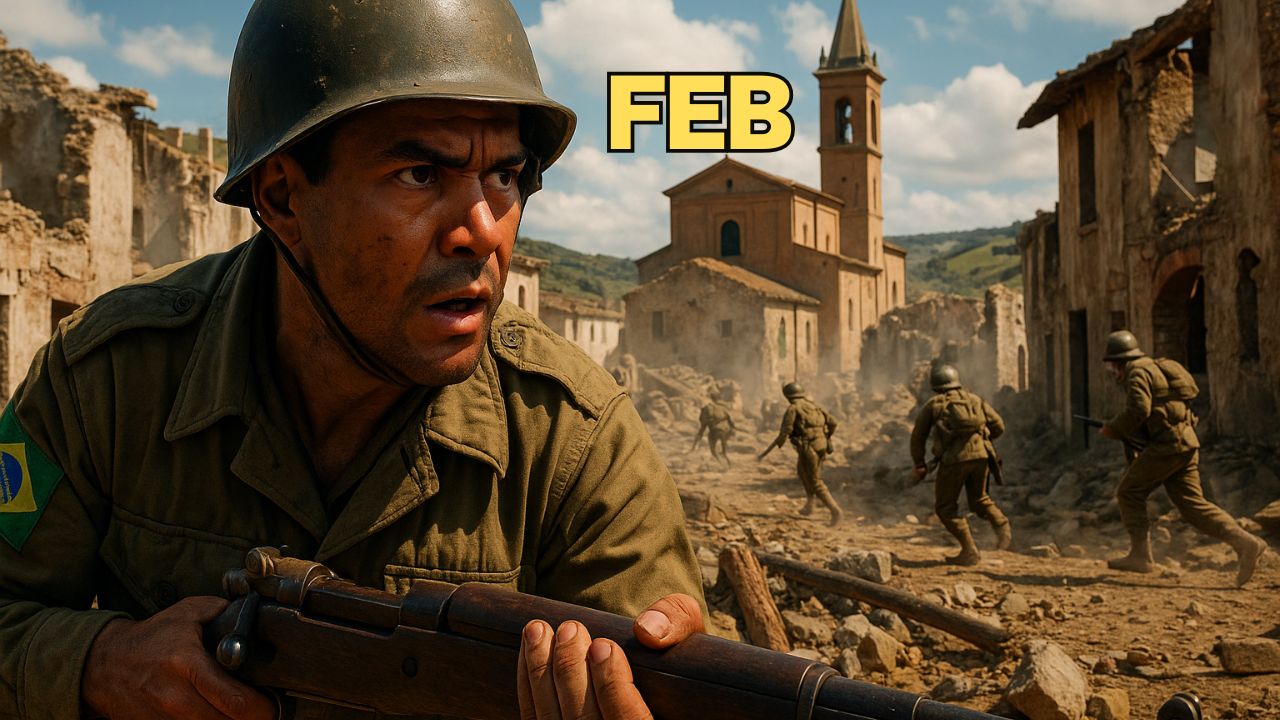
In The Greatest Brazilian Conquest of World War II, The FEB Soldiers Faced House-To-House Combat In Montese, Overthrew Nazi Positions On The Gothic Line, And Are Still Honored Today By The Italians.
The greatest Brazilian conquest of World War II has an address and a name: Montese, a small hill town in the Emilia-Romagna region of northern Italy. It was there, in the final days of the campaign in Italy, that the Brazilian Expeditionary Force was engaged in one of its toughest fights and helped to break a vital sector of the German defenses.
What makes this story even stronger is the contrast between past and present. In 1945, Montese was synonymous with ruin, loss, and courage. Today, it is synonymous with living memory, with public tributes, a museum, ceremonies, and a rare bond between Brazilians and Italians.
Why Montese Was A Decisive Target On The Gothic Line
Montese was located in a zone that the Allies considered difficult to cross due to the fortifications associated with the Gothic Line. After movements and repositionings in the sector between the regions of Bologna and Modena, the scenario closed for the final Allied offensive in the Italy campaign.
-
At 29 years old and tired of the corporate routine, a young man leaves his 11-year career, sells almost all his possessions, buys a sailboat, and sets off from Oregon to Hawaii accompanied only by his cat.

-
Saudi takes his Toyota Hilux 4×4, leaves Riyadh, crosses 23 countries, and drives about 6,000 kilometers for almost three weeks to northern Norway to fulfill the dream of seeing the northern lights.

-
An 84-year-old mother wakes up before midnight in Japan, keeps a family bakery open for 55 years, and sells cheap handmade bread; the shop in Fukuoka produces up to 400 units a day with the help of her son.

-
Tired of seeing her salary disappear with the mortgage, a 24-year-old sells her £125,000 house, buys a van for £13,000, invests £6,000, transforms the vehicle into a home, and decides to live on the roads of Europe.



On one side were FEB Infantry soldiers, with American reinforcements. On the other were Nazi German Infantry troops holed up in houses, woods, and trenches, with positions inside the city itself. It was terrain prepared to wear down the attacker, exactly the type of combat where every meter costs dearly.
The Battle of Montese: Bombardment, House-to-House Combat, and Advance Under Fire
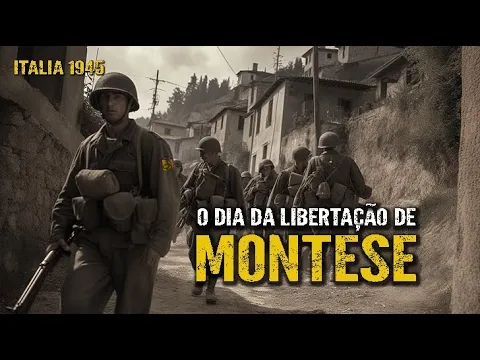

The battle is described as occurring between April 14 and 17, 1945, during the final Allied offensive. The soldiers positioned themselves ahead of the defenses in Montese and, after an intense bombardment, the city was taken, followed by house-to-house fighting in the subsequent days.
Even after the initial conquest, German artillery continued to shell without pause. Amidst new bloody clashes, the Brazilians seized Monte Belvedere and forced the Germans to retreat. The victory came, but it did not come clean. It came at the brutal pace of war.
The Human And Material Cost Of The Greatest Brazilian Conquest Of The Second World War
Montese was practically devastated. According to the figures cited in the base, of the 1,121 houses in the municipality, 833 were destroyed. The struggle also claimed the lives of 189 civilians.
On the Brazilian side, the campaign is described as successful, but with a high cost: about 430 casualties, including 34 dead, along with wounded, prisoners, and missing. On the German side, the cited estimate reaches 500 casualties among the dead and imprisoned. It is this weight that gives real dimension to the greatest Brazilian conquest of World War II.
Repercussions and Military Effect: Praise and Dismantling of Defenses
The capture of Montese had a favorable impact on high command and received praise from the American command. Coupled with victories at other points along the Gothic Line, this victory would have decisively contributed to the dismantling of the German defensive lines in the Fifth Army sector and, consequently, in the rest of Italy.
In other words, Montese was not an isolated episode. It was a piece that fit into the larger movement of the final offensive, accelerating the collapse of German positions in that phase of the war.
Montese Today: Ruins, Museum, and A Town That Doesn’t Forget The Brazilians
It is still possible to find ruins of German military positions in the region today. In the town, there is a historical museum that tells how the liberation of Montese from Nazi occupation took place, associating this chapter with the action of the Brazilian Army.
And the memory has not been restricted to showcases. The residents honor the Brazilian soldiers by naming a square Piazza Brasil. Furthermore, the anthem of the Brazilian Expeditionary Force is learned and sung by local children in ceremonies related to the April celebrations. Montese has turned memory into a public ritual.
April 25 and The Tribute That Moves Brazilians and Italians
The date April 25 is celebrated in Italy as Liberation Day. In Montese, it takes on an even more emotional meaning by also celebrating the liberation of the city by Brazilians. There is a parade, procession, and popular participation, reinforcing the bond between those who were liberated and those who fought.
The narrative highlights the emotion of walking the streets alongside Brazilians and Italians, passing by significant places for the FEB, such as sites linked to the former infirmary. Time passes, but history remains etched in the city, even in façades and places still marked by bullets, like the fountain mentioned in the base.
Why This Story Continues To Be The Greatest Brazilian Conquest Of World War II
Because it brings together, in the same place, three layers that are hard to separate: the harshness of combat, the strategic impact, and the permanence of memory. The greatest Brazilian conquest of World War II is not just a military achievement. It is an episode that has become identity, pride, and shared remembrance between two peoples.
And that explains why Montese is not just a point on the 1945 map. It is a living symbol of what the FEB faced and what it achieved.
What impacts you the most in this story of the greatest Brazilian conquest of World War II: the battle itself or the fact that Montese still honors the soldiers today?


-

3 people reacted to this.