






 Portuguese
  Spanish


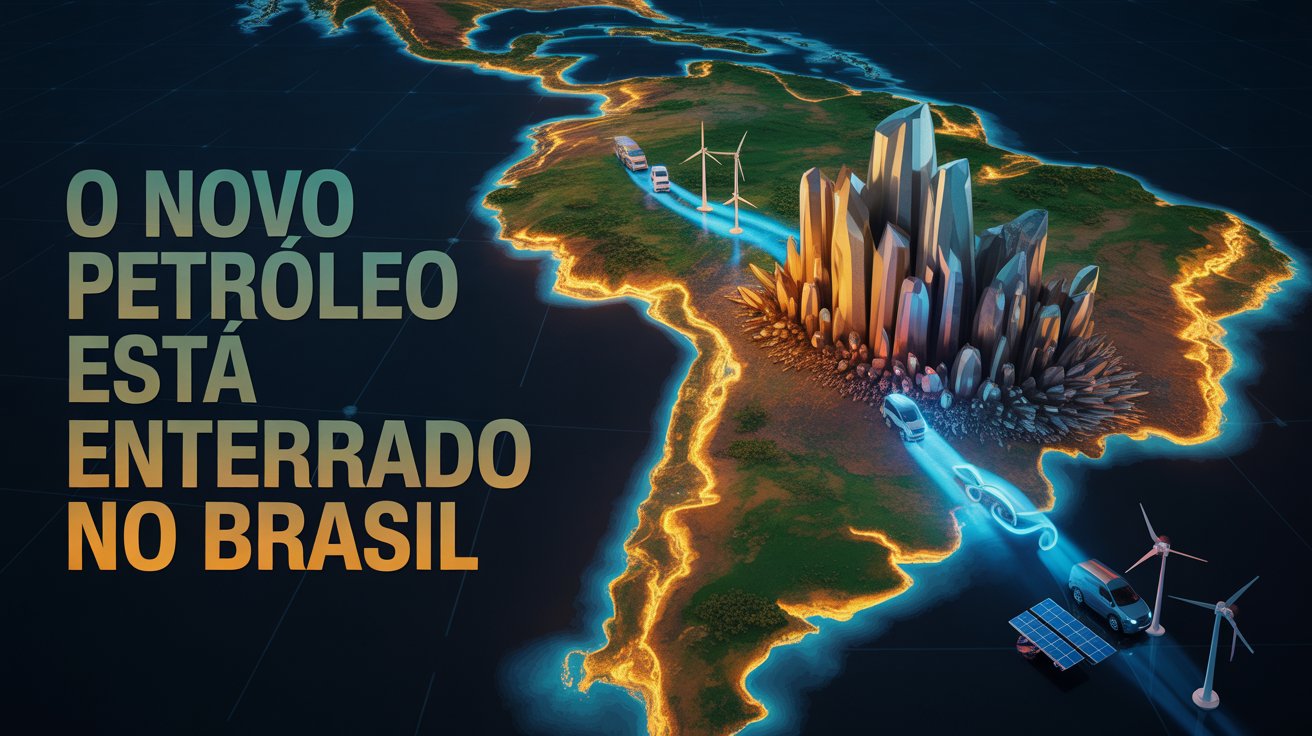


With Vast Reserves Of Rare Earths, Niobium, And White Hydrogen, Brazil Stands Out In The New Global Energy Geopolitics, But Faces Strategic And Environmental Challenges As World Powers Compete For Influence Over The Hidden Resources In The Amazon.
The Amazon rainforest may be on the verge of becoming the epicenter of the new global energy revolution.
Brazil, owner of a subsoil rich in strategic minerals, is beginning to emerge as a protagonist in a rapidly transforming geopolitical landscape.
Elements such as rare earths, niobium, and even white hydrogen place the country in a privileged position, but also exposed to foreign interests.
-
$2.5 Billion Amazon Potash Mine Aims to Reduce Brazil’s 95% Import Dependency

-
Grendene’s Sales Decline in 2025, but Melissa Brand Surges 36% and Becomes Key Focus
-
World’s Largest Single-Line Pulp Mill Opens in Brazil, Costing $4.3 Billion

-
Pix Processed $35 Trillion in 2025, Becoming Brazil’s Leading Payment Method


“Rare earth elements are the new oil,” says geophysicist and science communicator Sérgio Sacani during his participation in the Podcast Ciência Sem Fim, echoing a growing concern behind the scenes of major powers.
These materials are currently indispensable for the functioning of clean and digital technologies, such as wind turbines, solar panels, electric vehicles, and even state-of-the-art weaponry.
Rare Earths In The Amazon: Wealth In The Brazilian Subsoil
What was once the sole focus of environmental debates now takes on new contours.
The Amazon, in addition to its invaluable ecological value, hides promising reserves of rare earths, thorium, niobium, and other critical minerals in its subsoil.
According to Sacani, the true global interest lies not on the forest’s surface, but in what is buried beneath it.
And this interest is becoming increasingly difficult to disguise.
“Whoever has rare earths rules the world today,” Sacani warned during a livestream, highlighting the technological and energy dependency of modern nations on these inputs.
A recent study by the International Energy Agency (IEA) projects that global demand for critical minerals, such as lithium, cobalt, and rare earths, could quadruple by 2040.
It is no coincidence, therefore, that countries with a mining tradition, such as China and Australia, are consolidating their supremacy in the supply chain of these elements.
But Brazil, especially with the deposits in the North region, presents itself as a viable — and coveted — alternative.
White Hydrogen: Clean Energy Directly From The Earth
In addition to minerals, another energy promise hidden in Brazilian territory is starting to attract attention: white hydrogen.
This is a natural form of hydrogen found in underground reservoirs, which can be extracted directly from the Earth, as in the case of oil.
The current production of green hydrogen — through electrolysis — is expensive and requires enormous energy consumption.
For this reason, white hydrogen stands out as a more efficient and cleaner solution.
According to Sacani, companies from various countries are already investing billions to identify and explore these natural reservoirs.
“The future is not about producing hydrogen; it’s about finding where it already is and extracting it,” he explained.


Niobium And Lanthanum: Strategic Assets Of Brazil
Brazil is also a global powerhouse in the production of niobium, an essential element in the aerospace industry, superconductors, and advanced batteries.
With over 90% of the world’s known reserves, the country holds a strategic trump card that few exploit to its true value.
Local initiatives, such as the development of lanthanum batteries by groups in Minas Gerais, showcase the country’s innovative potential.
But they also expose the urgent need for government support and robust, continuous investments.
According to experts, ensuring technological and industrial sovereignty over these resources is crucial.
Otherwise, Brazil risks becoming merely a supplier of raw materials for powers that control the production chains.
Environmental Pressures And External Interests In The Amazon
The exploration of these resources, however, does not occur on neutral ground.
Sacani raises an uncomfortable alert: “The environment has become an excuse for the exploitation of rare earths. The question is: do they want to protect the Amazon or ensure access to what is beneath it?”
International organizations and environmental NGOs frequently press for greater protection of the forest.
But the tone of Sacani’s criticism suggests that there are also hidden agendas behind this discourse.
The tension between preservation and mineral sovereignty gains new chapters with each advancement in technological mining.
Energy Efficiency Crisis And Viable Alternatives
Even with the promises of clean energy, the planet is experiencing an energy efficiency crisis.
Intermittent sources, such as solar and wind, face technical limitations.
Meanwhile, fission nuclear energy generates radioactive waste that is difficult to manage.
“The only truly clean energy would be nuclear fusion, but we are still far from that,” said Sacani.
In the meantime, powers like China are advancing in innovation.
The Asian country recently announced the discovery of the world’s largest thorium mine and is already developing batteries using this element.
According to Sacani, this energy self-sufficiency represents a global strategic risk. “China could bankrupt the planet,” he stated.
Biofuels And Brazilian Innovation In The Energy Scenario
Brazil, for its part, remains at a crossroads.
It possesses the wealth, expertise in biofuels, and a history in clean technologies like ethanol, which has greater energy efficiency than many traditional methods.
Every unit of energy consumed in its production generates eight units back.
However, there is a lack of national articulation, consistent public policies, and a long-term strategic vision.
“There is no magic fuel,” Sacani reminds. “Every process has an impact. The key is balance.”
Artificial Intelligence And The New Challenge Of Energy Consumption
The advancement of artificial intelligence also raises new concerns.
Data centers and supercomputers require colossal amounts of energy and cooling.
To mitigate this impact, Sacani suggests creative solutions, such as the use of liquid nitrogen, inspired by overclocking practices in computer competitions.
The idea, according to him, is to think outside the box.
With the world rapidly transforming, solutions for the energy crisis require boldness, science, and sovereignty.
So, in your opinion: is Brazil prepared to lead this new energy race or will it continue to export its future at a bargain price?


Eu acho que vai continuar vendendo a matéria prima a preço de ****.