Portuguese
  Spanish


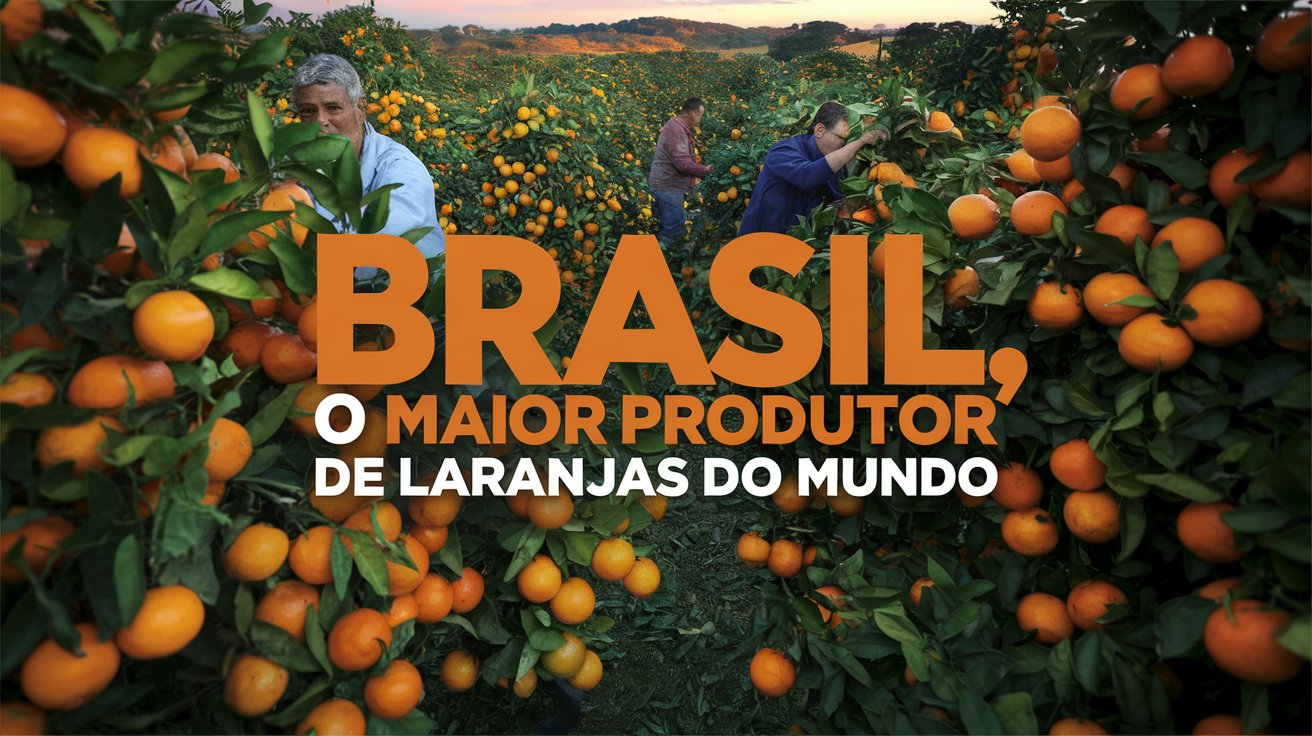


Did You Know That Brazil Is the Largest Producer and Exporter of Orange Juice in the World? Companies Like Cutrale and Citrosuco Not Only Lead the Global Market but Also Shape the Future of the Citrus Industry with Investments in Innovation and Sustainability.
Orange juice is present at breakfast, lunch, and even dinner for millions of people around the world, but few know where most of this popular drink comes from.
In supermarkets in Europe, the United States, and Asia, juice boxes arrive on the shelves with various labels, but one common factor unites many of them: Brazil is responsible for more than 50% of the world’s production of this product.
Two Brazilian giants dominate this market and generate billions of reais annually, consolidating the country as the largest global exporter of orange juice.
-
Toll Fees in São Paulo’s Countryside Drop by Up to 50% Starting Today

-
The Frenchman Who Brought the World Cup to Life: Overcoming Resistance and Crossing the Atlantic with the Trophy to Create Football’s Biggest Tournament
-
Archaeologists Reexamine 4,500-Year-Old Tombs in Ancient Mesopotamia, Suggesting Some Early Kings May Have Been Powerful Women
-
Petrobras Invests $2.3 Billion in Brazilian Coastal Shipyards, Creating Over 5,000 Jobs and Revitalizing the Naval Industry


According to Fernanda Iorio from FCI Consulting Export, Cutrale and Citrosuco are the main names in this industry, controlling half of the international sector together.
Brazil and Its Leadership in Orange Juice Production
Brazil has dominated the orange juice market for decades, being the largest producer and exporter in the world.
More than 70% of the orange juice consumed on the planet comes from Brazilian lands, according to data from the National Association of Citrus Juice Exporters (CitrusBR).
This prominence does not happen by chance. The tropical climate, territorial extension, and investment in agricultural technology have made the country a reference in citrus cultivation.
The states of São Paulo and Minas Gerais are the largest producers of oranges, with vast plantation areas that ensure large and high-quality harvests.
The international market absorbs almost all Brazilian orange juice production.
About 97% of the juice produced in Brazil is exported, with the United States and the European Union being the main consumers.
This external dependence puts the sector in the face of constant challenges, such as exchange rate fluctuations, trade barriers, and competition from emerging producers.
The Giants Cutrale and Citrosuco
At the center of this orange juice empire are two Brazilian giants: Cutrale and Citrosuco. Together, these companies control about 50% of the global market, generating more than R$ 30 billion a year.
Cutrale, founded in 1967, is one of the largest orange juice suppliers in the world and has a strong presence in the United States and Europe.
Its dominance in the sector is so significant that it has been referred to as “the OPEC of orange juice,” referencing the organization of petroleum-exporting countries, due to its impact on global commodity prices.
On the other hand, Citrosuco was born from the merger between Citrovita and Citrosuco Paulista, consolidating itself as one of the largest players in the industry.
The company exports to more than 100 countries and has its own distribution terminals in strategic ports, ensuring a constant flow of exports.
In addition to large-scale production, both companies invest in research to increase farm efficiency and improve juice quality.
The technological advancement in orange cultivation and juice industrialization allowed for greater productivity and reduced losses, essential factors for keeping Brazil in the global lead.
The Economic Impact and Challenges of the Sector
Citrus cultivation is one of Brazil’s most important agricultural activities.
The sector generates thousands of direct and indirect jobs, impacting the economies of various cities in São Paulo and Minas Gerais.
From farm workers to major exporters, the orange juice production chain is broad and diverse.
However, the industry faces constant challenges. Pests and diseases, such as greening (huanglongbing), threaten plantations and require ongoing investments in research and management.
Additionally, climate change affects production, with periods of intense drought and unexpected frosts impacting the orchards.
On the international scene, trade barriers and sanitary demands also pose challenges for the sector.
Some countries impose tariffs and restrictions on Brazilian orange juice, forcing producers to diversify markets and invest in certifications to ensure competitiveness.
Sustainability and Innovation in Citrus Cultivation
In recent years, sustainability has gained prominence in the citrus sector.
Companies like Cutrale and Citrosuco have adopted more sustainable practices, reducing water waste, investing in renewable energy, and reusing by-products of oranges, such as peels and pulp, to produce essential oils and animal feed.
Moreover, advancements in biotechnology help develop orange varieties that are more resistant to pests and diseases, decreasing the need for pesticides and making production more efficient.
Digitalization in the field, with the use of drones and sensors for monitoring crops, has also contributed to a more modern and sustainable citrus cultivation.
The Future of Brazilian Orange Juice
With an increasingly competitive global market, Brazil must constantly innovate to maintain its leadership position.
The search for new markets, product diversification, and investment in quality are fundamental strategies to ensure the sector’s future.
Although challenges such as climate change, trade barriers, and diseases in plantations are in the way, the country remains an undeniable powerhouse in the orange juice market.
The combination of tradition, technology, and production capacity keeps Brazil at the forefront of this essential segment for the agricultural economy.
For anyone drinking a glass of orange juice at breakfast, it may be hard to imagine all the work involved in producing this drink. But one thing is certain: there is a good chance that this juice originated from Brazilian lands, reaffirming the country as the absolute leader in global citrus cultivation.