Portuguese
  Spanish



Volkswagen Polo Track 2026 has a 1.0 MPI engine with 84 hp, consumption of up to 16.3 km/l, range above 760 km, and standard torque vectoring.
According to Volkswagen Brazil, the Polo Track 2026 enters the market with a suggested price of R$ 95,790, reduced to R$ 84,445 with the Sustainable Car Program and IPI exemption. With financing through Banco Volkswagen, it is possible to acquire the model with a down payment of R$ 59,174, equivalent to 70% of the value, and installment in 48 monthly payments of R$ 790. For buyers who prefer a smaller down payment, simulations with 20% down payment and 60 installments result in payments around R$ 1,300. The engine is the 1.0 MPI flex three-cylinder, with 84 hp on ethanol and 77 hp on gasoline, always paired with a five-speed manual transmission.
The consumption certified by Inmetro reaches 16.3 km/l on the highway with gasoline, and the range with the 49-liter tank exceeds 760 km on highways. The technical differential of the Polo Track is not only in consumption but in torque vectoring, a dynamic safety technology that improves stability in curves.
1.0 MPI Engine of Polo Track 2026 delivers 84 hp and efficient consumption for daily use
The 1.0 MPI three-cylinder engine of the Polo Track is the same mechanical set that has equipped entry-level versions of the Polo for years. The maturity of the project helps explain the reputation for reliability accumulated among owners.
-
Chevrolet’s Parent Company to Invest Billions in Brazil to Modernize Factories, Update Cars, and Accelerate Hybrid Launch by 2028

-
Practical Driving Tests in Brazil Surge by 23.5%, Exceeding 2.2 Million by 2026, as New Rules Make the Process Cheaper and Simpler
-
Brazil’s Lula Government Allocates $463 Million Quota for Electric Car Parts, Waives Import Tax Until December, Sparking Competition Among BYD, Automakers, and Unions as Consumers Question Impact on Prices and Local Industry

-
Thinking of Installing LED Headlights? Why Replacing Halogen Bulbs is Still Banned, the Glare Risks Authorities Worry About, and How a New Proposal Could Allow Certified, Safe Installations


With 84 hp on ethanol and torque of 10.3 kgfm, the performance is adequate for urban use, without a sporty proposal. The acceleration from 0 to 100 km/h in 13.4 seconds with ethanol places the Polo Track in the average of the entry-level category.


The maximum speed of 169 km/h is sufficient for normal use on Brazilian highways. In comparison with Fiat Argo 1.0, Citroën C3 Live, and Hyundai HB20 Comfort, all with 75 hp, the Polo Track delivers superior power within the popular segment.
Polo Track consumption reaches 16.3 km/l on the highway with gasoline
Consumption is one of the strongest points of the Volkswagen Polo Track 2026. According to Inmetro data, the hatch achieves 13.9 km/l in the city and 16.3 km/l on the highway with gasoline.
This performance places the model among the most economical entry-level hatches in Brazil. The number surpasses or ties with direct competitors in at least one of the evaluation cycles, especially when compared to HB20 1.0 and Argo 1.0.
The 49-liter tank further enhances the advantage in range. On a trip with gasoline, the Polo Track can exceed 760 km per refueling, potentially reaching close to 799 km in the ideal highway cycle.
Torque Vectoring in Polo Track Improves Stability in Curves
Torque vectoring is the electronic system that distributes engine power differently between the front wheels during curves. The goal is to improve trajectory, reduce understeer, and increase dynamic stability.
In practice, when the driver accelerates in a curve, the system helps the car follow the desired direction more precisely. Without this feature, the vehicle tends to widen the trajectory and go straight, a common behavior in front-wheel-drive hatchbacks.
The difference is that the Polo Track offers this technology as standard. In the entry-level category, Citroën C3, Fiat Argo, and Hyundai HB20 do not offer torque vectoring in equivalent versions.
Polo Track Combines ESC, ASR, EDS, and Hill Start Assist
Torque vectoring does not work alone. It works together with electronic stability control, traction control, and electronic differential lock, forming a more complete active safety package.

The ESC helps correct trajectory loss, the ASR reduces traction loss, and the EDS simulates the action of a more efficient differential in low-traction situations. The hill start assist prevents the car from rolling back on inclines.
This combination places the Polo Track above many rivals in dynamic behavior. It is a rare package in entry-level cars, especially in a model that competes on price with popular hatchbacks.
Standard Equipment of Polo Track 2026 Prioritizes Safety and Practical Use
The list of standard items in the Polo Track 2026 is more generous than the entry-level position of the line suggests. The main focus is on active safety, passive safety, and essential daily use equipment.
As standard, the model comes with four airbags with passenger deactivation, ESC, ASR, EDS, hill start assist, tire pressure monitoring, ABS brakes with electronic brake distribution and ISOFIX.
The hatch also comes with air conditioning with dust and pollen filter, electric steering, multifunction steering wheel, front electric windows, driver’s seat with height adjustment, and steering column with height and depth adjustment.
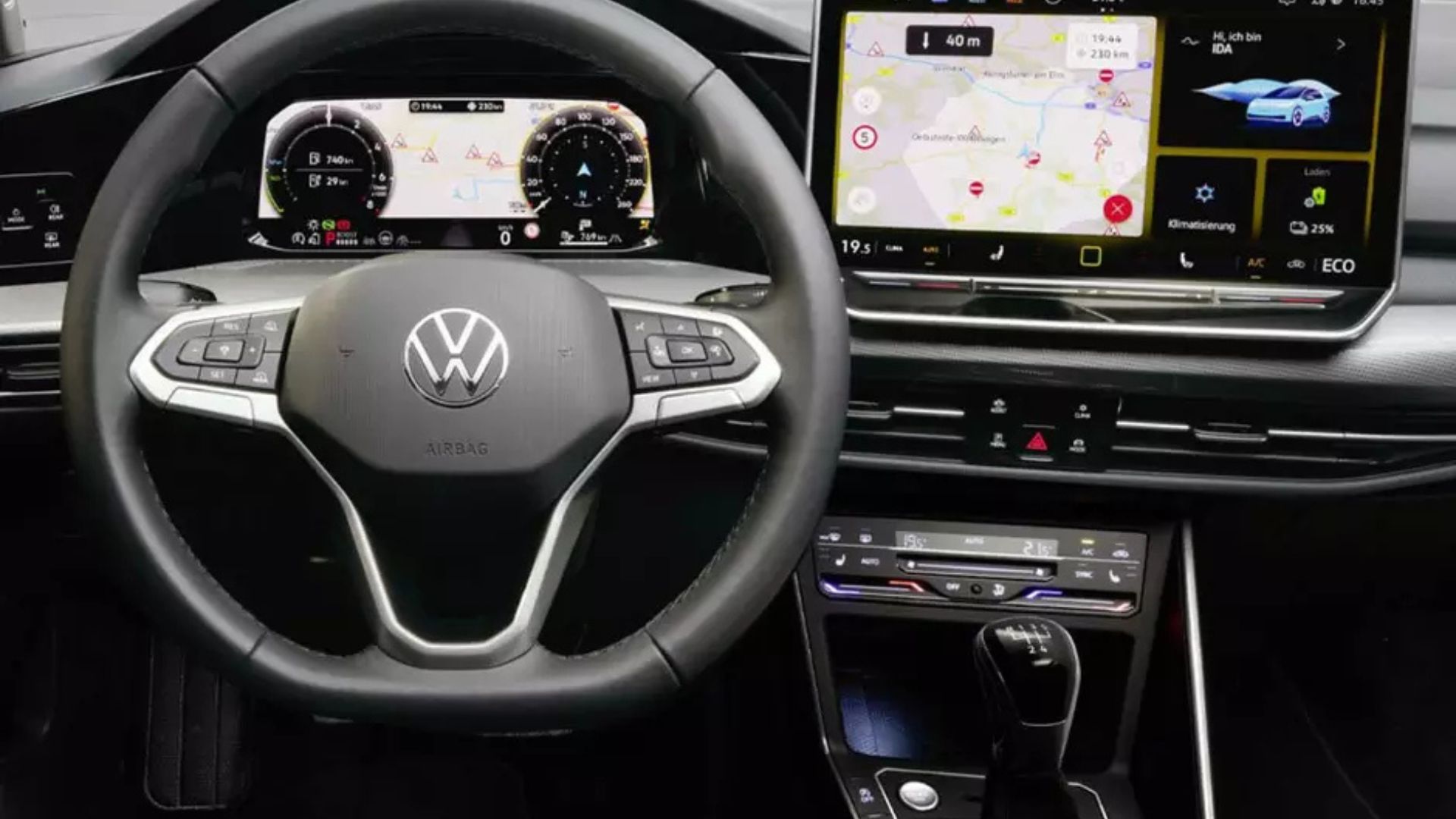
Polo Track 2026 does not come with VW Play multimedia or digital dashboard as standard
What is left out in the Track version are the items reserved for higher versions, such as Sense and Highline. The list includes VW Play multimedia center, digital dashboard, LED headlights, keyless entry, and rear parking sensor.
In the Polo Track, there is no infotainment screen as standard. The model offers a radio with Bluetooth and USB input, a simple solution for those who use their cell phone as the main navigation, music, and communication center.
This absence is the main limitation for those seeking integrated connectivity. For those prioritizing consumption, safety, and purchase cost, the Track delivers the essential package with a more rational focus.
Polo Track against Citroën C3, Fiat Argo, and Hyundai HB20 in the entry-level range
In the range between R$ 84,000 and R$ 95,000, the Polo Track competes with Citroën C3, Fiat Argo, and Hyundai HB20. The Volkswagen model is not necessarily the cheapest nor the most equipped in connectivity.
The Citroën C3 Live is cheaper and can offer a 10.25-inch multimedia center in nearby versions, but delivers 75 hp, a 44-liter tank, and does not have torque vectoring. The Fiat Argo 1.0 has a competitive trunk and greater ground clearance, but also remains at 75 hp.
The Hyundai HB20 Comfort brings a 10-inch multimedia center and six airbags as standard, two more than the Polo Track. Even so, it has a 75 hp engine, a smaller 40-liter tank, and does not offer torque vectoring in the same proposal.
Polo Track is the only one in the comparison with an engine above 75 hp and torque vectoring
The strong point of the Polo Track appears when the comparison is technical. It is the only one among the main entry-level hatches mentioned that combines an engine above 75 hp, torque vectoring, a 49-liter tank, and highway consumption above 16 km/l with gasoline.

Another differential is the MQB platform, the same modular base used in larger Volkswagen models. This architecture helps with torsional rigidity, dynamic behavior, and the feeling of stability at higher speeds.
The Polo Track does not try to win just by screen or appearance. The model’s proposal is to deliver an efficient mechanical set, good autonomy, strong active safety, and drivability above the average of the category.
Sustainable Car Program reduces Track 2026 price with IPI exemption
The list price of R$ 95,790 is not always the amount actually paid by the buyer in 2026. The Sustainable Car Program, from the federal government, eliminates the IPI for vehicles with engines up to 1.0 that meet energy efficiency criteria.
With the exemption, the Polo Track dropped to R$ 84,445, a reduction of R$ 11,345 from the suggested price. This difference makes the model more competitive against direct entry-level rivals.
For people with disabilities and professionals eligible for specific programs, Volkswagen can also apply additional IPI and ICMS exemptions. In these cases, the price can drop to the range of R$ 75,000 to R$ 80,000, depending on the state.
Polo Track financing has installments of R$ 790 with high down payment
The offer of R$ 790 monthly in 48 installments requires a high down payment, equivalent to 70% of the vehicle’s value. In the case of the Polo Track with a reduced price by the Sustainable Car Program, this represents a down payment of R$ 59,174.
This condition makes more sense for those who have a used car to trade in or can advance most of the amount. The advantage is reducing the monthly burden of financing, keeping the installment below R$ 800.
For those financing with a conventional down payment of 20%, the scenario changes. The installments usually range between R$ 1,200 and R$ 1,500 over 60 months, depending on the negotiated rate, the bank, the state of residence, and the contract conditions.