






 Portuguese
  Spanish
  2 min of reading


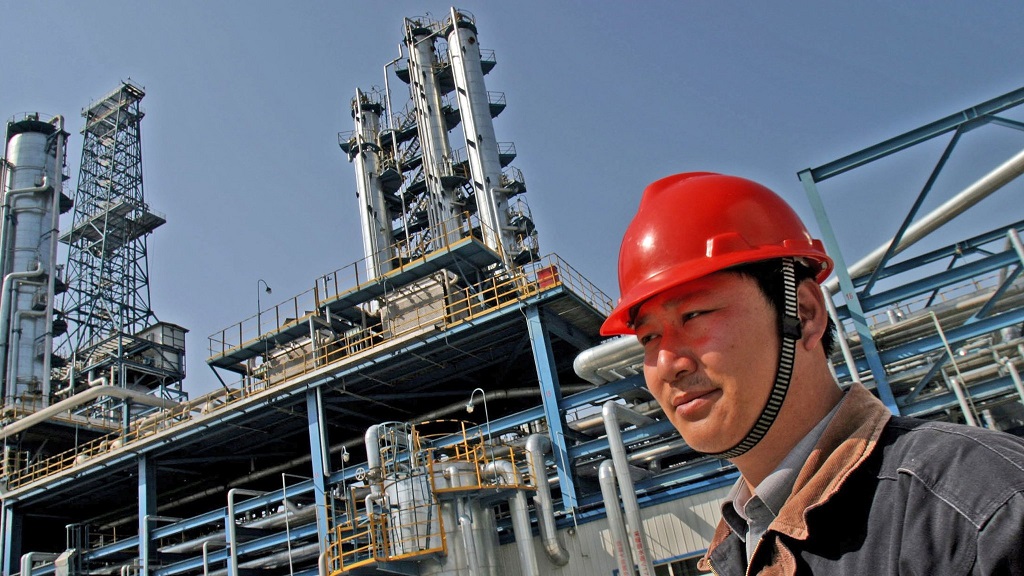
Oil Shipments from Brazil to Independent Refineries in China Increased by 81.4% in August to 1.21 Million Tons
Eight companies in China, including the trader Taifeng Hairun, imported Brazilian crude oil from the Lula, Iracema, and Sapinhoa fields in the same month. Platts’ research covers the barrels imported to independent refineries through ports in Shandong province and Tianjin, as well as those of the upcoming mega refinery Hengli Petrochemical in Liaoning province and the Zhejiang Petrochemical refinery in Zhejiang province. Among these consumers, 36 were crude oil import quota holders, who received a total quota of 120.83 million tons this year, representing 86.8% of the country’s total import quota allocation for 2018.
The Hongrun refinery also received about 60,000 tons of crude oil from Libya in August, the first in the sector’s series. Libyan crude oil is a light oil with an API of around 37 and sulfur of about 0.67%. Independent refineries shied away from both U.S. and other origins of crude that load from U.S. ports in August, due to the ongoing trade tension between China and the U.S. Sinoenergy offered Canadian oil loading from Portland in the U.S. for August arrival but could not attract buying interest.
-
While the world looks at forests, the UN warns that the Earth is also threatened by the silent degradation of natural grasslands and savannas, ecosystems that cover half of the planet, support billions of people, and can exacerbate water, food, and climate crises.
-
The future of computers may change sooner than expected: Amazon bets on commercial quantum computing within seven years, while qubits, the Ocelot chip, AI, and scientific simulations take center stage in the new race among big techs.
-
Cheaper than new HB20, Onix, and Argo, this German sedan offers a 510-liter trunk, a 2.0 naturally aspirated engine, a 6-speed Tiptronic automatic transmission, and well-known mechanics; the 2016 Volkswagen Jetta Comfortline still draws attention in the used car market.
-
Cheaper than new HB20, Onix, and Argo, this German sedan offers a 510-liter trunk, a 2.0 naturally aspirated engine, a 6-speed Tiptronic automatic transmission, and well-known mechanics; the 2016 Volkswagen Jetta Comfortline still draws attention in the used car market.
After the decline in total imports, raw material stocks at major ports in Shandong fell to 4.03 million tons on August 30, a 14% drop from the end of July, according to data from local provider JLC. The August total was the lowest in 13 months, and 26% below the record from the end of June, which was 5.42 million tons. The main ports in Shandong buying Brazilian crude oil are Qingdao, Dongjiakou, Longkou, Laizhou, Rizhao, Dongying, and Yantai.






Be the first to react!