Portuguese
  Spanish


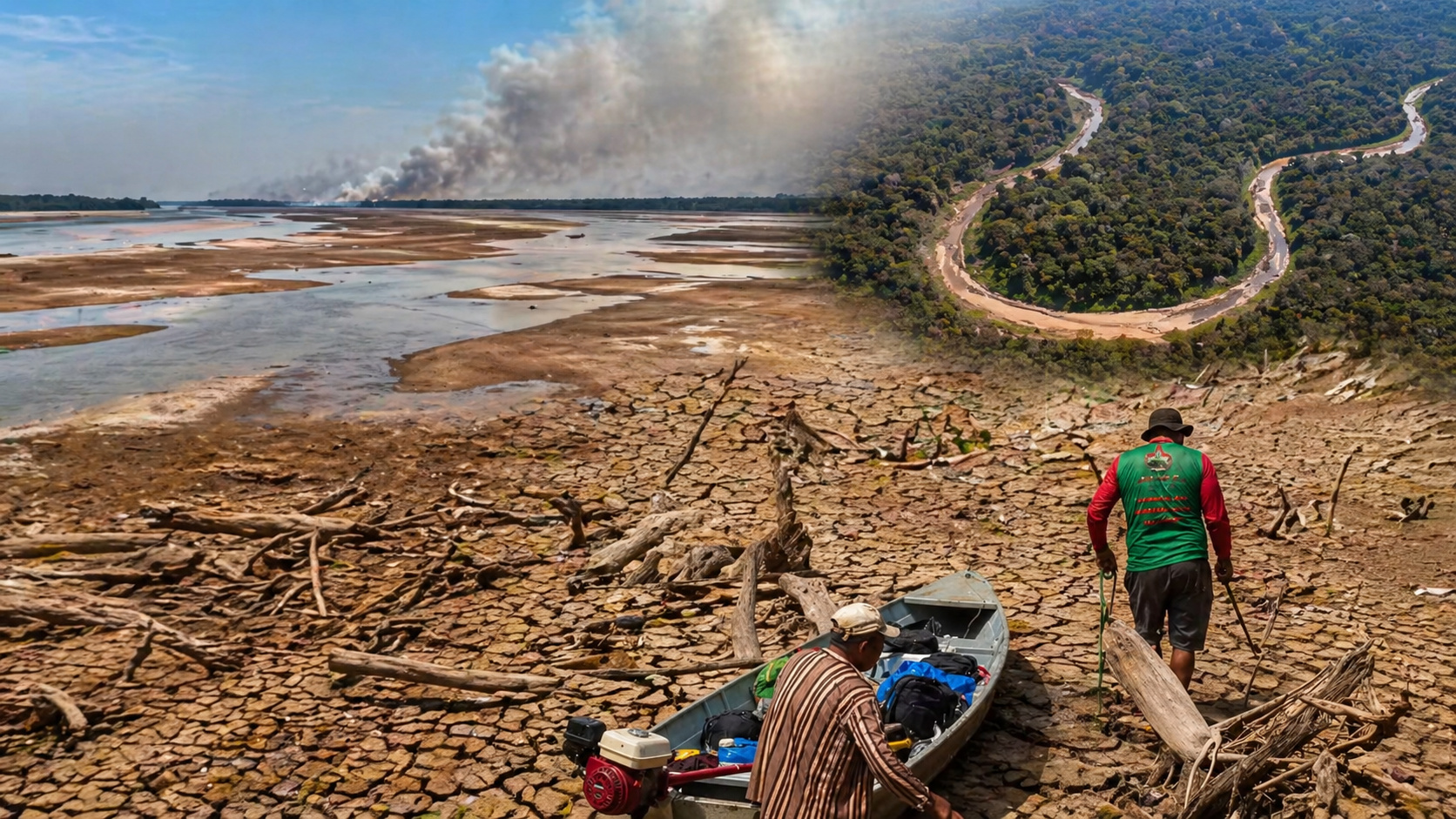

Satellite images reveal the advance of drought in the Amazon in 2024, with rivers at critical levels, impact on river transport, pressure on electricity, and losses in agriculture throughout South America, in addition to increased smoke already affecting cities and raising a global climate alert
The 2024 Amazon drought is already causing direct impacts in essential areas such as transport, energy generation, and agricultural production. Important rivers have reached critical levels, hindering navigation and altering the daily lives of thousands of people.
The information was released by NASA Earth Observatory, the scientific Earth observation platform of the United States space agency. Satellite images show an extensive drought in South America, accompanied by smoke and a significant reduction in water volume.
Amazon rivers reach critical levels and compromise transport in the region
The Amazon rivers are essential for the movement of people and goods. With the drop in water levels, several river routes have stopped functioning normally.
-
Lenovo Unveils Legion Y700 Tablet with RGB Backlighting, 5G, and SIM Card Support
-
Lenovo Unveils Legion Y700 Tablet with RGB Backlighting, 5G, and SIM Card Support
-
Northern Brazilian City Prepares Task Force to Mitigate El Niño Impacts with Stockpiled Fish, Drone Monitoring, Firefighting, and Water Supply Reinforcement in Remote Areas

-
Brazil to Issue “Panda Bonds” in China, Aiming to Raise Up to 5 Billion Yuan at Lower Interest Rates Than Dollar Debt

Vessels are facing difficulties navigating, with reports of practically dry sections. This scenario directly impacts the supply of communities that depend on river transport.
The Amazon drought is transforming the routine of thousands of residents, who face obstacles in accessing basic items and essential services.
Lack of water pressures energy generation and raises an alert in the electricity sector
Energy generation also suffers direct consequences from the reduction in water volume. Hydroelectric plants depend on rivers and reservoirs to operate.


With less water available, electricity production is compromised, which can lead to increased costs and the use of more expensive alternative sources. The water crisis affects the balance of the energy system in several countries in the region.
NASA Earth Observatory, the scientific Earth observation platform of the United States space agency, highlighted that important areas for energy generation were affected by the drought.
Agriculture faces losses with lack of rain and increased heat
The drought in the Amazon and other regions of South America also directly impacts the countryside. The absence of rain reduces soil moisture and hinders crop development.
Important crops suffer from water scarcity and rising temperatures. This scenario generates financial losses and increases concern about food supply.
Climate irregularity makes agricultural planning difficult and increases uncertainty for producers.
Fires increase and smoke covers cities in the region
The drought creates ideal conditions for the advance of fires. Drier vegetation facilitates the spread of fire, increasing the number of burnings.
Satellite images show large areas covered by smoke, which affects air quality in nearby and even distant cities. This scenario can cause respiratory problems and reduce visibility.
The smoke in the Amazon becomes one of the main visible signs of the severity of the situation.
Climate changes make extreme events more frequent and intense
The intensity of the observed drought reinforces the advance of climate changes. Extreme events are becoming more frequent and impactful.
The increase in temperature and changes in the rainfall regime make the region more vulnerable. The Amazon drought becomes a warning about the future of the forest and its effects on the climate.
These changes do not only affect the Amazon but also other regions that depend on the forest’s climate balance.
Technology helps monitor the drought and understand its impacts
The use of satellites allows real-time monitoring of drought evolution. The images help identify more affected areas and understand the dimension of the problem.
This monitoring facilitates decision-making and contributes to the creation of coping strategies. Technology becomes an important ally in the face of extreme events.
The dissemination of these images increases awareness about the severity of the environmental crisis.
Drought in the Amazon already impacts all of South America and raises global concern
The Amazon directly influences the climate of all South America. Changes in the forest affect rainfall patterns and environmental balance in other regions.
The 2024 Amazon drought shows that the impacts go beyond the forest, affecting economy, energy, and food production. The problem gains continental scale and attracts global attention.
The effects are already visible in daily life and show that the climate is undergoing significant transformations.
The situation reinforces the need for constant attention and measures to reduce environmental impacts. The current scenario makes it clear that extreme events tend to repeat more frequently.
And you, do you believe that the Amazon drought could further change the climate and directly affect your life in the coming years? Share your opinion in the comments and send this content to others to reflect on the topic.