Portuguese
  Spanish


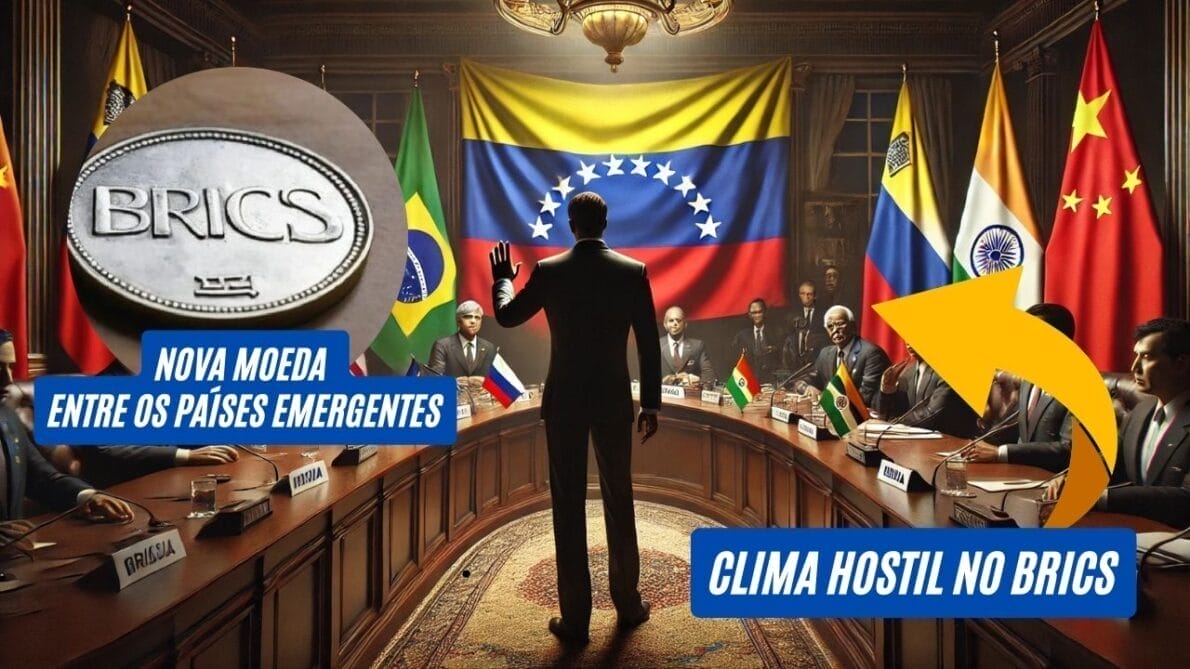

The 16th Summit of BRICS, concluded in Kazan, Russia, brought to light an intense diplomatic impasse: Brazil vetoed Venezuela’s entry as a “partner” of the emerging block, contrary to the wishes of allies such as Russia and China. This veto marked an important strategic development, highlighting internal divergences and reactions that promise to heat up relations between Brazil and Venezuela, countries that already live in a diplomatic situation marked by tensions and exchanges of criticism.
Russian President Vladimir Putin and Chinese President Xi Jinping, eager to include Venezuela and Nicaragua in the circle of emerging nations in BRICS, faced resistance from the Brazilian delegation, which opted to exclude these nations from the list of new partners in the block. In his speech, Putin defended the “objective treatment” among countries, but was clear in pointing out the need for consensus for the admission of new associates in BRICS. “It is impossible without agreement among all members,” declared the Russian president, making it clear that the Brazilian veto was the decisive factor.
Despite an unexpected visit from Nicolás Maduro to the event, Brazil maintained its position, resulting in a heated response from the Venezuelan government. In an official statement, the Venezuelan Ministry of Foreign Affairs condemned the veto as a “hostile gesture” and “aggression,” accusing Brazil of maintaining the same exclusionary guidelines that were applied during Jair Bolsonaro’s government. For Venezuela, entry into BRICS is seen as part of a struggle for “sovereignty” and strengthening alliances in the Global South.
Resentments and No ‘Inclusion’ in BRICS: A Tense Relationship Between Brazil and Venezuela
Brazil and Venezuela have been facing a relationship filled with diplomatic misunderstandings and public accusations. Although relations were officially resumed in January 2023 after the diplomatic rupture that occurred in 2019, recent misunderstandings indicate a strain in the relationship between President Lula and the Maduro government.
-
European Parliament Approves Digital Euro, Aiming to Challenge Visa and Mastercard’s Dominance and Transform Payments Across Europe by 2029

-
Israel finds Hezbollah militarized tunnel over 200 meters long under village, with 4 missile launch shafts, 12 chambers, anti-tank missiles, drones, and weapons depots at a depth of 25 meters.

-
Ukraine launches largest drone attack on Moscow since 2022, Russia claims to have intercepted nearly 200 aircraft near the capital, Kapotnya refinery targeted again, and offensive reignites alert about war reaching the Russian energy heart just a few kilometers from the Kremlin.

-
Truck drivers, freight, and fines from 2022 take center stage in politics: Chamber approves MP with amnesty, mandatory tracking by CIOT, million-dollar penalties, and new minimum wage for those who spend more than 24 hours on the road.



On several occasions, Lula has expressed concern about the Venezuelan electoral process, a position that led Maduro to publicly mock the Brazilian leader’s attitude. The Venezuelan president even suggested that critics of his government “have a chamomile tea,” in response to concerns expressed by Itamaraty.
Tensions were heightened by statements from Tarek William Saab, the Venezuelan Attorney General, who insinuated, without evidence, that Lula and Chilean President Gabriel Boric were “CIA agents.” This type of rhetoric further inflamed the scenario, adding a dose of mistrust between the nations.
The Context of the Global South and Future Bets of BRICS
The exclusion of Venezuela and Nicaragua from the list of new BRICS partners occurs at a time when the block seeks to consolidate a strategic alliance with countries of the Global South, those that share common challenges and the pursuit of economic independence. With this, BRICS signals its commitment to confront practices that its leaders see as “illegal sanctions” and a “devaluation of traditional values,” as highlighted by Putin in the closing press conference.
BRICS countries continue to strengthen their plans for a financial architecture independent of the dollar. Putin presented a prototype of the common BRICS currency, called “R5,” referring to the currencies of its members: the real, the rand, the yuan, the ruble, and the rupee.
The goal is to create a robust payment system and a financial market more resistant to external influences, such as sanctions. However, the effective launch still depends on long-term steps, with Brazil taking a central role in the presidency of the block starting in 2025, planning to boost the development of an integrated international payment infrastructure.
The Next Steps
For Brazil, the veto on Venezuela signals a cautious approach and a defense of consensus in BRICS, although it may bring consequences. With the country about to assume the presidency of the block, the Lula government aims to lead the creation of a payment system that values local currencies and accelerates trade among members. This plan promises to reduce trade costs and ensure more autonomy for the economies of the group, which seeks to detach itself from the hegemony of the dollar.
By reinforcing its stance on consensus rules, Brazil demonstrates that its foreign policy seeks to avoid tensions with the U.S. and maintain balanced relations in the global scenario. However, the Venezuelan reaction to the veto will not be easily forgotten, promising to keep the debate about the expansion of BRICS and the true alignment of its members alive.