Portuguese
  Spanish


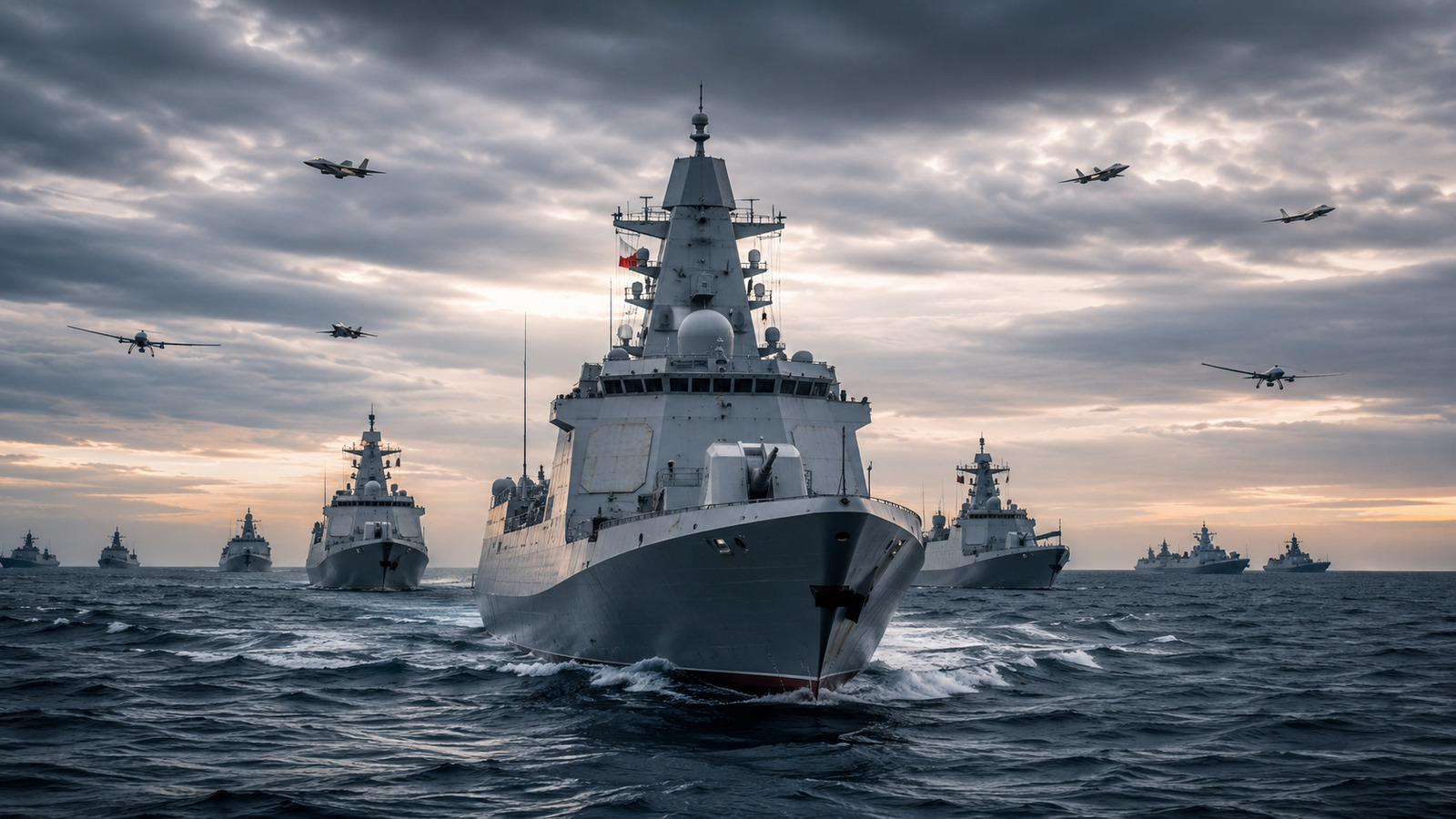

At the Shangri-La Dialogue in Singapore, Pete Hegseth called for Asian partners to increase military spending to 3.5% of GDP, cited China’s advance, and advocated for more self-sufficient alliances in the Pacific
The United States urged Asian allies to increase military spending to 3.5% of GDP in light of China’s military advance in the region. The request was made by Defense Secretary Pete Hegseth on Saturday during the Shangri-La Dialogue in Singapore, where he advocated for a stronger network of partners less dependent on Washington.


US wants more self-sufficient Asian allies
Hegseth stated that there is “legitimate alarm” regarding China’s military strengthening and the expansion of its military activities in and beyond the region. The statement was made at the main Asian forum aimed at defense leaders, military personnel, and diplomats.
According to the Pentagon chief, a stronger and more self-sufficient network of allies is necessary to deter aggression and preserve the balance of power in the Pacific.
-
European Parliament Approves Digital Euro, Aiming to Challenge Visa and Mastercard’s Dominance and Transform Payments Across Europe by 2029

-
Israel finds Hezbollah militarized tunnel over 200 meters long under village, with 4 missile launch shafts, 12 chambers, anti-tank missiles, drones, and weapons depots at a depth of 25 meters.

-
Ukraine launches largest drone attack on Moscow since 2022, Russia claims to have intercepted nearly 200 aircraft near the capital, Kapotnya refinery targeted again, and offensive reignites alert about war reaching the Russian energy heart just a few kilometers from the Kremlin.

-
Truck drivers, freight, and fines from 2022 take center stage in politics: Chamber approves MP with amnesty, mandatory tracking by CIOT, million-dollar penalties, and new minimum wage for those who spend more than 24 hours on the road.


He said that no country, including China, should impose hegemony or jeopardize the security and prosperity of the United States and its allies.
The call comes amid the American promise to invest $1.5 trillion in its Armed Forces.
At the same time, Washington expects Asian partners to take on a larger share of their own defense costs.
“Less Shangri-La, more ships,” says Pentagon chief
During the speech, Hegseth summed up his call with the phrase “less Shangri-La, more ships, more submarines.”
The message was directed at the need to turn diplomatic meetings into concrete military capability.
He stated that allies want stability, not escalation. According to Hegseth, what the United States offers is “disciplined strength,” “firm determination,” and leadership with enough confidence to engage in cautious dialogue while maintaining military capability.
The speech also repeated a long-standing demand from President Donald Trump, who advocates that allies take on more defense costs. Hegseth said that the era in which the United States subsidized the defense of wealthy nations is over.

Relationship with China appears in a more cautious tone
Despite the criticisms of Chinese military growth, Hegseth adopted a more restrained tone about the ties between the United States and China. He stated that relations are better than they have been in many years.
The secretary also highlighted that military contacts between the two countries are more frequent. According to him, Washington has kept open lines of military communication with its Chinese counterparts to help manage tensions.
Zhou Bo, a senior fellow at Tsinghua University and a retired senior colonel of the People’s Liberation Army of China, classified the relations between the two countries as “complicated.” However, he said that Hegseth used “a much better tone” this year.
China does not send minister for the second consecutive year
China did not send its Defense Minister to the Shangri-La Dialogue for the second consecutive year. Last year, Beijing accused Hegseth of making “defamatory” comments.
Zhou, who was part of the Chinese delegation, stated that both sides maintain open communication channels and that the situation “is not as exaggerated as the outside world makes it seem.”
In the end, Hegseth reinforced that the United States seeks partners, not “protectorates.” For him, a strong alliance depends on the real participation of all involved, without countries that only benefit from the American defense structure.
This article was prepared based on information provided in the base material about Pete Hegseth’s statements at the Shangri-La Dialogue in Singapore, with data, numbers, and statements preserved according to the consulted material.