






 Portuguese
  Spanish


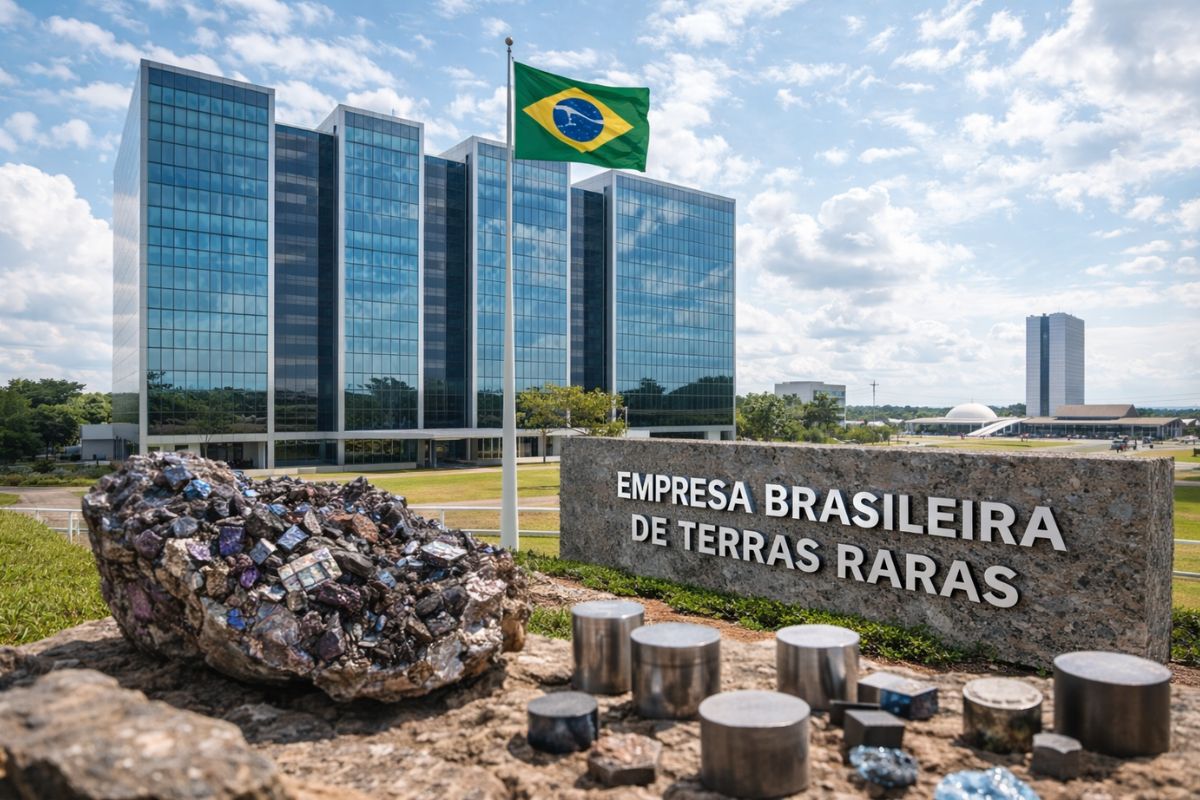

Brazil can create Terrabras, a state-owned company for rare earths proposed by PL 1.733/2026 by Deputy Rodrigo Rollemberg (PSB), presented on April 9, headquartered in Brasília, with a mission to explore, industrialize, and market strategic minerals to reduce imports and position the country as a global reference in the sector.
Brazil is one law project away from creating its own state-owned company for strategic minerals. Federal Deputy Rodrigo Rollemberg from PSB presented on April 9, 2026, Bill 1.733/2026, which proposes the creation of Brazilian Rare Earths S.A., nicknamed Terrabras. The goal is to establish Brazil as a reference in the exploration and commercialization of rare earths, a group of essential minerals for the manufacturing of electric vehicle batteries, wind turbines, smartphones, medical equipment, and military technology. The proposal has already drawn comparisons to Petrobras, the state-owned company that transformed the country into an oil powerhouse.
Terrabras would be headquartered in Brasília and would serve as a link between the federal government and the private sector. Unlike Petrobras, the proposal does not require mandatory shareholding by the Union in private companies in the sector, marking an important difference in the model. Brazil has significant reserves of rare earths in the subsoil, but today imports a large part of the processed minerals that its industry consumes, sending wealth abroad and buying back the finished product. Terrabras aims to reverse this logic.
What are rare earths and why does Brazil need a state-owned company to explore them
Rare earths are a group of 17 chemical elements essential for the technologies that define the economy of the 21st century. Brazil has reserves of these minerals in the subsoil, but lacks an industrial chain to process them internally, which forces the country to export raw materials and import finished products that contain the same minerals in processed form.
-
At 14 years old, she worked in a factory in Hong Kong, studied economics abroad, and then entered the Chinese real estate market, which helped change the landscape of Beijing.

-
While NATO secured more than $10 billion in missiles and space surveillance at a single forum, Brazil still spends 1.1% of its GDP on defense and is stalling its own anti-aircraft system.

-
Corn ethanol attracts R$ 23 billion in 21 new plants and prepares for a nearly 50% jump in Brazilian production by 2027, even with high interest rates.
-
A newly opened terminal in the middle of the Amazon has begun transporting soy and corn through Amapá, eyeing the queue of ships that is congesting the ports in the South.


It is the same pattern that Brazil faced with oil before Petrobras: having the natural resource but lacking the capacity to transform it into added value.
China dominates more than 60% of global rare earth production and controls most of the global processing, giving the Asian country bargaining power over all nations that depend on these minerals for their technology and defense industries.
For Brazil, creating a state-owned company that develops the production chain internally is not just an economic issue. It is a matter of technological sovereignty in a world where those who control rare earths control the future of industry.
How Terrabras would operate if the bill is approved in Brazil
Bill 1.733/2026 provides that Terrabras would operate throughout the rare earths chain, from mineral exploration to the industrialization and commercialization of processed products.
The state-owned company would be headquartered in Brasília and would function as a bridge between the federal government and private companies in the sector, coordinating investments, research, and development of industrial hubs dedicated to processing strategic minerals within national territory.
The project proposes that Terrabras develop industrial and research hubs to boost national production and promote technological innovations. By adding value locally, Brazil would expand its technological and industrial offering instead of continuing to export raw ore and import electronic components that contain the same minerals.
The model is inspired by the role that Petrobras played in the oil sector: a state-owned company that organizes and accelerates the development of a strategic sector that the private market has not been able to fully develop on its own.
What differentiates Terrabras from Petrobras in the proposed model for Brazil
The comparison with Petrobras is inevitable, but the Terrabras project has important structural differences. Bill 1.733/2026 does not foresee mandatory shareholding by the Union in private companies in the rare earth sector, something that oil legislation requires under certain conditions.
Terrabras would function more as a facilitator and strategic investor than as a monopolist, seeking partnerships with the private sector instead of competing directly with it.
For Brazil, this difference in model could facilitate the political approval of the project because it reduces resistance from those opposed to state-owned companies with excessive market power.
At the same time, the absence of mandatory participation raises questions about how much control the government would have over strategic decisions in the sector. The debate between advocates of a strong state-owned company and those who prefer a more flexible model is expected to dominate discussions in the House of Representatives committees.
The economic impact that Terrabras could have if Brazil approves the project
The potential is significant because rare earths are at the center of all technological chains that define the global economy.
A Brazil that processes and industrializes its own rare earths stops being a supplier of raw materials and starts competing in the value chain that goes from ore to finished product, whether it be an electric car battery, a wind generator, or a component of medical equipment. The difference in value between raw ore and processed product can be dozens of times.
The creation of industrial and research hubs as proposed in the project would generate skilled jobs in regions that currently depend on conventional mining. Brazil is already experiencing this cycle in the oil sector, where Petrobras not only extracts oil but supports a chain of suppliers, researchers, and technicians that moves billions of reais a year.
Terrabras could replicate this model in the strategic minerals sector, creating a new front for economic development.
What is needed for the Terrabras project to advance in Brazil
Bill 1.733/2026 is now moving to discussion in the House of Representatives committees, where it will be analyzed by lawmakers from different political orientations.
Brazil will need to debate issues such as the initial capital of the state-owned company, corporate governance, production targets, and tax incentives that would be necessary to attract complementary private investment to public capital. The experience with Petrobras offers both success stories and warnings about the risks of poorly managed state-owned companies.
The geopolitical context favors approval because the global competition for rare earths has intensified in recent years. The United States, European Union, and Japan are investing billions to reduce dependence on China in the sector, and Brazil, with significant natural reserves, is in a privileged position to benefit from this race.
The creation of Terrabras could be the decision that defines whether the country will be a protagonist or a supporting actor in the economy of strategic minerals in the coming decades.
What do you think about the creation of a new state-owned company in Brazil focused on rare earths? Do you believe that Terrabras can replicate the success of Petrobras or do you fear the same management problems? Share your thoughts in the comments. Projects that can change the economic future of the country deserve public debate, especially when they involve resources that the whole world is competing for.





