






 Portuguese
  Spanish


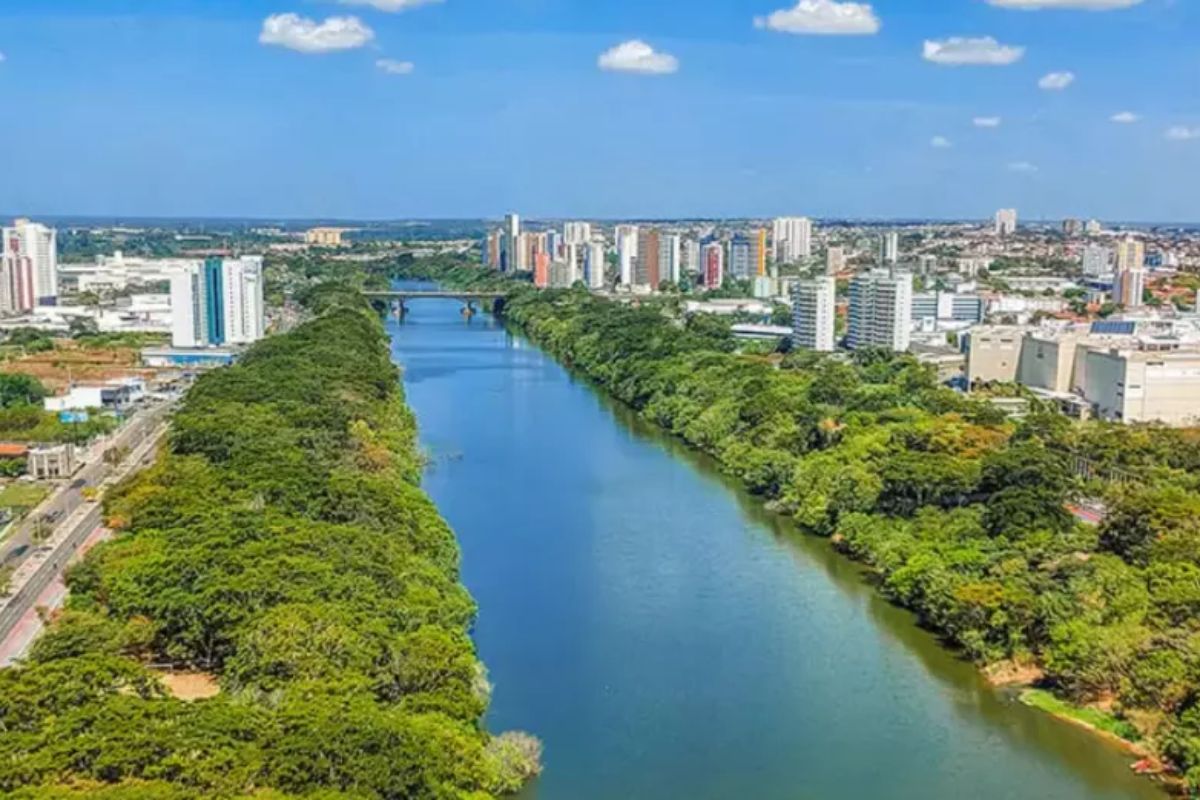

Teresina is the Brazilian capital known as Mesopotamia for being situated between the Parnaíba and Poti rivers. It was the first planned city in Brazil in 1852, located 343 km from the sea, and houses the only paleontological site in the world within a capital, with about 70 fossilized trunks dating back 270 million years in vertical position.
Between two rivers, 343 kilometers from the sea and with fossilized trunks in the urban area, Teresina is a Brazilian capital made of exceptions. It was the first planned city in Brazil, it is the only capital in the Northeast that does not see the sea, and it contains within its urban limits the only paleontological site in the world within a capital with petrified trees in vertical position, standing in the same place where they grew about 270 million years ago. Few cities on the planet concentrate so many geographical, historical, and paleontological peculiarities in a single address.
The nickname Brazilian Mesopotamia comes from geography. The Brazilian capital is squeezed between the Parnaíba River, which separates Piauí from Maranhão, and the Poti, its tributary, both meeting in the northern part of the municipality at a point named Encontro dos Rios, where a statue by the artist Mestre Nonato marks the location. This fluvial position also produced a rare phenomenon in Brazilian urbanism: Teresina is conurbated with Timon, a city in Maranhão on the other side of the Parnaíba, connected by a bridge. It is a capital that grows between rivers and states.
The 270 million-year-old forest hidden on an avenue in the Brazilian capital

Between Avenida Raul Lopes and the bed of the Poti River lies one of the rarest paleontological sites in the world.
-
Scientists warn that melting ice is triggering an alarming chemical transformation in preserved areas, and the first signs are already concerning researchers worldwide.

-
China placed 198 robotic legs under a 7,600-ton school and made the building walk 62 meters in 18 days, rotating the historic structure as if a concrete structure had gained feet to escape demolition.

-
Distributor confirms the premiere of ‘Dark Horse’, Bolsonaro’s film, in 650 cinemas with 99% of copies dubbed.
-
9-year-old boy who could only hold a plank for 6 minutes in physical education class trained alone for 6 months, without needing encouragement from his parents, until he broke the world children’s record with 61 minutes and 5 seconds.


The Municipal Park of the Fossil Forest of the Poti River houses about 70 petrified trunks in life position, that is, upright, in the same place where the trees grew during the Permian period, estimated to be between 270 and 280 million years old, according to the Municipal Secretary of Economic Development (SEMDEC).
It is the only paleontological site in the world within a Brazilian capital with trunks in vertical position, according to the City Hall of Teresina. The site was registered by IPHAN in 2017 and is part of the geological formation Pedra de Fogo, of the Parnaíba Basin.
For those walking along the avenue unaware of what is beside them, they are just curious rocks near the river. For those who know the history, they are remnants of a forest that existed before the dinosaurs, preserved in the urban area of a northeastern capital.
Why this Brazilian capital was born far from the sea and between two rivers
Until 1852, the capital of Piauí was Oeiras, in the center of the state, but the distance hindered trade and provincial administration. The decision to move the capital to a strategic point between two large rivers came from the president of the province, Counselor José Antônio Saraiva, who designed straight streets and regular blocks in a chessboard pattern on the Chapada do Corisco, along the banks of the Poti.
On August 16, 1852, Vila Nova do Poty was born, soon renamed Teresina in honor of Empress Teresa Cristina, wife of Dom Pedro II.
This choice made this Brazilian capital the only one in the Northeast that does not touch the coastline. The nearest sea is 343 kilometers away, a distance documented by the Municipal City Hall of Teresina.
The urban planning in a chessboard pattern made Teresina precede famous projects like Belo Horizonte (1897), Goiânia (1933), and Brasília (1960). The nickname Cidade Verde was later created by the Maranhão writer Coelho Neto, enchanted by the tree-lined avenues.
The climatic phenomenon that became an endearing nickname in the Brazilian capital
From September to December, the residents of Teresina experience B-R-O Bró, a popular expression that combines the final syllables of the hottest months of the year.
The Brazilian capital faces during this period the combination of lack of cloud cover and little rain that makes thermometers exceed 40°C, with relative humidity that can drop to levels between 10% and 30%, well below the 60% recommended by the World Health Organization. According to Climatempo, September, October, and November record the highest average maximum temperatures of the year in Teresina.
The extreme heat is part of the identity of the Brazilian capital, and the residents have learned to live with it using humor and adaptation. The tree-lined streets that Coelho Neto praised in the past continue to be the main defense against the sun, and the proximity of the rivers offers leisure options that alleviate the hottest afternoons.
For those visiting Teresina for the first time during B-R-O Bró, the recommendation is simple: constant hydration, light clothing, and respect for the slower pace that the city adopts during peak months.
The cajuína that became cultural heritage and gave international fame to the Brazilian capital
It is not just a cashew drink. The cajuína, clarified juice served cold in almost every Piauí home, received official registration as intangible heritage by IPHAN in May 2014, inscribed in the Book of Knowledge as Traditional Production and Sociocultural Practices Associated with Cajuína in Piauí.
The request came from the Cooperative of Cajuína Producers of Piauí (CAJUESPI) and involved a dispute with a multinational that wanted to register the name as a brand.
The process guaranteed the drink from the Brazilian capital a certification of origin comparable to that of French champagne. The cajuína gained international prominence after being mentioned in a verse by singer Caetano Veloso, in homage to the Teresina poet Torquato Neto.
For those visiting Teresina, tasting the cold cajuína is as mandatory as knowing the fossil forest or seeing the meeting of the rivers. It is a drink that summarizes the identity of a capital that transforms simplicity into heritage.
What makes this Brazilian capital one of the most surprising in the country
Teresina is a city that was born from a political decision, grew between rivers instead of the sea, and preserved, within its limits, a portrait of the Earth before the dinosaurs.
The Brazilian capital that hides a 270 million-year-old forest on the avenue, which was planned in a chessboard pattern before Belo Horizonte and Brasília and that protects a handcrafted drink as national heritage deserves more attention than it usually receives on lists of Brazilian destinations.
Each peculiarity of the Brazilian capital tells a piece of the history of Piauí and Brazil. The rivers that justify the nickname Mesopotamia, the fossils dating back to before the dinosaurs, the visionary urban layout of 1852, and the cajuína that became heritage form a set that few Brazilian cities can match in diversity of attractions. Teresina is not just the capital of Piauí.
It is an open-air museum that the majority of Brazilians have yet to visit.
Did you know that this Brazilian capital hides a 270 million-year-old forest in the urban area? Have you visited Teresina or are you curious to know it? Let us know in the comments. Underestimated capitals that hold treasures like this need more visibility, and each person who shares helps to put Teresina on the map it deserves.





