






 Portuguese
  Spanish


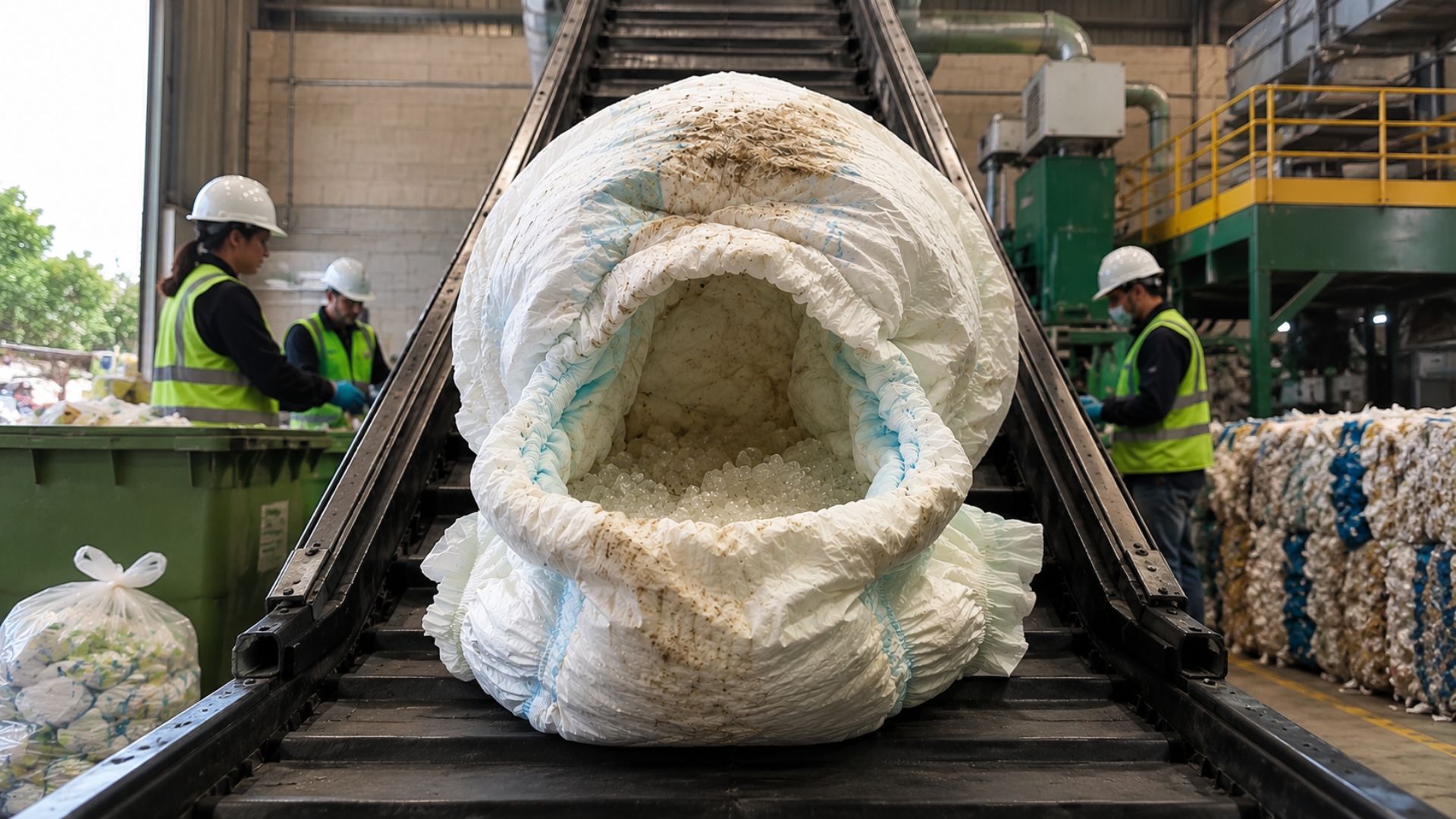

Brazil launched in 2021 a pilot project to transform used diapers into raw material and test a new recycling route in schools
Project launched in December 2021 by Kimberly-Clark, owner of Huggies, with Boomera, brought nursery schools in the metropolitan region of São Paulo to an experience of recycling used disposable diapers, a common, bulky waste that is difficult to reuse in urban routine.
Launched in December 2021, the My First Recycling Program placed used disposable diapers at the center of a Brazilian circular economy experience, focusing on nursery schools in the metropolitan region of São Paulo.
Created by Kimberly-Clark, through the Huggies brand, in partnership with Boomera, the initiative was presented as a pilot project to test the collection, separation, and reuse of waste normally discarded in common trash.
-
Cargo Ship Completes Historic Nighttime Voyage to Porto Alegre, Revolutionizing Large-Scale Navigation in Brazil After 42 Years

-
Say Goodbye to Round Drains: Linear Models Improve Water Drainage, Simplify Cleaning, and Offer Sleeker Finishes for Bathrooms and Balconies
-
Brazilian Engineers Lead $200 Million Project to Bring Water from São Francisco River to Transform Supply in Northeastern Cities
-
Largest Ocean Tank in the Americas Opens in Rio to Test Offshore Platforms, Ships, and Submarine Robots


The proposal consisted of collecting used diapers from participating schools, sending this material for recycling, and transforming it into raw material for the manufacture of new products.
According to Exame, the project was also developed to involve parents, students, schools, and the community in awareness actions about environmental preservation, correct use, storage, and proper disposal of this type of waste.
Recycling of used diapers in Brazil
The case draws attention because the disposable diaper has characteristics that make its recycling more complex than that of traditional materials, such as paper, glass, metal, or clean plastic.
After use, the product combines different components, comes into contact with organic waste, and requires collection, transportation, storage, and processing with specific care to avoid improper disposal.
In practice, the Brazilian project targeted a sensitive point in urban waste management, marked by the constant presence of diapers in household and institutional waste.
Within nursery schools, this disposal occurs in a concentrated volume, which allows organizing a more controlled collection chain than in homes scattered throughout the city.
This context helps explain the choice of the school environment as the starting point of the initiative, as the routine of the institutions facilitates separation, storage, and monitoring of the material.
According to the disclosed model, participating schools received guidance on the environmental impact of disposable diapers and on the correct way to separate, store, and dispose of the used material.
This step was essential because reuse depended on a different flow from common waste, without mixing with residues that would make subsequent processing unfeasible or more expensive.
Kimberly-Clark reported, through the Exame article, that the program could recycle around 100 tons of diapers in the first year.
Planned as a pilot phase, the experience sought to gather learnings, make operational adjustments, and assess the feasibility of expanding the model, always based on the results obtained in the initial stage.
Huggies, Boomera, and circular economy
Boomera’s presence gave the project an industrial and technological character, involving a company dedicated to circular economy solutions and the reuse of materials that are difficult to dispose of.
In developing the initiative, the company participated in a technology aimed at giving a new life cycle to a product that normally does not integrate into traditional recycling chains.
With this structure, the proposal was to convert the waste into input for new items, reducing dependence on conventional disposal and expanding the debate on post-consumer responsibility.
Although the topic has strong environmental appeal, the initiative also touched on a behavioral change related to consumption, family routine, and the way single-use waste is perceived.
Disposable diapers are products associated with practicality, hygiene, and child care, but they carry a post-consumer problem that remains after just a few minutes or hours of use.
By bringing this debate to schools, the program brought parents and institutions closer to a discussion that usually remains restricted to companies, municipalities, and waste operators.
The choice of the São Paulo metropolitan area increased the relevance of the case, as densely populated areas concentrate a large volume of waste and put pressure on collection, sorting, transportation, and final disposal systems.
Inserting sanitary waste into a specific reuse route required coordination between consumers, collectors, and those who transform the material after disposal.
Preschools as collection points
Besides the logistical challenge, diaper recycling involves a public perception barrier, especially since it is an item associated with personal hygiene and direct care for babies.
For many consumers, the idea of reusing a used diaper can cause immediate estrangement, even when the process involves separation, treatment, and industrial transformation of the material.
For this reason, the project’s communication became as important as the technology, as adherence depended on clear information about safety, purpose, and the correct way to participate.
The initiative also connected to corporate sustainability goals, as Kimberly-Clark declared the integration of the program into a journey aimed at reducing plastic use and expanding the circular economy.
In this context, the disposable diaper ceased to be seen merely as a fast-consumption product and became part of a larger discussion on post-consumer responsibility.
In Brazil, the issue gains strength because it deals with a waste present in millions of homes, daycare centers, schools, and care institutions.
Even when disposal is done correctly in regular trash, the accumulated volume and composition of the product make disposal a challenge for cities seeking to reduce waste.
The experience also showed how recycling projects can start in specific environments before reaching a larger scale, taking advantage of predictable routines and fixed collection points.
In nursery schools, the direct participation of educators and families facilitated operational tests, especially when compared to scattered collection in entire neighborhoods or residences without prior separation.
Urban Waste Management and Child Consumption
Another relevant point is the transformation of the environmental debate into something concrete for daily life, bringing the circular economy closer to an object used daily by babies.
Instead of treating the theme merely as a corporate concept, the program placed the disposable diaper as an example of waste that can be rethought from separation to productive reinsertion.
For the public, the interest in the story lies in the contrast between the type of waste and its possible destination, as the used diaper is usually associated with waste without reuse.
In this model, the same item began to be presented as part of a system capable of generating raw material for other products, maintaining a direct connection with a practical urban management issue.
The adoption of such programs depends on factors like the participation of involved institutions, adequate training, regularity of collection, processing capacity, and acceptance of the model by families.
In the Brazilian project, the pilot phase was precisely the chosen path to test these stages before any expansion, preserving control over collection, separation, and destination.
The discussion about disposable diapers also accompanies a growing concern with single-use waste, especially when products created to facilitate daily life start to generate large volumes of disposal.
In urban centers, this accumulation increases the pressure for reuse initiatives and places solutions like recycling, material reduction, and packaging improvement in the same environmental debate.
In the case of Huggies, diaper recycling was presented alongside other sustainability actions of the brand, including changes in formulas, packaging, and the use of materials with lower impact.
The used diaper, however, occupies a special place in this debate because it involves a more sensitive, less conventional waste with a greater capacity to surprise the reader.
The Brazilian project did not turn the problem of diaper disposal into a simple solution, but showed that companies and circular economy operators have already tested ways to deal with this waste.
By entering schools, the proposal brought technology, children’s consumption, environmental education, and waste management into the same experience, focusing on a common and difficult-to-reuse item.
If a used diaper can stop being just trash and become raw material for new products, what other everyday waste is still being wasted without most people realizing it?


