






 Portuguese
  Spanish


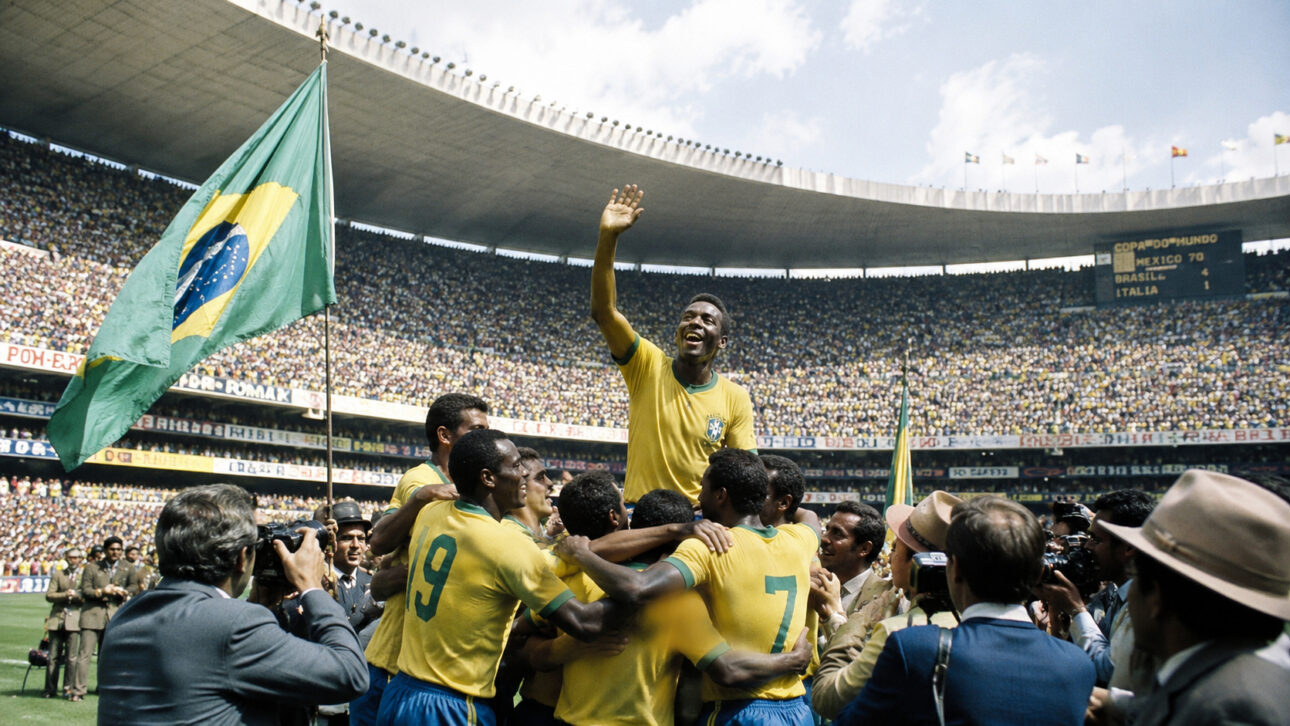
Forward Brazil propelled the conquest of the third championship in Mexico, but it was also marked by the political use of football during the harshest years of the military regime.
One of the most famous songs in World Cup history was born to celebrate the Brazilian team in 1970, but ended up gaining a much larger meaning.
Forward Brazil, composed by Miguel Gustavo and Raul de Souza, became a symbol of the third championship won in Mexico and, at the same time, came to be associated with the propaganda of the military dictatorship.
The song was created during the government of General Emílio Garrastazu Médici, a period marked by the AI-5, censorship, and political repression.
-
Brazil’s Highly Anticipated Highway Progresses with 8 Lanes, 24 Overpasses, and 2 Escape Ramps; Project Reaches 70% Completion, Set to Transform Traffic for 390,000 Vehicles Monthly

-
Siblings Leave Retirement and Decades in the Energy Sector to Rank Among Top 10 Efficient Poultry Farms, Plan Expansion in São Paulo
-
Man Compensated After Being Charged Property Tax for Over 30 Years Post-Sale, Court Upholds Decision in Southern Brazil

-
Mediterranean Storm Uncovers 1,800-Year-Old Roman Marble Columns Near Israel, Revealing Ancient Shipwreck and Insights into Imperial Architecture


With simple verses, vibrant melody, and strong popular appeal, the song helped create a climate of national unity around the Brazilian team.
Song was born to celebrate the Brazilian team
The song emerged in 1970, during the preparation for the World Cup in Mexico.
At that moment, Brazil was experiencing enormous anticipation for the team’s campaign, which brought together historic names in national football.
The work won a contest promoted by sponsors linked to the broadcasts of the games and quickly won over the public.
The lyrics reinforced the idea that the whole country was united by the same emotion.
Forward Brazil began to be repeated on radios, sports broadcasts, and events related to the World Cup.
According to records cited by Veja magazine, the song became one of the sound trademarks of that tournament.
Political context was of strong repression
The trajectory of the song cannot be separated from the political scenario of the time.
Since 1964, Brazil was under a military dictatorship.
In 1968, the Institutional Act No. 5 expanded the regime’s powers.
With the AI-5, constitutional guarantees were suspended, censorship increased, and mechanisms of repression were strengthened.
At the same time, the government promoted the so-called economic miracle as proof of growth and stability.
In this context, football began to be used as a showcase of a strong, victorious, and united country.
Médici tried to interfere with the national team
The 1970 World Cup was also marked by the political presence of President Médici in football.
Before the games, the general appeared on television as a common fan and showed direct interest in the national team.
According to Veja magazine, Médici even suggested that striker Dario be included as a starter.
The idea was rejected by coach João Saldanha, associated with the PCB, Brazilian Communist Party.
Soon after, Saldanha left the command of the national team and was replaced by Zagallo.
Dario was eventually called up but did not play during the championship campaign.

Victory turned music into propaganda
The World Cup victory offered the military government a powerful communication opportunity.
Football was already a national passion and mobilized millions of Brazilians.
With this, Pra Frente Brasil came to represent pride, celebration, and unity around the national team.
The song was not officially created by the government, but it became linked to the regime’s discourse.
Its optimistic verses helped reinforce a positive image of the country.
Reports of censorship, political persecution, arbitrary arrests, and torture were muffled during that period.
For this reason, the song carries an ambiguous memory.
On one hand, it recalls the brilliance of the third championship. On the other, it remembers the political use of football during the dictatorship.
Composers had remarkable trajectories
Miguel Gustavo, responsible for the lyrics, was already known in Brazilian communication.
A journalist and composer, he created sambas, Carnival marchinhas, and highly successful advertising jingles.
Among his most well-known works were campaigns for Casas da Banha and Leite Glória.
He also composed Dança da Boneca, recorded by Chacrinha in the Carnival of 1967.
Miguel Gustavo died in 1972, just two years after the release of Pra Frente Brasil, at the age of 49.
Raul de Souza, responsible for the melody, was a trombonist respected internationally.
The musician also played the saxophone and worked with names like Sérgio Mendes, Milton Nascimento, and Sonny Rollins.
The instrumental part was recorded with the Orquestra da Rádio Globo, which helped strengthen the song’s presence in broadcasts.
Music remains etched in the country’s memory
Currently, Pra Frente Brasil continues to be remembered as one of the most emblematic songs of the World Cups.
Its history, however, goes beyond sports celebration.
The song shows how soccer, politics, and communication intersected during one of Brazil’s most complex periods.
Understanding its origin helps explain not only the euphoria of 1970 but also the context in which this euphoria was exploited by the military regime.
The same song that accompanied a historic victory also became a symbol of an era marked by propaganda, censorship, and memory disputes.
What weighs more in the memory of Pra Frente Brasil: the emotion of the third championship or the political use of the music during the dictatorship? Share your opinion!


For sure the third championship!