Portuguese
  Spanish


Lorena Zabala was a mother and housewife until she discovered bioconstruction in Neuquén, Argentina. With her own hands, she built a superadobe dome of 24 tons of earth, without iron or beams, and today she travels the country teaching the technique, known as the “earth quarry”.
A woman without construction training proved that it’s possible to build a house using only earth. In Argentina, Lorena Zabala swapped her housewife routine for bioconstruction and, with her own hands, raised a dome using the superadobe technique. The story was reported by the Argentine newspaper Río Negro.
The result is a sturdy dome built almost without industrial materials. The dome used about 24 tons of earth, without iron, beams, or metal structure, just bags filled with soil and stacked in layers. It is a concrete example of how superadobe transforms the ground beneath your feet into a home.
More than building her own project, Lorena became a reference and teacher. Nicknamed the “earth quarry”, she now travels through different provinces of Argentina offering bioconstruction courses, teaching others how to raise their own domes. Next, see who she is and how the technique works.
-
Manchester Builds 40 Furnished Homes for the Homeless Under Railway Arches, Complete with Community Hall, Laundry, Garden, and Sports Court

-
New Highway Section in Brazil’s Serra das Araras Opens: $300 Million Investment, 24 Viaducts, and Promised Travel Time Cuts of Up to 50% to Rio de Janeiro and 25% to São Paulo
-
Major Infrastructure Project in Northeast Brazil Advances with New Overpass Construction to Ease Traffic for Over 13,000 Daily Drivers

-
Frustrated by local government inaction, Brazilian villagers crowdfund $800 to build wooden bridge for coffee transport across stream


Who is Lorena Zabala, the “earth quarry”
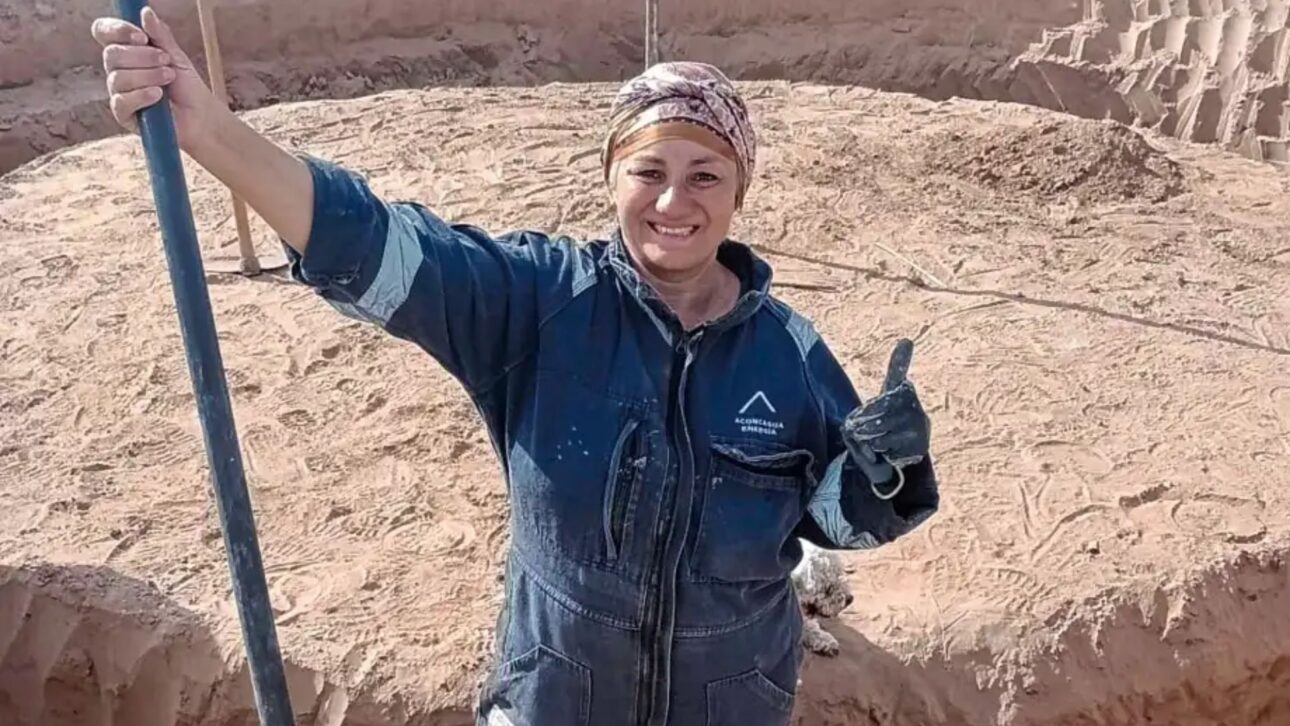
Her journey began far from the construction world. Lorena Deolinda Zabala was born in La Rioja and has lived for 22 years in Neuquén, in Argentina. For a long time, she dedicated herself to being a mother and housewife, without any professional connection to construction or architecture, until she became interested in bioconstruction.
The contact with superadobe came from curiosity and research. Starting in 2018, she began to seek information about the technique, still scarce in Argentina at the time. In January 2020, she participated in a course in the city of Rosario, conducted by specialists from Colombia, who introduced her to the universe of earth domes.
From there, learning became a one-way path. Lorena immersed herself in the study of bioconstruction, combining theory and practice until she felt capable of erecting her own work. The nickname “earth quarrywoman” sums up this turning point well: a woman who learned, through sheer determination, to build with the simplest material available.
Today, she has transformed this knowledge into a profession and mission. Instead of keeping what she learned to herself, Lorena began to spread the technique of superadobe, bringing the idea to those who dream of owning a home without relying on bricks and cement. Her story shows how a new skill can completely change someone’s life path.
The first superadobe dome: 24 tons of earth
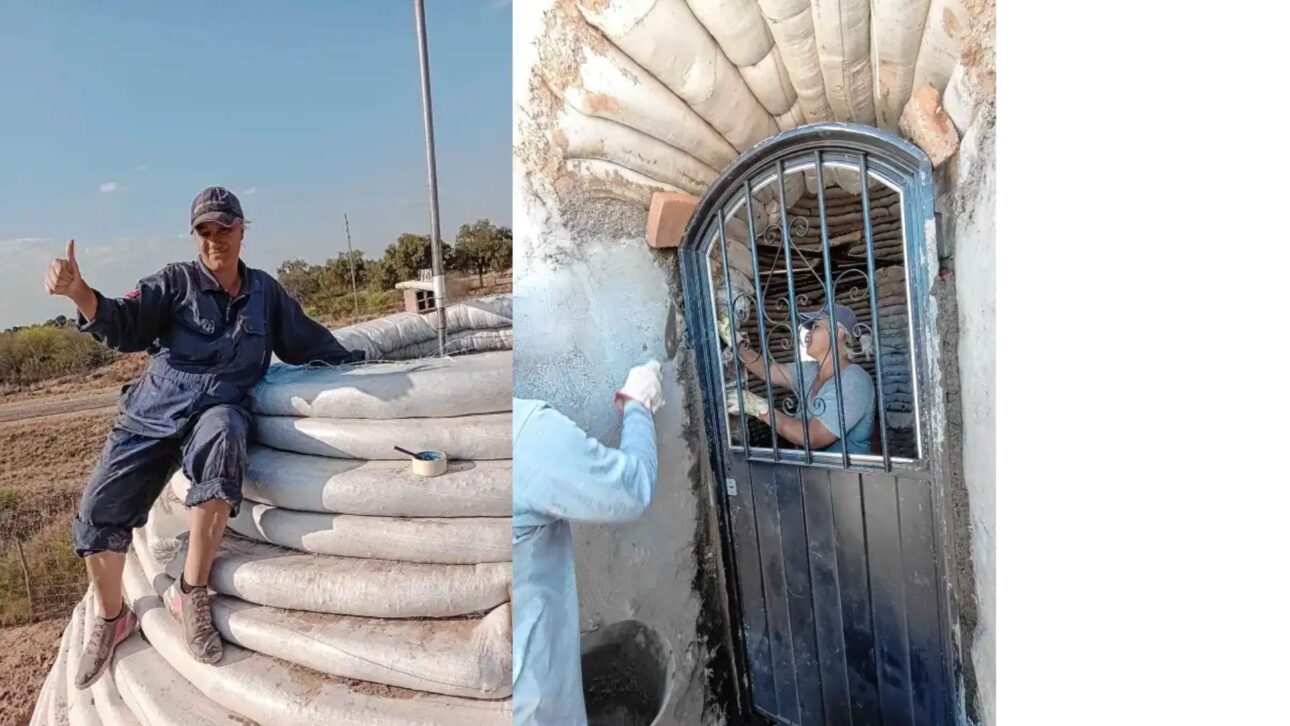
The work that marked the turning point was erected in 2023. After years of study and delays caused by the pandemic, Lorena finally built her first superadobe dome, not in Neuquén, where she lives, but in La Rioja, her native province, hundreds of kilometers away. It was there that theory turned into a real dome.
The construction numbers are impressive in their simplicity. The dome is about 5 meters in diameter and 20 square meters in area, erected with approximately 24 tons of earth. All this weight is supported without the use of iron, beams, or any metallic structure, something unthinkable in conventional construction.
The secret lies in the shape and technique. The superadobe dome distributes the weight so efficiently that it dispenses with columns and beams, relying on its own geometry. The thick earth walls do the rest, ensuring solidity to a structure made basically of soil, bags, and manual labor.
Raising such a structure alone carries enormous symbolic weight. Proving that a single person, without technical training, can raise a dome of 24 tons of earth dismantles the idea that construction always requires large teams and expensive materials. It was this living proof that opened the path for Lorena to teach others.
What is superadobe and why she chose it
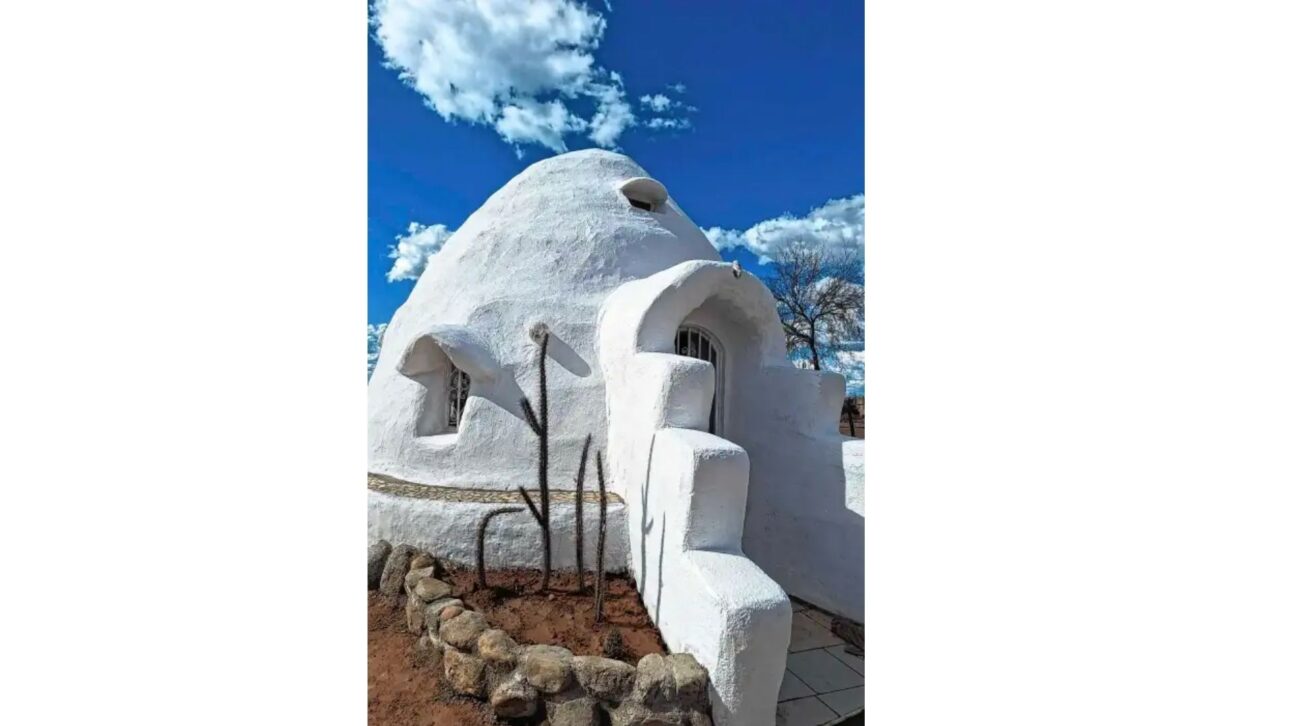
The superadobe is a bioconstruction technique based on earth bags. Instead of bricks, long bags or fabric tubes filled with moist soil are used, stacked in layers and locked together with barbed wire. As the rows rise and close, the rounded shape of a dome emerges.
The technique has recognized origins in world architecture. It was developed by Iranian architect Nader Khalili and was even studied by institutions like NASA, for combining simplicity and resilience. Superadobe structures are known for withstanding earthquakes, storms, and even fire well, thanks to the thick earth walls.
For Lorena, the choice made perfect sense. She saw in superadobe an accessible and efficient way to build, using a material that is literally underfoot. “With the earth, the most abundant material in the world under our feet, we can build houses, completely efficient and healthy homes. Living houses,” she said, according to Río Negro.
This vision combines practicality and purpose. Instead of relying on a heavy materials industry, superadobe bets on what is local, cheap, and natural. For a bioconstructor like Lorena, this means putting the possibility of having a home within reach of many more people, without sacrificing comfort and safety.
Why build with earth? The advantages of the dome
The first advantage is the cost of the material. Since the base of the dome is the earth from the land or region itself, much less is spent than with brick, cement, and steel. For many people, it is precisely this savings that makes superadobe a real alternative in the face of high traditional construction prices.
Thermal comfort is another strong point. The thick earth walls hold the temperature, keeping the interior of the dome cooler in the heat and warmer in the cold, reducing the need for climate control devices. In regions with extreme climates, this natural behavior makes a huge difference in daily life.
The resistance impresses those unfamiliar with the technique. Despite appearing fragile, a well-made superadobe structure is extremely solid and durable, capable of withstanding tremors and weather conditions that would topple ordinary buildings. It’s no wonder the technique is studied for risk areas and emergency situations.
There is also the environmental appeal of bioconstruction. Using raw earth, without firing and almost without industrial material, reduces the ecological impact of the construction and takes advantage of a renewable and abundant resource. For those seeking a more sustainable home, the superadobe dome combines low cost, durability, and respect for the environment.
Building with earth, however, requires technique and care. A superadobe dome needs a good foundation, protection against moisture, and a finish that seals the walls, to avoid cracks and infiltrations. When these details are respected, the construction lasts decades; when ignored, the clay can become a headache.
From Housewife to Bioconstructor: The Turnaround
Lorena’s life change was built step by step. There was no stroke of luck, but rather years of study, courses, and attempts until mastering superadobe. From the first research in 2018 to the finished dome in 2023, it was a long journey marked by dedication and the typical patience of bioconstruction.
She herself sums up the period as an investment, not as wasted time. “I didn’t waste time; I was investing in knowledge out of love for the earth,” Lorena told Río Negro. The phrase shows how she views her own journey: each course and each attempt were steps towards mastering the technique.
The practical result was the creation of her own business. Lorena founded “El Campo La Deolinda,” her bioarchitecture venture, focused on building sustainable domes and glamping projects with a bioclimatic approach. This is how learning also became a source of income and a personal brand.
This path transformed the former housewife into a sought-after professional. Today, Lorena is sought after by those who want to learn the technique or build their own dome, and her name circulates in the bioconstruction field in Argentina. Her professional turnaround is, above all, a concrete example of reinvention through knowledge.
“El Campo La Deolinda” and the “Dome Paradise”
Lorena’s projects show that the idea went far beyond a house. Besides “El Campo La Deolinda,” she runs a venture called “Dome Paradise,” developed on a property of about 79 hectares. The proposal is to create a set of superadobe domes amidst nature.
These spaces combine housing, tourism, and demonstration of technique. With a bioclimatic focus and use of clean energy, the domes serve both for living and for hosting visitors interested in bioconstruction and glamping experiences. It is a way to practically show that it is possible to live well in earth houses.
The investment in glamping is no coincidence. Sustainable accommodations amidst nature are on the rise, and the superadobe domes align well with this audience, who value comfort, organic aesthetics, and low impact. For Lorena, it is a way to combine income, promotion of bioconstruction, and direct contact of the visitor with the earth house.
The model also functions as a living showcase of superadobe. Those who visit Lorena’s projects see up close how an earth dome behaves, feel the thermal comfort, and understand the advantages of the technique without relying solely on theory. This direct contact often convinces more than any explanation.
Behind it all, there is a conscious economic bet. By combining bioconstruction, tourism, and teaching, Lorena created a business that sustains her own work and still spreads the technique. The “Paraíso de Domos” is proof that building with earth can be both a personal dream and a viable enterprise.
The earth quarry that teaches all of Argentina


Perhaps the most striking facet of Lorena is that of a teacher. Instead of keeping the knowledge, she travels through different provinces of Argentina giving superadobe workshops, teaching from scratch those who want to learn to build their own dome. It is this generosity that earned her the nickname “earth quarry.”
The courses have already reached various regions of the country. Lorena takes her workshops to places like San Juan, San Luis, and Buenos Aires, forming groups of ordinary people interested in bioconstruction. Many of these students dream of building a cheap and sustainable house with their own hands, as she did.
The demand for the workshops follows the housing crisis. With the cost of traditional construction increasingly high, many people see techniques like superadobe as an accessible way to own a home. Lorena’s groups gather entire families to young people interested in bioconstruction and a more sustainable way of life.
Teaching the technique has a powerful multiplying effect. Each person who learns to work with superadobe can pass the knowledge forward and build new domes, spreading bioconstruction wherever they go. Thus, Lorena’s work goes far beyond the projects she signs herself.
There is also a message of inclusion in this story. A woman who was a housewife now leads projects and teaches in a sector historically dominated by men, showing that construction with earth can be done by anyone willing to learn. The “earth mason” has thus become a symbol of autonomy.
What this has to do with Brazil
Brazil has fertile ground for bioconstruction, in every sense. Construction techniques with earth, such as adobe, rammed earth, and superadobe itself, are already used and taught in different regions of the country, in courses, community efforts, and sustainable housing projects. Lorena’s story directly connects with this growing movement here.
Her example further reinforces the debate about women in construction. In Brazil, as in Argentina, the number of women taking on projects, sites, and techniques like superadobe is growing, breaking into a traditionally male sector. Seeing an “earth mason” leading domes helps inspire this change.
This movement already has a face here. In Brazil, there are collectives and bioconstruction courses led by women, teaching adobe, superadobe, and green roofing in community efforts. The initiative brings the technique closer to low-income communities and, at the same time, opens space for more women on the construction site, repeating, on Brazilian soil, the path of the “earth mason”.
There is also the appeal of disaster resistance. Since superadobe structures withstand earthquakes, floods, and strong winds well, the technique sparks interest in risk areas, something relevant in a country that suffers from floods and landslides. Well-designed earth houses can be part of the solution in vulnerable regions.
Finally, there is the lesson about access to housing. In a Brazil with a large housing deficit, cheap and low-impact techniques based on local earth offer a possible path for those who cannot build in the traditional way. The superadobe dome shows that knowledge, more than money, can be the key to having a place to live.
And you, would you live in an earth dome?
Lorena Zabala’s journey shows how a simple technique can change a life and inspire many others. From housewife to bioconstructor, she single-handedly built a superadobe dome with 24 tons of earth, created her own business, and now travels across Argentina teaching the “earth mason”. All this using the most abundant material there is: the ground beneath our feet.
And you, would you live in a earth house in the shape of a dome? Tell us in the comments what you think of the superadobe technique and if you believe that bioconstruction can gain more space in the cities and countryside of Brazil.