






 Portuguese
  Spanish


Manaus strengthens urban cleaning in an agenda that gathered new trucks, announcement of more workers, and the mayor dressed as a street cleaner, in an act focused on household collection, combating illegal disposal, and valuing the teams working on the streets of the capital.
The mayor of Manaus, Renato Junior, wore a street cleaner’s uniform and delivered nine compactor trucks to the Municipal Urban Cleaning Department (Semulsp) on Friday (22), during an event held at the department’s headquarters to reinforce solid waste collection in the Amazonian capital.
Initially destined for the North, East, and South zones, the vehicles became part of the operational fleet of public cleaning and are expected to support household collection on routes already served by the city, within the structure maintained daily by the municipal administration.
In the same ceremony, Renato Junior announced the addition of 500 more street cleaners to expand sweeping, pruning, and combating illegal waste disposal on the streets, one of the central fronts in Semulsp’s routine.
-
São Paulo Beach Ranked Among World’s Best, But Access Requires Challenging Hike

-
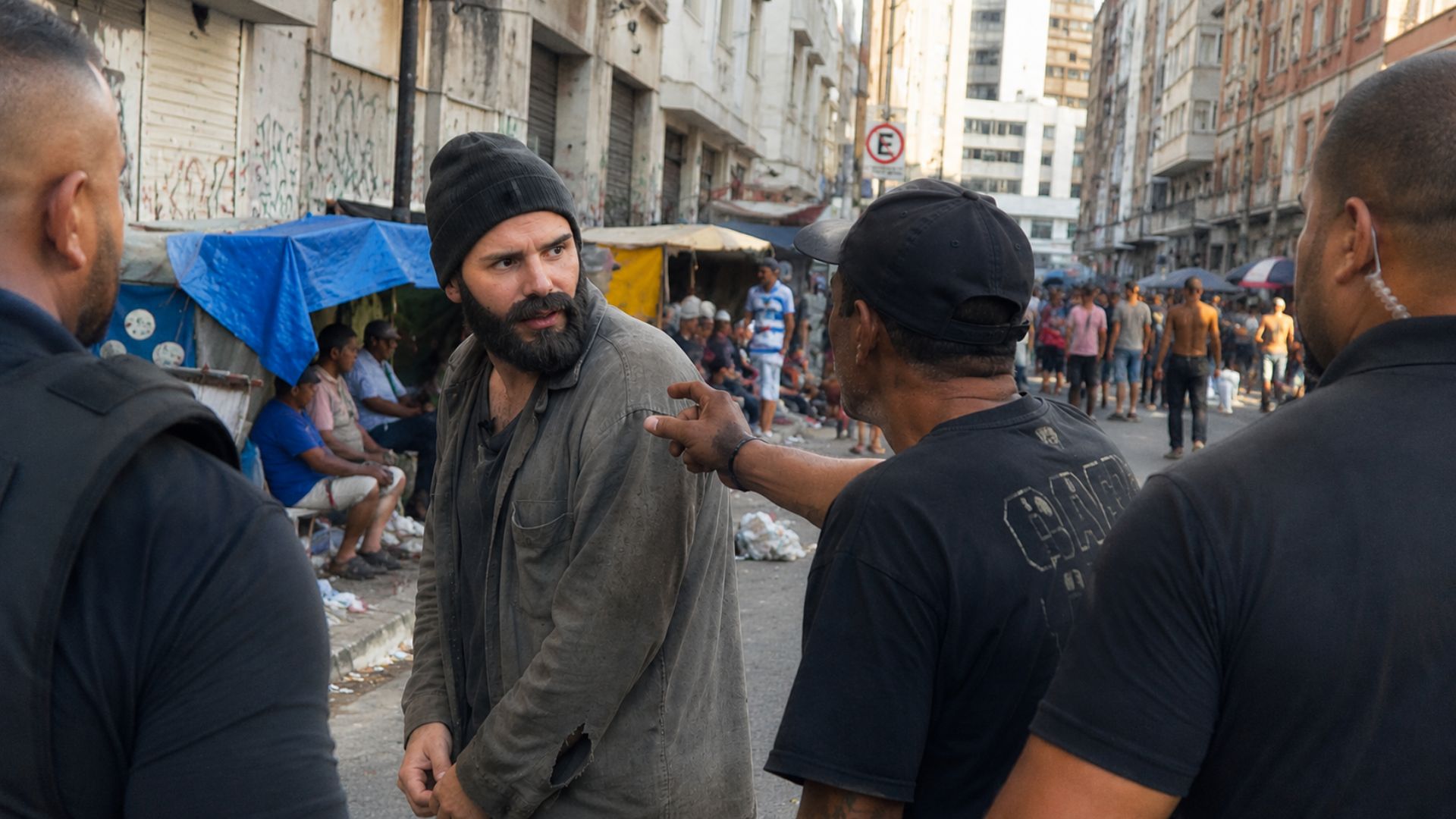
Brazilian TV Host Disguised as Homeless in São Paulo’s Drug District Recognized and Nearly Attacked During Filming
-
10-Year-Old Brazilian Girl Develops Method to Analyze Colonial Counterfeit Coins, Published in Science Magazine for Children
-
Bizarre “tentacled” rabbits with dark horns and giant warts reappear in the U.S., prompting officials to explain the real Shope papilloma virus.




New trucks expand collection structure in Manaus
With automatic transmission, more efficient engines, and atmospheric emissions control systems, the compactor trucks were presented by the City of Manaus as part of the modernization of household collection and operational reinforcement in the serviced regions.
The municipal administration also highlighted that the equipment offers better conditions for workers’ routines, with greater operational comfort, noise reduction during service, and more suitable performance on collection routes spread across the city.
During the event, the mayor stated that Manaus now has a fleet of almost one hundred collection trucks and noted that the capital also uses dumpsters and other equipment to tackle improper waste disposal.
According to Renato Junior, the new compactors have a capacity of eight tons and a lower environmental impact, a feature presented by the city as part of the effort to increase the efficiency of the structure used daily by urban cleaning teams.
Mayor dressed as street cleaner marks vehicle delivery
Appearing in a street cleaner’s uniform alongside the Semulsp secretary, Sabá Reis, the mayor sought to associate the delivery of the trucks with the appreciation of the workers responsible for collection, urban maintenance, and street upkeep in Manaus.
“Value the street cleaner, value the worker,” stated Renato Junior, explaining the use of the uniform during the event and attributing the reach of household collection to the work carried out by the teams that operate daily on the streets.
This choice gave a symbolic character to the agenda and transformed the delivery of machinery into an act of public recognition for the collectors, amid the city hall’s attempt to increase the visibility of urban cleaning in the Amazonian capital.
In addition to the new vehicles, the municipal operation involves daily household collection routes, sweeping teams, pruning services, and actions aimed at removing improperly discarded waste at various points in the city.
Household collection exceeds national average
Based on data from the IBGE Continuous PNAD, the City Hall of Manaus reported that the capital reached 98.4% coverage of household solid waste collection, a rate higher than the national average of 93.1% and the Northern Region average, indicated at 78.5%.
The IBGE News Agency recorded that, in 2024, 93.1% of Brazilian households were served by waste collection, either directly on the property or through a cleaning service dumpster.
In the same survey, direct collection reached 86.9% of the 77.3 million households in the country, while about 4.7 million homes still burned waste on their own property in 2024.
These numbers help to gauge the weight of urban cleaning in the capitals of the Northern Region, where urban growth, areas of difficult access, and irregular disposal keep waste collection as a permanent demand for the public authorities.
Reinforcement of 500 street cleaners targets irregular disposal
In the announcement made during the delivery of the trucks, Renato Junior said that the city hall would put more 500 street cleaners into action in the two weeks following the event, focusing on incorrect disposal, sweeping, and pruning.
When asking for the population’s collaboration in the proper disposal of waste, the mayor stated that maintaining public cleanliness depends both on the municipal structure and on how residents handle household waste.
Semulsp reported that household collection operates on 140 routes distributed throughout the city’s zones and functions in five shifts throughout the day and night, a model adopted to maintain continuous service in Manaus.
Head of Semulsp, Sabá Reis stated that the coverage indices released by the IBGE serve as an incentive to the teams and said that the arrival of the new vehicles helps to maintain the performance of household collection in the capital.
Held at the headquarters of the department responsible for municipal urban cleaning, the delivery brought together the announcement of new equipment, the presentation of personnel reinforcement, and the public defense of the work carried out by the street cleaners.
With the trucks incorporated into the fleet, the city hall is betting on a combination of more modern machinery, expansion of teams, and resident participation to sustain collection coverage and reduce illegal dumping points in Manaus.


