






 Portuguese
  Spanish
 6 min of reading
  0 comments


Program created in the 1980s transformed degraded areas into green coverage, reduced risks on slopes, and became one of the largest urban restoration actions of the Atlantic Forest in Brazil
Rio de Janeiro, known for its beaches and occupied hills, also carries an environmental experience that grew far from the most obvious postcards. In recent decades, the city has begun to recover slopes, springs, and degraded areas with an urban reforestation program based on native Atlantic Forest trees and resident participation.
As reported by Revista Fórum, based on data attributed to the Municipal Secretariat of Environment and Climate, the Reforestation Task Force reached about 11 million native trees planted in approximately four decades. The cited average is about 150,000 trees per year.
The program is part of Refloresta Rio, a municipal initiative aimed at restoring vegetation cover in areas of the Atlantic Forest and associated ecosystems. The idea goes beyond making the city greener, as it involves slope containment, spring recovery, erosion reduction, and local income generation.
-
Victorian-era Glass Dumped into the North Sea Returns as Rare Multicolored Gems on Seaham Beach, Attracting Global Collectors.

-
Brazilian Researchers Develop Technology to Extract Drinking Water from Air Humidity Using Recycled Synthetic Fiber

-
Neymar’s Family Sells 300,000 Bottles of Wine Before Launch, Aims for $20 Million Revenue in First Year
-
Cambridge Introduces 25m² Modular Homes to Bridge the Gap from Shelters to Permanent Housing


According to the Rio City Hall, the program had already surpassed 10 million seedlings planted in 2022, was present in 94 of the city’s 162 neighborhoods, and had about 500 active task force members. The city hall also pointed out that more than 10,000 people have participated in the task force throughout history.
What started as a response to the slopes became a long-term public policy
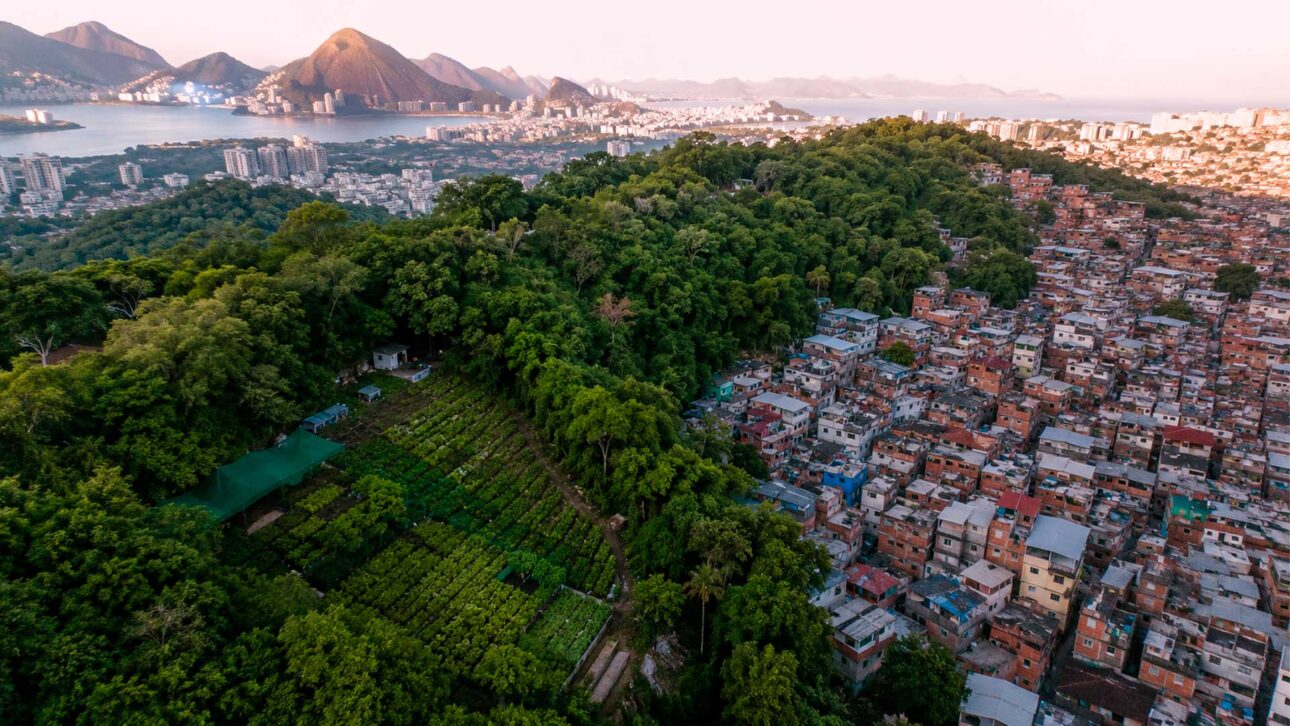
The Reforestation Task Force was born in the 1980s, when urbanization advanced over the city’s hills and fragile areas. In many places, the removal of vegetation left the soil more exposed to rain, increasing erosion and paving the way for landslides.
The logic of the program was simple and ambitious, to recover native vegetation in degraded areas and involve residents of nearby communities in the work of planting and maintenance. This helped turn reforestation into a continuous public policy, rather than an isolated symbolic planting action.
According to SMAC, Refloresta Rio’s mission is to restore the municipality’s vegetation cover in the Atlantic Forest biome, recovering degraded areas and permanent protection areas. The work focuses on dense ombrophilous forests, restinga, and mangroves, depending on the city’s region.
Why planting trees on hills helps stabilize the soil
The impact of reforestation first appears on the ground. When a slope loses vegetation, rainwater hits the soil directly, carries particles, creates grooves, and can accelerate erosive processes.
With trees, this impact changes. The canopies reduce the force of the rain, the roots help structure the terrain, and the litter, a layer formed by leaves, branches, and organic matter, acts as a natural protection over the soil.
This cover favors the gradual infiltration of water, instead of allowing it to rush forcefully downhill. In urban areas with rugged terrain, this detail makes a difference because it can reduce flash floods, surface erosion, and instability in vulnerable sections.
The official document “33 years planting forests in Rio de Janeiro” highlights benefits such as containment of unstable slopes, protection of springs, reduction of river and watercourse siltation, as well as improved microclimate and shelter for fauna.
It’s not enough to plant seedlings, the secret is in maintenance
One of the central points of Refloresta Rio is that reforesting does not just mean putting seedlings in the ground. The work requires area preparation, species selection, control of invasive plants, ant control, fire prevention, and maintenance until the vegetation gains strength.
SMAC reports that the municipality maintains five main nurseries, with a combined capacity to produce more than one million seedlings per year. These nurseries gather about 200 tree species and 130 shrub species, in addition to herbaceous and climbing plants used in different environments.
In practice, the choice of species depends on the soil, sunlight, altitude, degradation stage, and type of ecosystem. A dry and exposed slope does not receive the same management as a restinga area or a mangrove.
Another challenge is the advance of exotic grasses and other invasive species. They compete with native seedlings, hinder natural regeneration, and can also increase the risk of fires in dry areas.
Therefore, continuous maintenance is a decisive part of the outcome. Without this care, many seedlings die before forming enough shade to control the grass and create conditions for the arrival of other species.
Restoration also tries to reconnect pieces of the Atlantic Forest
The urban reforestation of Rio does not only operate in isolated points. In some areas, the goal is to reconnect green fragments, creating ecological corridors that help fauna circulate and favor genetic exchange between plant and animal populations.
An example cited in the context of the program is the Posse Forest, in the West Zone, an important area for the connection between the Pedra Branca and Mendanha massifs. This connection is relevant because the Atlantic Forest in Rio appears very fragmented, surrounded by neighborhoods, roads, and urbanized areas.
According to IBGE, the Atlantic Forest occupies about 13% of Brazilian territory and is in the coastal strip, where more than half of the country’s population lives. Therefore, the institute classifies it as the most threatened biome in Brazil, with only part of its original coverage preserved.
The payment to the volunteers helps keep the program running
A distinguishing feature of the Reforestation Task Force is the participation of residents from communities near the recovered areas. They work in planting, selective weeding, creating firebreaks, controlling invasive species, and maintaining the seedlings.
This model creates a direct relationship between environmental conservation and local income. Instead of hiring only external teams, the program incorporates people who know the territory and monitor the transformation of the areas over time.
The city hall reported in 2022 that participants received grants of up to R$ 1,000 to contribute with their workforce. Meanwhile, the report from Revista Fórum mentioned a range of financial aid between R$ 1,000 and R$ 1,300, linked to replanting and species maintenance.
This point is important because an urban forest is not born ready. Planting can be done in a day, but the area needs monitoring for months or years until the trees grow, provide shade, and begin to create a more resilient environment.
The challenge now is to keep the forest alive in a hotter city
With extreme rains, heat waves, and urban occupation pressuring fragile areas, reforestation gains strategic importance. Native trees can help reduce heat islands, improve water infiltration, and protect slopes, but they depend on continuity, oversight, and maintenance.
According to SOS Mata Atlântica, the biome hosts the majority of the Brazilian population and provides essential services such as water supply, climate regulation, agriculture, fishing, energy, and tourism. In Rio, Refloresta Rio shows that restoring vegetation in urban areas can also be a form of risk prevention and climate adaptation.
The case in Rio draws attention because it combines environmental restoration, slope protection, spring recovery, and income generation into a single public policy. In a city marked by hills and vulnerable areas, planting native trees has become more than just landscaping and is now part of environmental security.
Do you think other Brazilian cities should adopt this model of urban reforestation with resident participation? Leave your comment and tell us if there are degraded areas in your city that could become forests again.




Be the first to react!