






 Portuguese
  Spanish
  6 min of reading
  0 comments


System developed by researchers from Unesp and IGTPAN uses recycled textile waste to capture moisture from the atmosphere and produce up to 6 liters of water per day in experimental prototype
A Brazilian technology based on recycled synthetic fibers has managed to transform air humidity into potable water, paving the way for a decentralized alternative in regions where lack of rain, infrastructure costs, and reliance on water trucks make supply a daily challenge.
FAPESP Agency reported on June 22, 2026, that the system was developed by researchers from the São Paulo State University, Unesp, in partnership with the Granado Institute of Polyacrylonitrile Technology, IGTPAN, located in Jacareí, in the interior of São Paulo. In tests conducted over almost a year, the prototype produced between 4 and 6 liters of water per day.
The difference lies in the material used. Instead of relying on expensive and hard-to-scale solutions, the researchers utilized textile waste made from polyacrylonitrile, known as acrylic fiber, to produce a superabsorbent polymer capable of capturing water vapor present in the atmosphere.
-
Neymar’s Family Sells 300,000 Bottles of Wine Before Launch, Aims for $20 Million Revenue in First Year

-
Cambridge Introduces 25m² Modular Homes to Bridge the Gap from Shelters to Permanent Housing
-
Facing high costs and limited expertise in Brazil, couple builds 27 m² tiny home on wheels for $36,000 using online resources.

-
Tired of High Rent in Portland, Newlyweds Buy 37m² Tiny House with 36 Cabinets, King-Size Bed, and Loft Office, Paving Way to Financial Freedom




The proposal is not to replace public supply networks, treatment plants, or sanitation policies. The advancement draws attention because it points to a complementary solution in isolated locations, semi-arid areas, rural communities, and urban regions where regular access to water is still limited.
The secret lies in panels that act like sponges to capture water vapor
The system uses modules called hydrocells, which function as small technological “sponges.” They retain water vapor molecules on the material’s surface and then release this moisture in the form of liquid water through moderate heating.
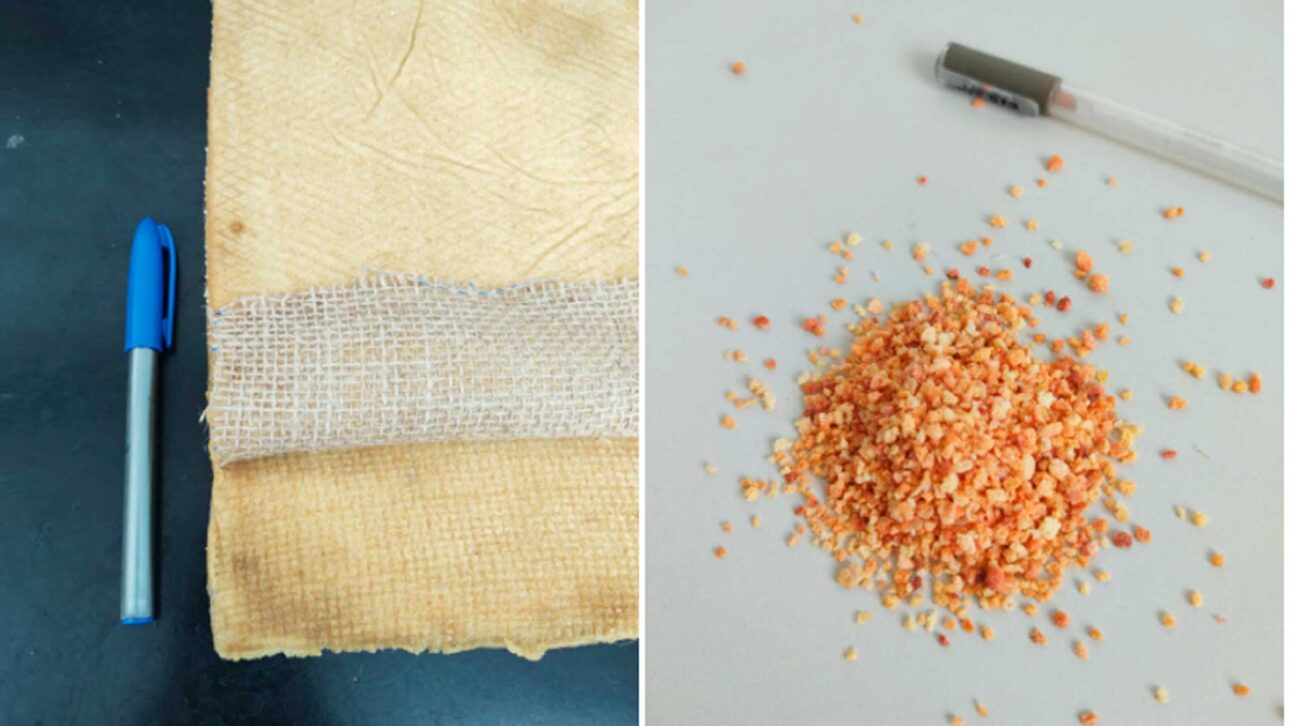
The heart of the technology is PANSAP, a superabsorbent polymer produced from the recycling of acrylic fibers. The material undergoes a chemical reaction that transforms the textile waste into a structure capable of retaining large amounts of water.
According to the study published in the scientific journal npj Clean Water, from the Nature group, the system showed a daily production of 4 to 6 liters from 25 units, with hybrid solar and electric operation. The work also indicates material stability for more than 2,500 cycles of use, which suggests potential for long service life.
In practice, air passes through the plates, the polymer captures the moisture, and then the module is heated in a chamber. This heating causes the vapor to be released, condensed, and collected as water.
Textile waste becomes a central piece of a circular economy solution
The innovation also enters the field of circular economy, because it transforms a material that could become waste into part of a supply technology. Discarded clothes, scraps, and synthetic fabrics can serve as raw material for the production of the polymer.
This point is relevant because textile waste has become a global problem. The United Nations Environment Program indicates that about 92 million tons of textile waste are generated annually worldwide, a volume associated with the growth of fast fashion and the low reuse of fibers.
In the case of Brazilian technology, the process also recovers part of the chemical by-products of the reaction. The ammonia released can be converted into ammonium phosphate, a fertilizer used in agriculture, reducing losses and improving the environmental performance of the production route.
Another important factor is cost. Advanced materials used in air water capture research, such as some MOFs, can be very expensive and complex to produce. The polymer derived from recycled fiber emerges as a simpler and cheaper route for social applications.
The water comes out almost pure, but needs adjustment before consumption
The water obtained by the equipment goes through condensation, a process similar to distillation. Therefore, it has a high degree of purity and a low presence of detectable contaminants in laboratory tests.
But there is an important detail: since it is practically demineralized, this water needs to undergo remineralization before regular consumption. This procedure adds mineral salts, such as calcium and magnesium, something common also in desalination systems.
The study also highlights the need for care with storage and microbiological safety. Reservoirs may require additional treatment with ultraviolet light, ozone, or other domestic purification protocols, depending on use and environment.
This point prevents an exaggerated reading of the discovery. The technology does not mean that anyone will be able to drink water extracted from the air without control, filtration, or technical supervision. The advancement lies in the ability to generate water from humidity, but the path to everyday use requires standardization, field tests, and adaptation to local regulations.
Solar energy can make the system useful in communities far from the power grid
One of the advantages of the prototype is the possibility of operation with solar energy. In tests, the system combined electric heating, direct solar radiation, and photovoltaic panels to release the water captured by the plates.
This feature makes the technology more promising for isolated communities where the power grid is unstable or nonexistent. In regions with good sunlight, the system could operate autonomously, provided it is properly sized.
The heating stage occurs at moderate temperatures, between 55 °C and 80 °C. This range was important because very high temperatures can damage the polymer and affect the quality of the produced water.
The modular design also aids in expansion. A unit with about 10 kilograms of adsorbent material can produce approximately 6 liters per day, while larger sets of modules could supply small communities in specific situations.
Global water crisis increases interest in technologies that extract water from the atmosphere
Interest in air water capture technologies is growing at a time of pressure on traditional sources. A report by WHO and UNICEF released in 2025 showed that 2.1 billion people still did not have access to safely managed drinking water.
Furthermore, data from UN-Water indicate that about 4 billion people face severe water scarcity for at least one month a year. This scenario helps explain why decentralized solutions have started to gain space in laboratories, universities, and innovation centers.
Atmospheric capture does not solve the world’s water problem alone. It depends on relative humidity, energy, maintenance, cost per liter, and sanitary safety. Even so, it can make a difference in places where other alternatives are expensive, distant, or technically unfeasible.
The case of Lima, Peru, is cited by researchers as an example of a region where the combination of humid air and little rain can make the technology interesting. The city has low annual precipitation but faces fog and humidity, conditions that favor this type of approach.
Field tests will still be decisive to know how far the technology can go
Despite promising results, the system still needs to prove performance outside the experimental environment. Researchers plan to advance to field tests in Peru, especially in areas that already rely on artisanal fog capture solutions and water supply by tanker trucks.
This stage will be crucial to measure durability, actual operating cost, maintenance, water quality in continuous use, and acceptance by communities. It will also be necessary to assess how the equipment behaves at different levels of humidity, dust, heat, and solar variation.
The potential, however, is clear. By combining drinking water, solar energy, and textile waste recycling, Brazilian technology shows a practical route to transform an environmental problem into part of the solution for another urgent challenge.
The advancement does not eliminate the need for investments in sanitation, recovery of water sources, and public water management. But it places Brazil in a strategic discussion: how to produce simple, scalable, and more accessible technologies to tackle water scarcity on an increasingly pressured planet.
Do you believe that technologies capable of extracting water from air humidity can help isolated communities in the future? Leave your opinion in the comments and tell us if such a solution would make sense in dry regions of Brazil. Your insight can help broaden the debate on water, innovation, and sustainability.




Be the first to react!