






 Portuguese
  Spanish
  4 min of reading
  0 comments


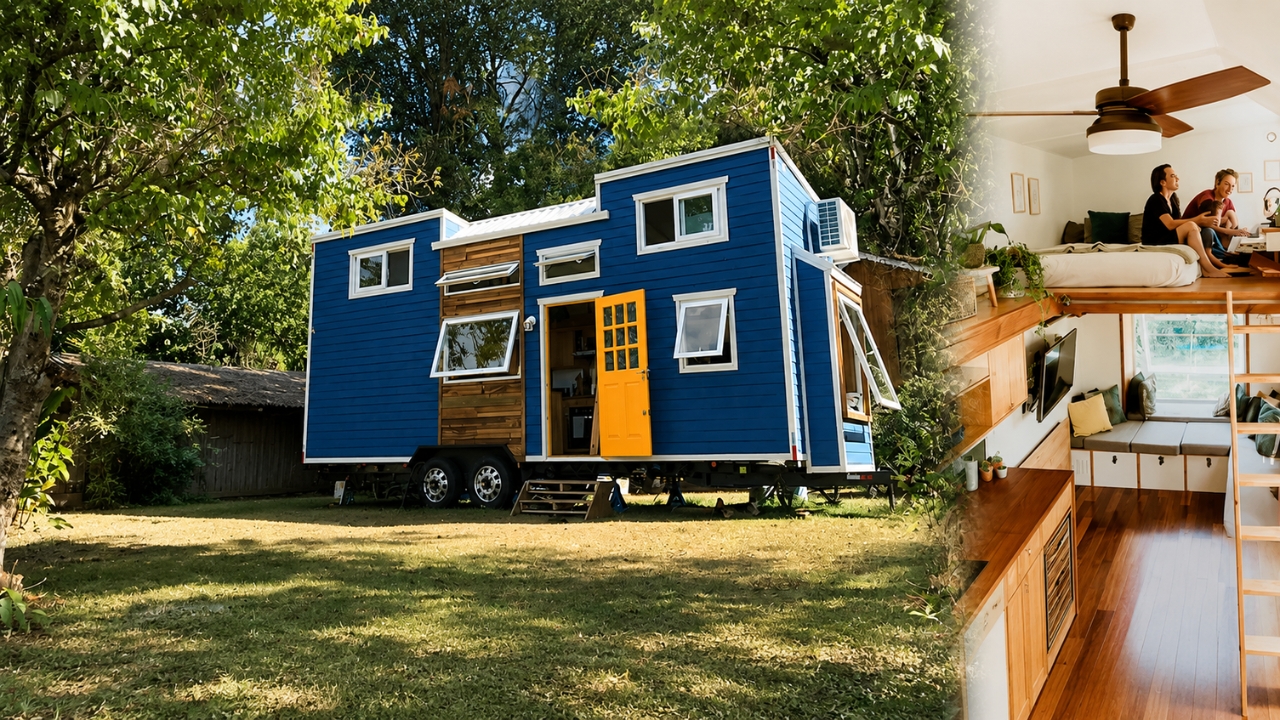
Robson Lunardi and Bel Albornoz left a conventional house in Greater São Paulo to invest in a compact 27 m² home on wheels, built with study, online courses, smart space solutions, and a total cost of R$ 180,000.
Robson Lunardi and Isabel Albornoz, also known as Bel, were neither engineers, architects, nor construction professionals. Even so, after living in a conventional house of over 160 m² in Greater São Paulo, they decided to build a 27 m² tiny house on wheels.
The project, called Araraúna, cost R$ 180,000, according to information from UOL Nossa and Tiny Houses Brasil. More than just a small house, the construction became a symbol of an uncommon solution: learning through online courses, studying the movement abroad, and getting hands-on due to the lack of specialized professionals.
From a 160 m² house to a 27 m² home
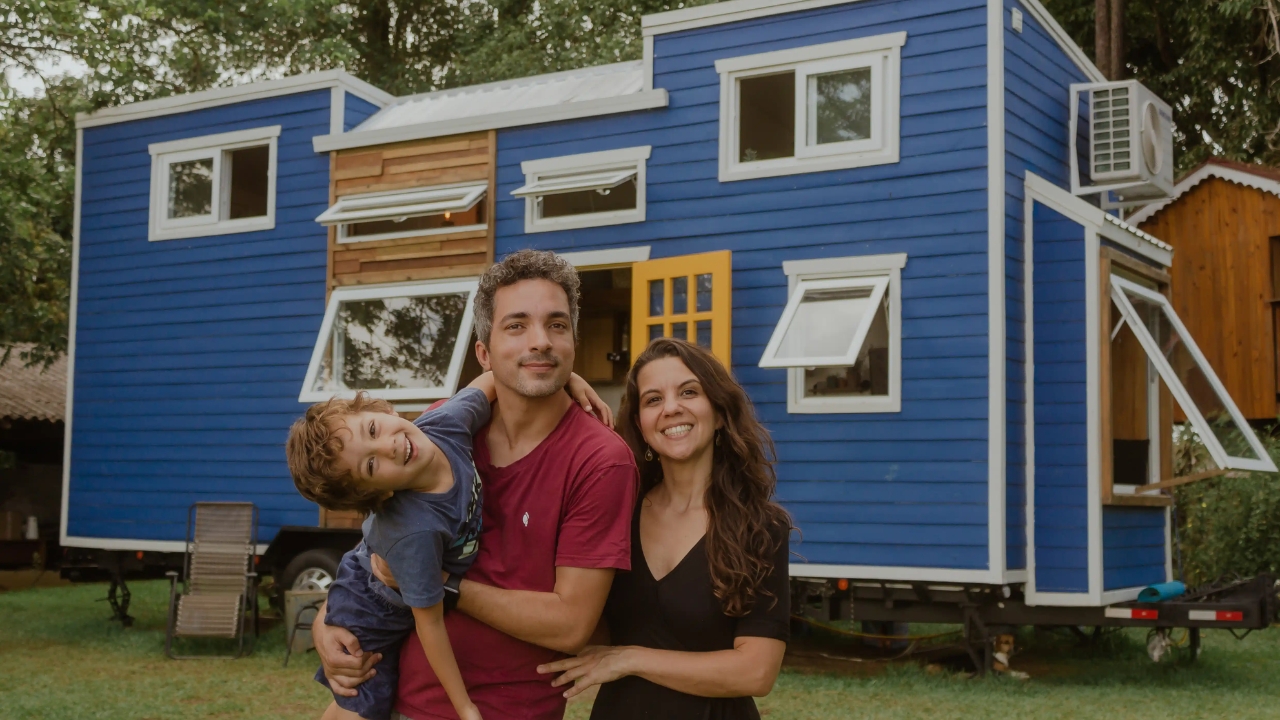
The change began before the construction. According to UOL Nossa, Robson worked as a statistician in the financial sector, while Isabel worked in tourism, travel, and hospitality.
-
Tired of High Rent in Portland, Newlyweds Buy 37m² Tiny House with 36 Cabinets, King-Size Bed, and Loft Office, Paving Way to Financial Freedom

-
In Sweden’s Jukkasjärvi, Artists Transform the Frozen Torne River into the Icehotel, a Seasonal Ice Structure That Melts Back into Nature

-
Innovative Heat Storage Tower in Finland Uses 2,000 Tons of Crushed Soapstone to Warm Cities
-
17-Year-Old Homeschooler from the Bahamas Solves 40-Year-Old Math Puzzle, Earns Direct PhD Admission


The search for minimalism led the couple to the world of tiny houses, compact homes that became popular in the United States and combine mobility, functionality, and reduction of excess.
In the case of Robson and Bel, the idea was not just to live in less space. It was to build a real house, with a living room, kitchen, bathroom, office, and two bedrooms, but within 27 m², on a chassis with wheels.
Online courses became a construction tool
According to Tiny Houses Brasil, the couple returned to the country after discovering the tiny house movement in the United States and realized a practical barrier: there were few specialized professionals in Brazil, and the quotes they found were considered astronomical.
The solution was to learn. Robson and Isabel turned to online courses, research, practice, and digital design tools like SketchUp. The tiny house began to be conceived from the chassis to the structure, with mistakes, corrections, and adaptation to the Brazilian reality.
The Araraúna was born from the combination of study, planning, and manual work.
The R$ 180,000 tiny house on wheels
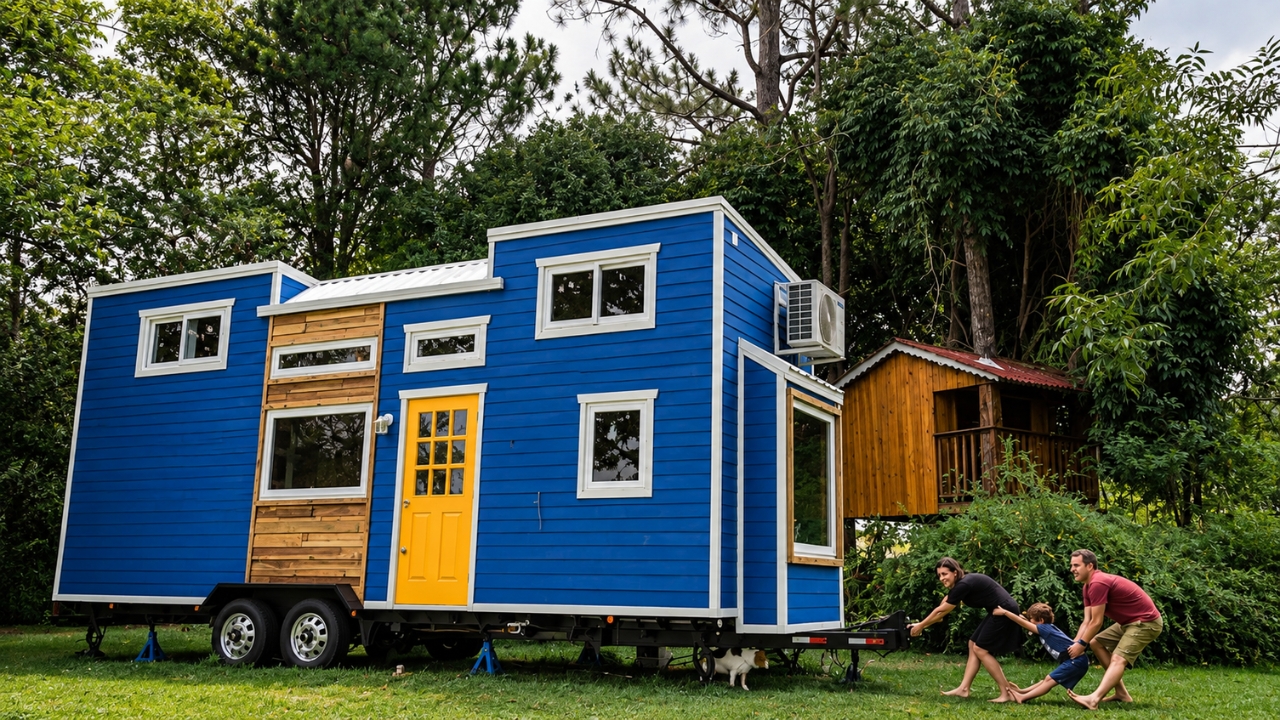
The Araraúna house is 8.20 m long, 2.60 m wide, 4.40 m high, and weighs approximately 6 tons. The disclosed price was R$ 180,000.
The structure was made of steel frame, with walls in five layers to improve thermal and acoustic insulation. The project also included water and energy solutions, with the possibility of operating connected to the grid or in an off-grid format.
Inside the house, every centimeter had to work in favor of the family. UOL Nossa describes a staircase-cabinet, modular sofa with compartments, hidden table, retractable ironing board, staircase-bench, nine windows for natural lighting, and a dry bathroom.
Own work, but not improvised
QuintoAndar emphasizes that Robson and Isabel built the Araraúna with their own hands, almost alone, counting only on occasional help throughout the process.
The work lasted about a year and three months on the calendar. Robson estimated to QuintoAndar that, adding up the actual hours of work, the process would equate to approximately seven months with two people working.
This detail changes the reading of the story. It was not a quick or improvised solution. It was a long, planned work full of stages.
Legalization shows that a tiny house is not just a small house
One of the most important points of the story is legalization. Tiny Houses Brasil states that a true tiny house should not be treated merely as a smaller house. The project needs to consider comfort, ergonomics, ventilation, insulation, materials, layout, weight, and real use.
In the case of houses on wheels, the challenge grows. It is necessary to think about chassis, axle, brakes, center of mass, dimensions, and road safety. CONTRAN Resolution No. 882/2021, published in the Official Gazette of the Union, establishes limits such as 2.60 m in width and 4.40 m in height.
If the construction exceeds limits or is born without adequate calculation, it may become difficult to transport legally. Therefore, the Araraúna draws attention not only for its size but for the attempt to adapt the concept to Brazil.


From Family Project to National Reference
The story of Robson and Bel went beyond their home. The couple began documenting the process in the Barefoot Project and later, the experience helped to fuel the activities of Tiny Houses Brasil and the tiny house movement in the country.
Metrópoles also recorded the family traveling across Brazil with the 27 m² tiny house, reinforcing the practical side of the proposal: a compact, functional dwelling designed for mobility.
Araraúna shows that the dream of homeownership can take different forms when cost, space, mobility, and lifestyle are considered together. The case does not eliminate the need for technique, safety, and legalization, but reveals something greater: when the market does not yet offer accessible or specialized answers, some families begin to build their own path, literally.




Be the first to react!